

Uncategorized
Essential Oils: The Ultimate UK Guide to Purity, Safety, and Usage in 2026
Apr
What if the “therapeutic grade” label on your bottle is actually a clever marketing invention rather than a regulated safety standard? It’s understandable if you feel overwhelmed by conflicting advice while trying to find genuine, high-quality essential oils in the UK today. You want the calming benefits of nature without the risk of skin sensitisation or the worry of an unethical supply chain. We agree that transparency shouldn’t be a luxury; it should be the foundation of every botanical product you bring into your home.
In this comprehensive 2026 guide, we’ll show you exactly how to identify 100% pure oils, master safe dilution ratios for DIY skincare, and source ethically grown ingredients that respect our environment. Our family-run team is here to replace confusion with confidence by sharing the professional expertise we’ve cultivated over years of sourcing. You’ll discover the practical steps to create effective aromatherapy blends that support your health and your values. We’ll explore everything from reading GC/MS reports to selecting the right carrier oils for your specific needs.
Key Takeaways
- Learn how to identify 100% pure essential oils by decoding labels and understanding why “therapeutic grade” is simply a marketing term.
- Master the essential safety guidelines for topical application, including the specific dilution ratios required for facial treatments and body care.
- Curate a versatile starter collection of five botanical extracts that support sleep, calm, and daily wellness within the modern British home.
- Discover the benefits of sourcing directly from ethical growers through a transparent, family-run UK supplier committed to botanical integrity.
Understanding Essential Oils: Nature’s Concentrated Botanical Essence
Essential oils are the volatile aromatic compounds found within the roots, seeds, flowers, and bark of plants. These microscopic droplets serve as the plant’s immune system, protecting it from environmental threats and attracting pollinators. For a comprehensive overview of essential oils, one can see how these substances have transitioned from ancient apothecary shelves to modern UK homes. While ancient civilisations like the Egyptians used botanical infusions for rituals as early as 3500 BC, the term aromatherapy was first recognised in 1937 by the chemist René-Maurice Gattefossé. Today, the UK wellness market prioritises these extracts for their ability to enhance the atmosphere of a home or support a balanced lifestyle.
The term “essential” doesn’t imply the oil is a basic dietary necessity. Instead, it refers to the “quintessence” or the very soul of the plant. It captures the characteristic fragrance and biological properties that make a specific botanical unique. You’ll find a vast difference between these natural extracts and synthetic fragrance oils. Lab-created scents might mimic the smell of a rose, but they lack the complex chemical profile required for therapeutic use. Synthetic oils often contain phthalates and petrochemicals; these offer no wellness benefits and may cause sensitivities when used in a diffuser or topical blend.
The Science of Extraction: Steam Distillation and Cold Pressing
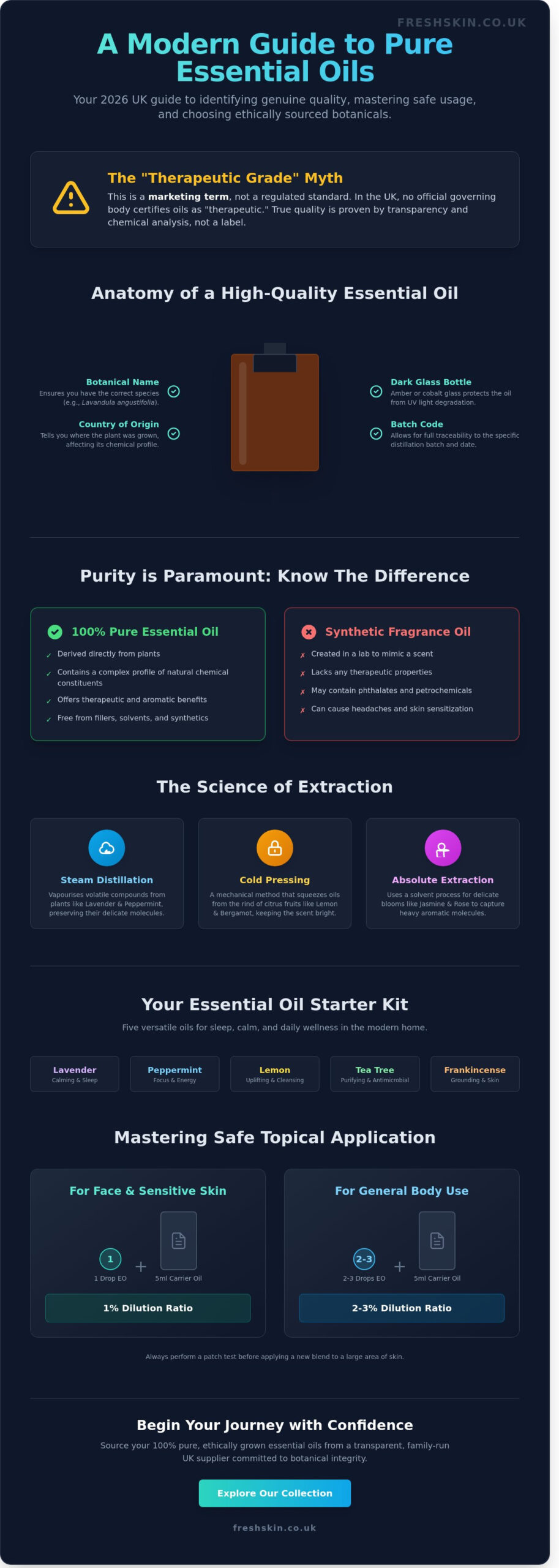
Most essential oils are harvested through steam distillation. This process uses controlled heat to turn the plant’s volatile compounds into vapour, which then condenses back into a liquid form. It’s a delicate balance that preserves the fragile molecules in botanicals like lavender or peppermint. Citrus fruits like Lemon and Bergamot require a different approach called cold pressing or expression. This mechanical method squeezes the oils from the rind without using heat, keeping the scent bright and zesty. For delicate blooms like Jasmine or Rose, producers use “absolute” extraction. This involves a solvent process to capture heavy aromatic molecules that steam would otherwise destroy, resulting in a highly concentrated and viscous product.
Why Botanical Purity Matters for Therapeutic Use
Purity isn’t just a marketing term; it’s a safety requirement for anyone using oils at home. Synthetic additives or “extenders” can negate the natural benefits of the oil and lead to unexpected skin reactions or headaches. When you’re creating a massage blend or a facial oil, you need to know exactly what’s in the bottle. Adulterated oils often contain hidden solvents that shouldn’t come into contact with the skin. A pure essential oil is a product free from all fillers, synthetics, and carrier oils. Choosing 100% pure formulations ensures you’re receiving the full botanical profile intended by nature. Our family-run commitment at Fresh Skin focuses on this transparency, ensuring every drop meets the high standards our UK customers expect for their daily self-care rituals.
Identifying Quality: How to Spot 100% Pure Essential Oils in the UK
The term “Therapeutic Grade” is often used by brands to imply a superior level of purity, yet it’s actually a marketing term rather than a regulated medical standard. In the UK, no official governing body like the MHRA certifies essential oils as therapeutic grade. Quality is instead determined by chemical analysis and rigorous sourcing standards. You should look for a label that includes the botanical Latin name, such as Lavandula angustifolia for Lavender, and the specific country of origin. These details ensure you aren’t buying a cheaper hybrid or a synthetic lookalike.
Packaging plays a vital role in preserving the integrity of the oil. High-quality oils are always stored in amber or dark cobalt glass bottles to block UV rays, which can cause oxidation and spoil the chemical profile within weeks. Every bottle should also feature a batch code. This code allows for full traceability back to the original distillation date and farm. For those starting their journey, following established essential oil safety guidelines ensures you get the most from these potent extracts without risk. Transparency isn’t just a buzzword; it’s a safety requirement.
Red Flags: How to Identify Synthetic or Adulterated Oils
Price is your first indicator of purity. It takes approximately 4,000kg of rose petals to produce just 1kg of Rose Otto oil. If you see a 10ml bottle of Rose or Frankincense for £5, it’s almost certainly a synthetic fragrance or diluted with a cheap carrier oil. You can perform a “paper test” at home by dropping a single bead of oil onto white printer paper. Pure oils typically evaporate completely without leaving a greasy ring, though heavier oils like Patchouli or Vetiver are natural exceptions. Don’t be put off by slight scent variations between batches. These nuances are a sign of a natural product affected by soil and weather, whereas synthetic oils smell identical every time.
Ethical Sourcing and Sustainability in the UK Market
The demand for botanical extracts has put immense pressure on global ecosystems. Indian Sandalwood (Santalum album) was classified as vulnerable on the IUCN Red List in 2022 due to over-harvesting. Freshskin prioritises direct relationships with growers to ensure our supply chain doesn’t contribute to environmental decline. As a family-run business based in the UK, we value the long-term health of the planet over short-term margins. We work with producers who practice sustainable reforestation and fair trade. When you shop for pure essential oils, you’re supporting a system that respects both the artisan distiller and the delicate environment they work within.
The Essential Oil Starter Kit: Top 5 Oils for Every British Home
Curating a collection of essential oils doesn’t require dozens of bottles to be effective. By selecting five core botanical extracts, you can address most daily needs from sleep support to natural home maintenance. As a UK family-run business, we’ve seen how these specific oils consistently provide the most value for British households looking for high-quality, 100% pure solutions.
Lavender and Tea Tree: The Versatile Household Heroes
Lavender is often called the “Swiss Army Knife” of aromatherapy. It’s famous for its ability to promote a sense of calm and emotional balance. You can transform your evening ritual by adding two drops to a warm bath or misting a diluted solution onto your pillow 15 minutes before bed. This simple habit helps signal to your body that it’s time to rest after a long day.
Tea Tree serves as nature’s powerful antiseptic, making it a staple for a chemical-free home. You can create a simple surface spray by mixing 10 drops with water and white vinegar to tackle kitchen counters. For personal care, its applications are vast. You can find detailed instructions in The Ultimate Guide to Tea Tree Oil, which covers skin benefits and essential safety protocols for 2026.
- Lavender: Best for sleep hygiene, soothing minor skin irritations, and reducing stress.
- Tea Tree: Ideal for natural cleaning, blemish control, and foot health.
Refreshing the Mind with Peppermint and Eucalyptus
Peppermint provides a sharp, invigorating scent that’s perfect for a natural afternoon energy boost. Inhaling it directly from the bottle or using a desk diffuser helps sharpen focus during the workday when concentration starts to dip. If you’re looking for physical relief, Peppermint Oil: The Ultimate Guide offers professional advice on using this potent oil for headache relief and digestive comfort.
Eucalyptus and Rosemary complete the kit by supporting physical well-being and respiratory health. Eucalyptus is excellent for clearing the air during the damp British winter months. Adding it to a bowl of steaming water provides immediate support when you’re feeling congested. Rosemary is a favourite for hair health. Many of our customers add a single drop to their shampoo to encourage a healthy scalp and improve hair thickness. These essential oils ensure your home remains a sanctuary of health, clarity, and vitality.
When you’re starting out, remember that potency matters. Always use a carrier oil for topical applications and keep your diffusers in well-ventilated rooms. These five oils provide a foundation of safety and efficacy that helps you manage your home and health with confidence.
Mastering Safe Usage: Dilution, Diffusing, and Skincare
Safety is the foundation of any effective aromatherapy practice. Because essential oils are highly concentrated botanical extracts, applying them “neat” or undiluted to the skin is the most common cause of adverse reactions. This practice can lead to immediate irritation or long-term sensitisation, where your body develops a permanent allergy to a specific plant extract. To enjoy these oils safely, you must respect their potency and understand that more is rarely better.
Dilution is the process of blending a small amount of essential oil into a larger volume of a base medium. In 2026, the industry standards for safe topical application remain precise to ensure you get the benefits without the risks:
- 1% Dilution (approx. 2 drops per 10ml): Recommended for facial skincare, children over five, or those with sensitive skin.
- 2-3% Dilution (approx. 4-6 drops per 10ml): The ideal ratio for daily body massage and general wellness blends.
- 5% Dilution (approx. 10 drops per 10ml): Targeted for acute, short-term issues like a sore muscle rub or a specific blemish treatment.
Before you commit to a full-body application, a patch test is a non-negotiable step. Place a small amount of your diluted blend on the inner elbow and wait a full 24 hours. If any redness, itching, or swelling occurs, wash the area with soap and water and discontinue use. Proper storage is equally vital for safety. Essential oils are volatile and light-sensitive. Store your collection in amber glass bottles in a cool, dark environment, ideally between 15 and 20 degrees Celsius, to prevent oxidation and keep them out of reach of children and pets.
Carrier Oils: The Essential Partner for Topical Application
Carrier oils do more than just dilute; they facilitate the absorption of essential oils into the dermis. Without them, volatile oils often evaporate off the skin surface before they can provide any benefit. Choosing the right base is a matter of skin chemistry. For those with dry or mature skin, Sweet Almond oil offers deep nourishment. If your skin is oily or acne-prone, Jojoba oil is a superior choice as its molecular structure mimics natural human sebum. You can explore the science behind these bases in our Carrier Oils Pillar.
Diffusing Best Practices and Household Safety
Aromatic diffusion is a wonderful way to influence mood, but it requires a thoughtful approach. Ultrasonic diffusers, which use water and vibrations, are perfect for humidifying a room while scenting it. Nebulising diffusers provide a more intense, waterless mist for rapid therapeutic effect. Your pets’ safety must come first. Cats and dogs have highly sensitive olfactory systems; oils like Tea Tree, Peppermint, and Cinnamon can be toxic if diffused in poorly ventilated spaces. We recommend an intermittent diffusing schedule of 30 minutes “on” followed by a 60-minute break. This prevents olfactory fatigue and ensures the therapeutic benefits remain effective.
Ensure your home kit is built on quality and safety. Browse our range of 100% Pure Essential Oils to find your perfect blend.
Sourcing Your Oils: Why Freshskin is the UK’s Trusted Family-Run Supplier
Freshskin began its journey in Nottingham with a clear mission: to provide the UK with honest, high-quality botanical extracts. As a family-run business, we’ve spent over 12 years building relationships with ethical growers who share our passion for purity. We don’t believe in corporate coldness. Instead, we offer a personal touch that ensures every bottle meets our exacting standards. Our commitment to 100% purity means you’ll never find synthetic fillers or diluted batches in our warehouse. We understand that for our customers, these essential oils are more than just scents; they’re tools for wellness and professional creativity.
From Global Growers to Your Doorstep
Maintaining a balance between premium quality and fair pricing is our priority. By sourcing directly from the source, we eliminate the markups often added by distributors. This lean supply chain ensures that our stock is always fresh. High turnover is vital for oil potency, as many citrus oils can begin to oxidise if left on a shelf for too long. Our current range exceeds 100 distinct varieties, providing a comprehensive library for any aromatherapy requirement. Whether you need a 10ml bottle for home use or a 5kg canister for production, our fast UK delivery ensures your supplies arrive when you need them. Each batch undergoes rigorous quality checks, ensuring the therapeutic profile remains consistent.
Supporting the UK Creative Community
We take immense pride in being a trusted partner for the UK’s vibrant community of makers. Our wholesale services empower small businesses to scale without losing their artisanal edge. We provide the necessary documentation, including SDS and IFRA certificates, which are crucial for cosmetic safety assessments in the UK. Our oils help entrepreneurs create premium products that stand out in a competitive market.
- We supply soap makers with consistent, high-quality oils that retain their scent through the saponification process.
- We provide candle makers with oils that offer excellent hot and cold throw for a superior home fragrance experience.
- We assist cosmetic formulators with pure ingredients for skin-safe products, backed by full technical data.
Our expert customer care team is always on hand to offer guidance, ensuring you choose the right essential oils for your specific application. We’re more than a supplier; we’re a partner in your creative journey, rooted in the heart of the UK.
Explore our full range of pure essential oils and discover why thousands of UK customers trust us for their botanical needs.
Elevate Your Home with Botanical Integrity
Embracing the therapeutic power of essential oils is a meaningful step towards a more natural lifestyle. You’ve learned how to distinguish genuine purity from synthetic imitations and how to apply these concentrated extracts safely within your British home. Prioritising 100% pure ingredients ensures your wellness rituals remain effective and free from hidden chemicals. It’s a simple change that yields significant benefits for your physical and emotional health.
As a UK-based, family-run business, Freshskin remains dedicated to providing the highest quality botanicals. We’ve earned over 10,000 positive customer reviews by maintaining a strict 100% purity guarantee and ensuring every product is ethically sourced. We don’t just sell oils; we provide the peace of mind that comes from knowing exactly what’s in every bottle. You’re joining a community that values transparency, safety, and the incredible potential of nature’s own chemistry. Your path to a more balanced, fragrant life starts with a single, authentic drop.
Browse our collection of 100% Pure Essential Oils and find the perfect scent for your next moment of calm. We’re excited to be part of your wellness journey.
Frequently Asked Questions
Are essential oils safe to ingest?
You shouldn’t ingest essential oils because they’re highly concentrated botanical extracts that can cause internal irritation or toxicity. The UK’s Tisserand Institute notes that even a single drop of peppermint oil is equivalent to 28 cups of tea, which is far too potent for the delicate lining of your digestive tract. Always prioritise aromatic or topical application with a carrier oil to enjoy their therapeutic benefits safely.
What is the difference between essential oils and fragrance oils?
Essential oils are 100% pure liquids distilled from plants, whereas fragrance oils are synthetic laboratory creations designed solely for scent. While fragrance oils are often cheaper, they lack the therapeutic properties found in botanical extracts. For example, our 100% pure lavender oil contains over 100 natural compounds like linalool, whereas a fragrance oil only mimics the aroma using chemical fixatives without any wellness benefits.
How long do essential oils last before they expire?
Most essential oils have a shelf life between 2 and 5 years, though this varies by botanical family. Citrus oils like lemon or grapefruit are the most volatile and typically expire after 12 months due to oxidation. In contrast, heavier base notes like patchouli or sandalwood can remain stable for 6 to 8 years if you keep them in the right conditions away from heat.
Can I use essential oils during pregnancy?
You can use certain essential oils during pregnancy after your first 12 weeks, provided you stick to a low 1% dilution. Gentle oils like lavender and neroli are generally considered safe, but you should avoid others like clary sage or rosemary until labour. Always consult your midwife or a qualified aromatherapist before starting a new wellness routine during these 40 weeks to ensure complete safety.
Why are some essential oils much more expensive than others?
Pricing is determined by the botanical yield and the complexity of the extraction process. It takes approximately 4,000 kilograms of rose petals to produce just 1 kilogram of Rose Absolute, which explains why it costs significantly more than orange oil. Orange oil is a byproduct of the juicing industry, making the 100% pure extract much more accessible for everyday home use in the UK.
Is it safe to use essential oils around cats and dogs?
You must be cautious with pets because their livers cannot process certain plant compounds as efficiently as humans. A 2023 report from the Veterinary Poisons Information Service highlights that tea tree and peppermint are particularly hazardous to cats. Always ensure your diffuser is in a well-ventilated room where your dog or cat can easily leave if the scent becomes too intense for their sensitive noses.
What should I do if I have an allergic reaction to an oil?
If you experience redness or itching, you should immediately stop using the oil and blot the area with a carrier oil like coconut or olive oil. Don’t try to wash it off with water first, as oil and water don’t mix; water can actually drive the essential oils deeper into your skin. If the irritation persists for more than 24 hours, seek advice from a medical professional.
How do I properly store my essential oils to maintain their quality?
You should store your oils in a cool, dark place away from direct sunlight to prevent oxidation and preserve their therapeutic integrity. Heat and UV light can degrade the chemical structure of the liquid in as little as 3 months. We supply our 100% pure oils in amber glass bottles because this specific tint filters out harmful rays, ensuring your collection stays fresh and potent.