

Uncategorized
Neem Oil: The Ultimate Guide to Benefits, Uses, and Natural Garden Care (2026)

Apr
What if one bottle of botanical oil could protect your organic vegetable patch from over 200 species of pests while simultaneously clearing your complexion? This isn’t a modern marketing claim; it’s a 4,000-year-old secret rooted in Ayurvedic tradition. While many people feel wary of the characteristic, earthy scent of pure neem oil, its therapeutic profile is unmatched by synthetic alternatives. You’re likely here because you’re tired of using toxic store-bought sprays that feel unsafe for your family, pets, and the environment.
As a UK-based, family-run business, we understand that getting the dilution ratios right can feel confusing, especially when you’re balancing garden care with personal wellness. In this guide, you’ll discover how to harness the multi-purpose power of our 100% pure neem oil for radiant skin, healthy hair, and a thriving, pest-free garden. We’ll provide clear, step-by-step instructions on how to mix and apply this versatile extract safely. From soothing scalp treatments to natural aphid control, you’re about to learn how to simplify your household rituals with a single, ethically sourced solution.
Key Takeaways
- Learn why this ancient “Village Pharmacy” ingredient remains a cornerstone of Ayurvedic wellness for its versatile therapeutic properties.
- Understand the vital difference between extraction methods and why choosing cold-pressed botanical oils is essential for preserving active nutrients.
- Discover how to protect your organic garden using neem oil as a gentle yet effective biopesticide that keeps beneficial pollinators safe.
- Master the art of balancing oily skin and soothing chronic conditions like eczema with the deep, fatty-acid-rich nourishment of pure botanicals.
- Gain practical confidence with our guide to safe application protocols, including essential patch testing and proper storage to maintain product integrity.
What is Neem Oil? Understanding the ‘Village Pharmacy’ in a Bottle
Neem oil is a potent vegetable oil pressed from the seeds and fruits of the Azadirachta indica tree, a botanical powerhouse native to the Indian subcontinent. To answer the question What is Neem Oil?, one must look at its diverse chemical makeup that allows it to function as a natural antifungal, antibacterial, and biopesticidal agent. For over 4,000 years, this oil has served as a cornerstone of Ayurvedic medicine. It’s often called the ‘Village Pharmacy’ because of its historical ability to support health and protect crops through a single, natural source.
In the UK, neem oil has become a staple for those committed to organic living and sustainable gardening. As more households move away from harsh synthetic chemicals, they’re turning to this ethically sourced botanical to protect their homes and plants. Our UK-based, family-run team sees this shift as a return to traditional wisdom. We provide a 100% Pure guarantee for those who value transparency and quality in their wellness and gardening routines, ensuring that every bottle remains true to its therapeutic roots.
The Origins of the ‘Sacred Tree’
The Neem tree thrives in tropical and semi-tropical climates. While it’s native to India, it has been introduced to various regions across the globe. Historically, every part of the tree has found a use in traditional wellness, including the bark, leaves, and seeds. This holistic approach ensures nothing goes to waste. The modern cultural shift toward neem reflects a growing desire for green alternatives. Gardeners and skincare enthusiasts alike are choosing these therapeutic extracts over laboratory-made synthetics to maintain a healthy, chemical-free environment.
Key Active Compounds: The Power of Azadirachtin
The effectiveness of neem oil comes from its complex chemical profile. It contains over 100 biologically active compounds that work together to provide its unique benefits. These ingredients offer a reliable way to manage pests and support skin health without the aggressive nature of industrial chemicals.
- Azadirachtin: This is the most well-known component. Azadirachtin is a naturally occurring liminoid that disrupts the life cycle of insects.
- Nimbin and Nimbidin: These two compounds are responsible for the oil’s powerful antiseptic and anti-inflammatory properties, making it a favorite for skin-soothing applications.
By understanding these specific compounds, you can better appreciate why this oil is a trusted partner in your natural living journey. It’s a versatile solution that brings the essence of the sacred tree into the modern home, allowing you to absorb the benefits of nature at a relaxed, intentional pace.
The Science of Purity: Why Cold-Pressed Neem Oil Reigns Supreme
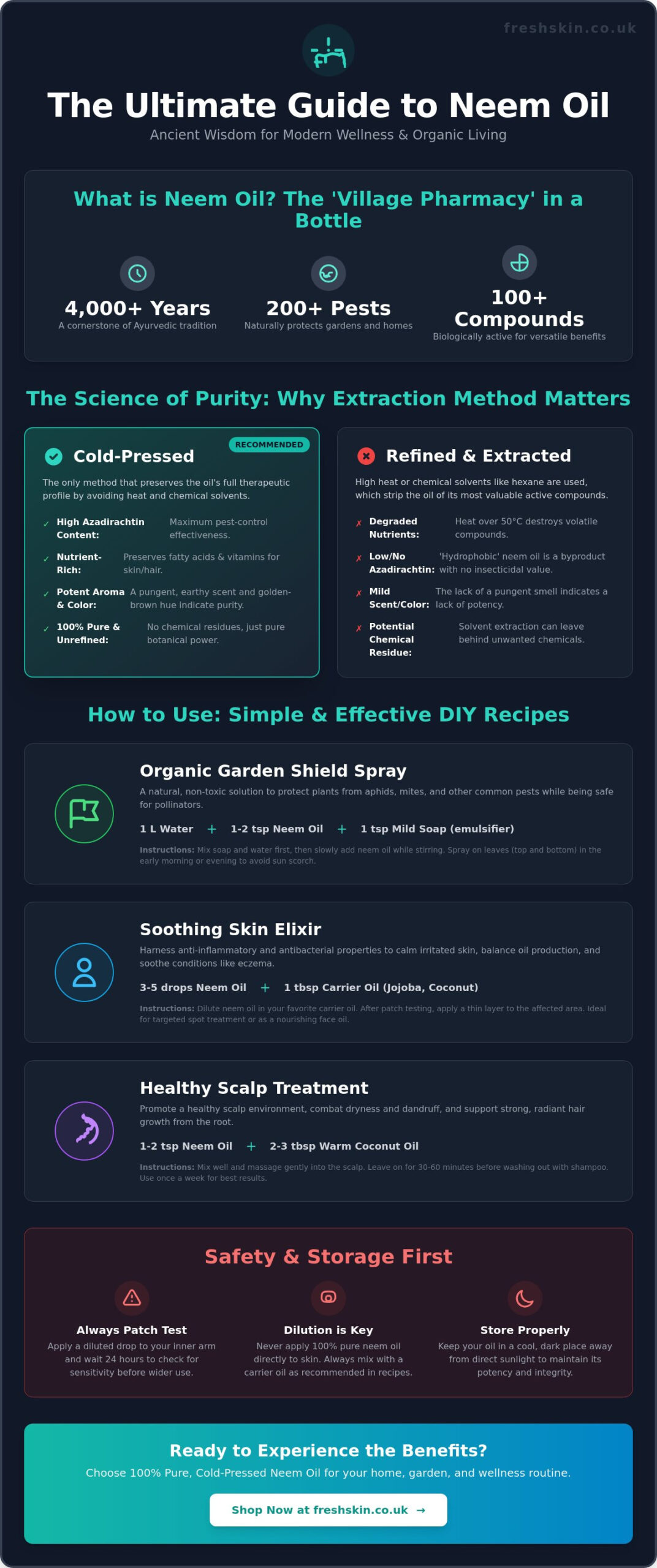
Understanding how your neem oil is produced determines its effectiveness in your home and garden. Most commercial oils undergo harsh processing that strips away the very compounds you’re paying for. At Freshskin, we prioritize cold-pressing because it’s the only way to protect the delicate triterpenoids, specifically azadirachtin, which provide the oil’s therapeutic and insecticidal properties. When seeds are pressed at temperatures exceeding 50°C, these volatile components degrade rapidly, leaving you with a product that lacks biological activity.
Solvent-extracted oils often use chemicals like hexane to maximize yield, while ‘hydrophobic’ neem oil is a byproduct that has had the azadirachtin removed. This is why the Neem Oil Fact Sheet from the NPIC emphasizes that the composition of the oil varies significantly based on how it is processed. For those seeking a natural solution for plant health or skin care, 100% pure, unrefined oil is the only logical choice. Our family-run team ensures every batch meets these rigorous standards of purity.
Cold-Pressed vs. Refined Neem Oil
Refined oils are popular in mass-market cosmetics because they lack the pungent, garlicky aroma of raw neem. However, that scent is a direct indicator of the oil’s potency. If the smell is gone, the medicine usually is too. High-quality neem oil should be thick, viscous, and display a rich golden-brown hue.
| Feature | Cold-Pressed (Unrefined) | Refined/Solvent Extracted |
|---|---|---|
| Nutrient Retention | Maximum (150+ bioactive compounds) | Minimal (Heat-sensitive compounds lost) |
| Scent Profile | Strong, nutty, sulfurous | Faint, odourless, or bleached |
| Colour | Deep golden-brown to dark green | Pale yellow or clear |
Identifying Genuine, High-Quality Oils
You can verify the quality of your oil with the ‘refrigerator test’. Pure neem oil has a high concentration of fatty acids that cause it to solidify at temperatures below 12-15°C. If your oil remains a thin liquid in the fridge, it’s likely been diluted with cheaper carrier oils or synthetic fillers. Genuine oil will become buttery and thick, requiring a gentle warm water bath to return to a liquid state.
Avoid products labelled as ‘neem-scented’ as these often contain synthetic fragrances that offer zero botanical benefits. If you’re interested in learning more about how we verify the integrity of our products, check out our Essential Oils: The Ultimate UK Guide. We believe in total transparency, providing the technical data you need to feel confident in your purchase. You can browse our collection of ethically sourced botanical ingredients to find the perfect match for your wellness routine.
Neem Oil for Plants and Pets: A Natural Shield for Your Garden and Home
Neem oil functions as a powerful systemic biopesticide, offering a botanical alternative to harsh synthetic chemicals. When applied as a soil drench, the plant absorbs the oil through its roots, distributing the active compounds throughout its vascular system. This creates an internal defense mechanism. According to research documented by the National Pesticide Information Center, the primary component, azadirachtin, works by disrupting the hormonal systems of leaf-eating insects. This ‘Stop and Deter’ mechanism ensures that pests lose interest in feeding and fail to reach their next life stage, effectively breaking the reproductive cycle without immediate toxicity to the environment.
One of the most significant advantages of using neem oil is its selective nature. It primarily affects insects that chew on plant tissue. Beneficial pollinators like bees and butterflies, which visit flowers for nectar, are generally safe because they don’t consume the foliage. To ensure maximum safety, we recommend applying neem solutions during the evening. This practice prevents leaf burn from the sun and ensures the spray has dried before pollinators become active the following morning.
Organic Gardening: Eliminating Aphids, Thrips, and Fungus Gnats
UK gardeners face a variety of persistent challenges that neem manages with ease. It’s particularly effective against a broad spectrum of 10+ common pests, including:
- Aphids and Thrips: Preventing these sap-suckers from weakening new growth.
- Fungus Gnats and Whiteflies: Tackling infestations in both greenhouses and indoor pots.
- Spider Mites and Mealybugs: Controlling these stubborn, tiny invaders.
- Caterpillars and Leaf Miners: Protecting the structural integrity of leaves.
- Box Tree Caterpillars and Vine Weevil Larvae: Safeguarding ornamental hedges and root systems.
Beyond insect control, neem serves as a potent antifungal agent. It’s a reliable treatment for ‘Black Spot’ on roses and powdery mildew on vegetable crops like courgettes and cucumbers. Regular application creates a protective barrier on the leaf surface, preventing fungal spores from germinating and spreading through your allotment.
Pet Care: A Natural Alternative to Chemical Flea Treatments
The therapeutic properties of neem extend to our four-legged companions. For dogs suffering from ‘hot spots’ or seasonal dermatitis, a diluted neem solution provides immediate, calming relief. Its natural antiseptic qualities help soothe itchy, inflamed skin while promoting faster healing of minor abrasions. It’s also an excellent tool for managing mange and ear mites, offering a gentle alternative to aggressive chemical treatments.
Safety remains our priority when discussing animal health. While neem is beneficial for canines, neem oil should never be used undiluted on cats or small mammals. Felines are particularly sensitive to certain botanical compounds and lack the liver enzymes needed to process them efficiently. Always consult a veterinarian before introducing new natural remedies into your pet’s wellness routine, and ensure all applications are properly diluted to maintain a safe, comfortable environment for your animals.
Skincare and Haircare: Harnessing Neem’s Ayurvedic Properties Safely
Neem oil is a botanical powerhouse with a history in Ayurvedic traditions spanning over 4,000 years. Its unique chemical profile, rich in bioactive compounds like nimbidin and nimbin, makes it a formidable ally for those managing complex skin concerns. For individuals with acne-prone skin, it works by regulating sebum production while its anti-inflammatory properties visibly calm redness. Unlike harsh synthetic treatments, it maintains the skin’s moisture barrier while addressing bacterial imbalances.
Those living with chronic conditions such as eczema or psoriasis often find relief through its high concentration of Vitamin E and essential fatty acids. These nutrients penetrate deep into the dermal layers to soothe irritation and support the skin’s natural repair processes. Because it is incredibly concentrated, it functions more like an active ingredient than a standard base oil. This potency is why we always emphasize safety and proper preparation at our UK facility.
The Ultimate Neem Dilution Guide for Skin
Pure neem oil is exceptionally potent and requires careful preparation before topical application. We recommend blending it with high-quality carrier oils such as Jojoba or Sweet Almond to ensure skin compatibility. Follow these specific ratios for the best results:
- Facial Care: Use a 1% dilution. This equates to approximately 3 drops of neem per 15ml of carrier oil for leave-on products.
- Body Treatments: A 3-5% concentration is suitable for larger areas or stubborn patches of dry skin.
- Scent Management: Its earthy, nutty aroma can be strong. You can easily mask this by adding a few drops of essential oils like lavender or peppermint.
Neem for Hair: From Scalp Health to Lice Prevention
A healthy scalp is the foundation for vibrant hair. Neem effectively targets the Malassezia fungus, a common cause of dandruff, while its antioxidants protect follicles from environmental stress. For an intensive treatment, create a pre-shampoo mask by mixing neem with coconut oil and massaging it into the scalp for 20 minutes before washing as normal. This provides deep hydration and clears flake buildup efficiently.
If you want to boost hair density, consider combining this routine with our Rosemary Oil Guide for a synergistic growth-focused approach. Beyond daily care, it remains a trusted natural solution for head lice. The azadirachtin found in the oil disrupts the life cycle of lice, preventing them from feeding and breeding without the use of aggressive chemicals. It is a gentle yet effective choice for children and adults alike.
How to Use Freshskin Neem Oil: Storage, Safety, and DIY Recipes
Freshskin operates as a family-run UK supplier dedicated to providing 100% pure, therapeutic-grade oils. Our commitment to quality ensures every bottle of neem oil meets rigorous standards for botanical integrity and effectiveness. To maintain the potency of your oil, store the bottle in a cool, dark cupboard away from direct sunlight. Exposure to high temperatures can degrade the active azadirachtin content in as little as 90 days. When kept at a steady temperature between 15°C and 20°C, your oil will remain shelf-stable and effective for up to 2 years.
Safety is our primary concern. Before you apply any botanical oil to your skin, you must perform a patch test. Apply a single drop of diluted oil to the inside of your elbow or wrist. Monitor the area for 24 hours. If you notice any redness, itching, or inflammation, wash the area immediately and discontinue use. This simple protocol prevents widespread irritation and ensures your self-care routine remains a positive experience.
DIY Recipe: The ‘Golden Garden Spray’
Creating a natural solution for your plants is straightforward and cost-effective. Combine 1 litre of warm water with 5ml of pure neem oil and 2ml of mild castile soap in a spray bottle. The soap acts as an emulsifier to allow the oil and water to mix. Shake the bottle gently before each use to ensure the ingredients remain combined. For active pest infestations, spray the undersides of leaves every 7 days until the problem clears. For preventative maintenance, a single application every 21 days helps keep your garden vibrant and healthy.
Safety Precautions and Contraindications
While neem is a powerful natural tool, it isn’t suitable for everyone. Pregnant women or those actively trying to conceive should avoid neem oil. Research suggests that specific compounds in the oil can impact hormone levels and may act as a natural contraceptive. We recommend consulting a healthcare professional before introducing new botanical products during pregnancy.
The characteristic scent of the oil is often described as a mix of garlic and sulphur. If you find the aroma too intense, you can blend it with 1% to 2% essential oils like lemon or eucalyptus to mask the smell. Our 100% Pure Guarantee means we never use synthetic fragrances to hide the natural scent of our products. Transparency in sourcing ensures you receive a product that is both honest and effective. As we look toward 2026, the role of sustainable botanicals in the UK home is more vital than ever. Choosing ethically sourced oils supports a greener future for your family and the planet.
Embrace the Versatility of Your Botanical Shield
Transitioning to natural solutions is a powerful way to protect your environment and nourish your body. By choosing cold-pressed neem oil, you’re utilizing a botanical powerhouse that contains over 140 bioactive compounds, a fact that has made it a staple of Ayurvedic traditions for over 4,000 years. This single ingredient acts as a sustainable protector for your garden while doubling as a restorative treatment for your hair and skin. It’s a practical, multi-purpose tool for any health-conscious home.
At Fresh Skin, we take our role as your ethical guide seriously. As a family-run UK business, we back every product with our 100% Pure Guarantee, ensuring you receive only ethically sourced botanical ingredients without hidden additives. We’ve spent years perfecting our sourcing to provide the therapeutic quality your family deserves. You’ll find that incorporating these ancient rituals into your daily routine is both simple and deeply rewarding.
Shop our 100% Pure, Cold-Pressed Neem Oil today and take the first step toward a more natural, toxin-free lifestyle.
Frequently Asked Questions
Is neem oil safe for all plants, including indoor houseplants?
Neem oil is safe for the vast majority of indoor and outdoor plants, though you’ll need to be careful with sensitive species like ferns, calathea, or delicate herbs. The University of California IPM program recommends testing a single leaf 24 hours before a full application to check for signs of wilting or spotting. This botanical solution effectively manages 200 different species of chewing and sucking insects without harming the plant’s health when used at a standard 0.5% concentration.
How do I get rid of the strong smell of neem oil on my skin?
You can neutralize the pungent, nutty aroma of the oil by washing your skin with a mixture of lemon juice and warm soapy water. The citric acid in the lemon breaks down the organic sulphur compounds that are responsible for the distinct scent. Our family-run team suggests following this with a scented carrier oil, such as our 100% pure lavender oil, to leave your skin feeling fresh and balanced after use.
Can I use neem oil directly on my face for acne?
You shouldn’t apply pure neem oil directly to your face because its high potency can cause skin irritation or redness. Instead, dilute it to a 2% concentration in a carrier oil like jojoba or almond oil, which is approximately 12 drops per 30ml of base. This therapeutic approach, supported by safety guidelines from the Tisserand Institute, ensures you receive the antibacterial benefits for acne without compromising your skin’s delicate moisture barrier.
Will neem oil kill bees, butterflies, or ladybirds in my garden?
Neem oil won’t harm bees, butterflies, or ladybirds as long as you spray it during the early morning or late evening when these pollinators aren’t active. The Environmental Protection Agency (EPA) classifies neem as a low-risk pesticide because it must be ingested by pests to be effective. Since beneficial insects don’t eat your plant’s leaves, they remain safe from the oil’s insect-growth-regulating properties once the spray has dried completely.
How often should I spray my plants with a neem oil solution?
You should spray your plants every 7 to 14 days to maintain a protective barrier against common garden pests. If you’re dealing with an active infestation of spider mites or aphids, increase the frequency to once every 3 days for a period of 14 days. This consistent schedule ensures that you disrupt the life cycle of the insects at every stage, from egg to adult, using your 100% pure neem oil solution.
What happens if my neem oil has turned solid in the bottle?
Your oil has simply solidified because the ambient temperature has dropped below 21 degrees Celsius. This is a natural characteristic of high-quality, unrefined botanical oils and doesn’t mean the product has expired or lost its efficacy. To return it to a liquid state, gently place the bottle in a bowl of warm water for 10 minutes. Don’t use a microwave, as excessive heat can degrade the therapeutic azadirachtin compounds within the oil.
Is neem oil safe for use on dogs and cats?
Neem oil is safe for topical use on dogs to repel fleas and ticks, but it’s not recommended for cats due to their sensitive metabolic systems. For dogs, a dilution of 1 part neem to 10 parts carrier oil is the standard recommendation for safe application. The Pet Poison Helpline warns that cats often over-groom, which could lead to them ingesting the oil. You should always consult a vet before starting any new botanical treatment for your pets.
Can neem oil be ingested for health benefits?
You should never ingest neem oil as it’s strictly intended for external, botanical, and cosmetic applications only. Clinical studies published in the Journal of Medical Toxicology have documented serious health risks, including metabolic acidosis, after internal consumption of even 5ml of the oil. At Fresh Skin, we prioritize your safety by providing 100% pure neem oil that’s ethically sourced for therapeutic topical use and natural home care, rather than dietary consumption.