

Uncategorized
Jojoba Oil for Oily Skin: The Ultimate 2026 Guide to Balancing Your Complexion
Apr
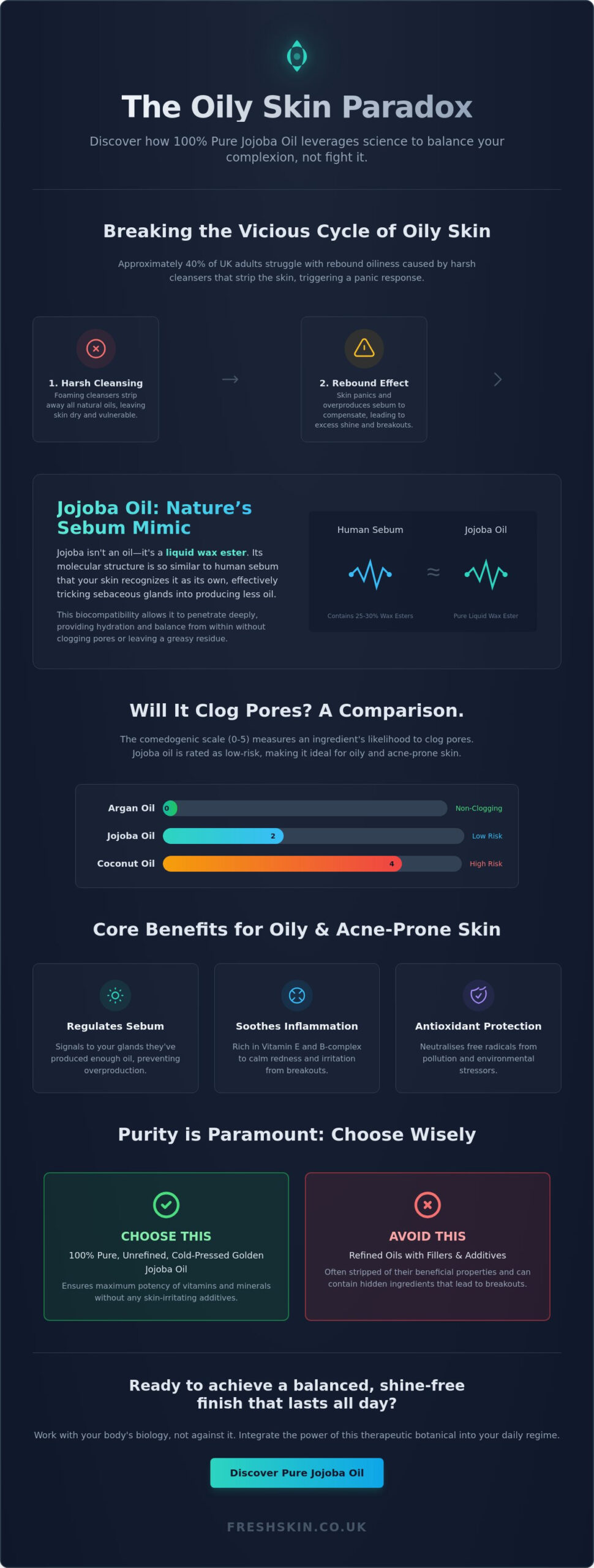
Could the secret to a matte, clear complexion actually be found in a bottle of botanical oil? It sounds counterintuitive to add more moisture when you’re already battling a midday shine that could rival a London skyscraper. However, applying 100% pure jojoba oil for oily skin is one of the most effective ways to tell your sebaceous glands to relax. When you use harsh, foaming cleansers to strip away every trace of grease, your skin often panics and overproduces oil to compensate. This creates a frustrating cycle of breakouts and rebound oiliness that affects approximately 40% of adults in the UK.
We know it’s exhausting to constantly check the mirror for clogged pores or a greasy T-zone. That’s why we’ve compiled this 2026 guide to help you harness the power of liquid wax esters. You’ll discover how this unique plant extract mimics your skin’s natural sebum to balance production, clear blackheads, and provide a lightweight, breathable glow. We’ll walk you through the simple steps to integrate this therapeutic botanical into your daily regime for a balanced, shine-free finish that lasts all day.
Key Takeaways
- Understand why this botanical liquid wax ester is a molecular match for your skin’s sebum, helping to naturally regulate oil production for a clearer complexion.
- Discover how the soothing properties of jojoba oil for oily skin can calm inflammation and provide deep hydration without leaving a heavy or greasy residue.
- Learn the professional steps of the Oil Cleansing Method to effectively dissolve “hard” sebum and clear congested pores for a shine-free glow.
- Compare jojoba with other popular carrier oils to identify the most effective botanical pairings for your unique skincare needs.
- Identify why choosing 100% pure, unrefined Golden Jojoba is essential for avoiding the hidden additives and fillers that can lead to unexpected breakouts.
Understanding Jojoba Oil: Why This Liquid Wax is a Game-Changer for Oily Skin
While it looks and pours like a typical carrier oil, Jojoba oil is technically a liquid wax ester extracted from the seeds of the Simmondsia chinensis shrub. This distinction is vital for anyone managing a shiny T-zone. Most plant oils consist of triglycerides, but jojoba consists of long-chain fatty acids and alcohols that mirror 25% to 30% of the wax esters found in human sebum.
This unique chemical profile makes it exceptionally biocompatible. Your skin recognizes jojoba as a familiar substance, allowing it to penetrate deeper than most botanical oils. In the UK, our complexions face unique challenges. The combination of high seasonal humidity and the drying effects of central heating often leads to “dehydrated oily skin.” This is a condition where the skin produces excess oil to compensate for a lack of internal moisture. Using jojoba oil for oily skin provides a breathable, protective layer that prevents this moisture loss without the suffocating feel of synthetic alternatives.
The Sebum Mimicry Effect
Your skin’s sebaceous glands are highly sensitive to external moisture levels. When you use harsh, foaming cleansers that strip away every trace of grease, your skin often overcompensates by producing even more oil. This is known as the rebound effect. Because jojoba is so similar to the oil your skin naturally produces, applying it can trick your glands into thinking they’ve already released enough sebum.
This creates a natural feedback loop that slows down oil production over time. It’s a far more sustainable approach than using traditional oil-free moisturisers. Those products often rely on silicones that sit on the surface without actually nourishing the skin’s lipid barrier. By integrating jojoba oil for oily skin into your daily ritual, you’re working with your body’s biology rather than fighting against it.
Is Jojoba Oil Comedogenic?
A common concern is whether applying a wax to the face will cause breakouts. Skin specialists use the comedogenic scale, ranging from 0 to 5, to measure how likely an ingredient is to clog pores. Jojoba oil sits at a rating of 2 or lower, which is considered non-clogging for the vast majority of users.
- Jojoba Oil: Rating of 2 (Low risk of clogging).
- Coconut Oil: Rating of 4 (High risk for oily skin).
- Argan Oil: Rating of 0 (Non-comedogenic).
The Science of Balance: How Jojoba Benefits Oily and Acne-Prone Skin
Jojoba isn’t actually an oil. It’s a liquid wax ester that mirrors roughly 25% of human sebum. Because of this molecular match, it regulates sebum production by signaling to your pores that they’ve reached their hydration quota. This prevents the “rebound oiliness” often caused by over-cleansing with foaming washes. Using jojoba oil for oily skin provides a breathable seal that locks in moisture while delivering a concentrated dose of Vitamin E and B-complex vitamins. These nutrients work together to soothe the visible redness and inflammation that often accompany active breakouts, providing a calming effect that synthetic moisturisers often miss.
Many people in the UK struggle with a compromised skin barrier due to hard water or aggressive 10% glycolic acid peels. Jojoba acts as a natural humectant, filling in the gaps between skin cells to prevent transepidermal water loss. Its antimicrobial properties also provide a gentle defense against blemish-causing bacteria, helping to keep your complexion clear without the peeling or tightness associated with traditional treatments. It’s a therapeutic approach that respects the skin’s natural architecture rather than fighting against it. By repairing the damage done by harsh chemicals, jojoba helps your skin return to its most resilient state.
Antioxidant Protection and Healing
Urban living exposes our skin to significant oxidative stress every day. A 2021 dermatology study highlighted how antioxidants like those found in jojoba neutralise free radicals from vehicle emissions and environmental pollutants. Since jojoba is a remarkably stable wax ester, it doesn’t oxidise on the skin surface or go rancid easily. This stability helps heal minor irritations and fades the dark marks left behind after a blemish. As a UK-based, family-run business, we ensure our jojoba meets a 100% Pure guarantee, so you know exactly what you’re putting on your face. If you’re looking for a reliable addition to your routine, our ethically sourced jojoba oil offers the botanical purity your skin deserves.
pH Regulation and Skin Flora
A healthy acid mantle typically sits at a pH of 4.5 to 5.5. When this delicate balance is disrupted, skin flora becomes imbalanced, often leading to increased sebum and a greasy appearance. Jojoba oil for oily skin supports a diverse microbiome by providing a compatible environment for beneficial bacteria to thrive. This leads to a noticeable reduction in midday shine for many users, as the skin no longer feels the need to over-produce oil to compensate for a high pH environment. Maintaining this equilibrium is the secret to a matte, healthy-looking complexion that lasts from morning until night.
Jojoba vs. Other Carrier Oils: Which is Best for Your Skin Type?
Choosing the right botanical oil involves understanding how your skin’s biology interacts with different fatty acid profiles. Many people with overactive sebaceous glands fear that adding more oil will lead to breakouts, but the secret lies in the molecular weight of the extract. While some oils act as occlusives that sit on the surface, jojoba oil for oily skin is unique because it’s technically a liquid wax ester. This allows it to penetrate deeper into the follicular pores rather than just resting on top like Sweet Almond oil, which often feels too rich for those prone to mid-day shine. If you’re looking for a comprehensive breakdown of all your options, our ultimate guide to carrier oils explores the science behind dozens of botanical extracts.
Understanding the difference between “absorbing” and “sitting” is vital for a clear complexion. Heavier oils like Coconut or Avocado create a barrier that can trap bacteria in oily skin types. Jojoba, however, mimics the skin’s natural sebum so closely that it’s readily accepted by the epidermis. It’s also a fantastic partner for Rosehip oil. While jojoba balances oil production, Rosehip provides high levels of Vitamin A to help with skin regeneration. Together, they create a potent duo for those who want to manage grease while also addressing post-blemish marks. According to experts at the Cleveland Clinic, jojoba’s ability to cut down on inflammation makes it a powerful ally for managing the redness often associated with oily, acne-prone skin.
Jojoba vs. Argan Oil for Oily Faces
Argan oil is frequently called “liquid gold” due to its high Vitamin E and antioxidant content. It’s a brilliant choice for mature skin, but its fatty acid profile contains a significant amount of oleic acid. This can sometimes feel slightly “greasy” on a face that already produces plenty of its own oil. Jojoba wins for daily sebum regulation because it doesn’t just hydrate; it sends a signal to your pores to slow down oil production. You should choose argan if your main concern is fine lines and dry patches, but stick to jojoba oil for oily skin if your primary goal is achieving a matte, balanced finish throughout the day.
The Squalane Comparison
Squalane has gained massive popularity in the UK skincare market for its incredibly light, water-like texture. It’s a hydrogenated version of squalene, a lipid naturally found in our skin. While squalane is excellent for basic hydration, jojoba offers more structural support. The wax esters in jojoba provide a more resilient protective layer that helps reinforce the skin’s natural barrier. From a practical perspective, jojoba is also more cost-effective for most households. It boasts a remarkable shelf life of up to 24 months without going rancid, whereas many plant-derived squalane products are more delicate and require faster consumption to remain effective.
How to Incorporate Jojoba Oil into Your Oily Skincare Routine
Integrating a new botanical into your regimen requires a thoughtful approach, especially when managing excess sebum. Jojoba oil for oily skin works best when applied with intention. You can use it as a standalone treatment or as a functional addition to your existing products. These four steps provide a reliable framework for achieving a balanced, matte complexion without stripping the skin’s natural barrier.
- Step 1: The Oil Cleansing Method. Use jojoba to dissolve “hard” sebum and stubborn blackheads that water-based cleansers often miss.
- Step 2: The Moisturiser Booster. Add one or two drops to your daily water-based moisturiser to enhance its emollient properties.
- Step 3: Overnight Balancing. Apply a thin layer directly as a night serum to signal your pores to slow down oil production while you sleep.
- Step 4: Gentle Makeup Removal. Dissolve waterproof mascara and long-wear foundation while conditioning your lashes with natural vitamin E.
The Oil Cleansing Method for Oily Skin
The “like dissolves like” principle is the foundation of effective oil cleansing. Because jojoba’s chemical structure is nearly identical to human sebum, it penetrates deep into the pores to loosen hardened debris. Start your 3-minute ritual by massaging a teaspoon of oil onto dry skin. This physical action breaks down pollutants and makeup. To finish, soak a muslin cloth in warm water and gently steam your face for 30 seconds before wiping away the residue. This leaves the skin refined and soft, never greasy.
DIY Recipes for Oily Skin Balance
Creating your own botanical blends allows for a truly personalised experience. For a Matte-Finish Facial Serum, mix 30ml of jojoba oil with 3 drops of tea tree and 3 drops of lavender essential oil. This 1% dilution rate is the professional standard for facial safety. It provides a potent antimicrobial effect while maintaining the skin’s moisture levels. If you enjoy weekly treatments, try a Purifying Clay Mask Booster. Adding half a teaspoon of jojoba to your clay mask prevents the “cracking” effect that often leads to rebound oiliness. These simple additions ensure your skin remains hydrated while the clay draws out impurities.
Our UK-based, family-run team ensures every bottle meets our 100% Pure guarantee. You can buy pure jojoba oil directly from our ethical collection to start your journey toward balanced skin today.
Choosing the Right Jojoba: Why Purity and Provenance Matter
Not all oils are created equal. When you’re selecting jojoba oil for oily skin, the extraction method dictates the results you’ll see in the mirror. Refined “clear” jojoba has been bleached and deodorised, a process that strips away the essential fatty acids and antioxidants. Golden jojoba is the unrefined, cold-pressed version. It retains its natural nutty aroma and vibrant honey hue. This “liquid gold” contains the full spectrum of tocopherols (Vitamin E) and minerals your skin needs to regulate sebum production effectively.
Cheap alternatives often hide behind “blends.” These products frequently contain high-comedogenic filler oils like mineral oil or isopropyl palmitate. These additives can clog pores and trigger the exact inflammatory breakouts you’re trying to prevent. A 2023 industry analysis found that roughly 15% of tested “natural” oils contained undeclared synthetic ingredients or cheaper substitutes. Choosing a 100% pure product ensures your skin only absorbs what it needs.
Identifying High-Quality Jojoba
Check the label for Simmondsia chinensis. It should be the only ingredient listed. High-quality jojoba feels silky rather than greasy and absorbs within seconds. Our Golden Jojoba Carrier Oil is a staple for UK skincare enthusiasts because it remains unadulterated and potent. Look for a deep golden colour. If the oil is pale or scentless, it’s likely been over-processed.
The Freshskin Difference
We’re a UK-based, family-run business. Our heritage is built on therapeutic quality rather than mass-market shortcuts. We source directly from trusted producers to maintain a transparent supply chain. This ensures every bottle meets our 100% pure guarantee. You can explore our range of pure carrier oils and start your natural skincare journey today.
Jojoba is technically a liquid wax, making it more stable than traditional vegetable oils. It can stay fresh for up to 24 months if stored correctly. Follow these simple steps to protect your investment:
- Keep the bottle in a cool, dark cupboard away from direct sunlight.
- Ensure the cap is tightly sealed after every use to prevent oxidation.
- Avoid introducing water into the bottle, as moisture encourages microbial growth.
- Use a clean dropper or pump to maintain the purity of the remaining oil.
By choosing a high-quality, ethically sourced oil, you’re giving your skin the best chance to find its natural balance. Quality matters because your complexion deserves nothing less than botanical excellence.
Embrace a Balanced Complexion for 2026
Achieving a clear, matte finish doesn’t require harsh chemicals that strip your skin’s natural barriers. By mimicking the skin’s natural sebum, jojoba oil for oily skin provides a unique biological solution that signals your pores to slow down oil production. This liquid wax offers a lightweight texture that absorbs quickly without clogging pores, making it a staple for any modern botanical routine. At Fresh Skin, we’ve spent over 10 years perfecting our selection of therapeutic-grade oils to ensure you receive the highest quality ingredients. Our family-run UK business prioritizes transparency and ethical sourcing, so you can trust the provenance of every drop. Switch to a natural approach that respects your skin’s delicate chemistry and enjoy the lasting benefits of a balanced, healthy glow. Investing in high-purity botanicals ensures your skin receives the essential nutrients it needs without the risk of irritation. You’re not just buying an oil; you’re joining a community of natural wellness enthusiasts who value quality and integrity.
Shop 100% Pure Golden Jojoba Oil for your skincare routine
Frequently Asked Questions
Will jojoba oil cause me to break out if I have acne-prone skin?
Jojoba oil is highly unlikely to cause breakouts because it has a low comedogenic rating of 2 out of 5. This means it won’t clog your pores. Since its molecular structure is nearly identical to human sebum, your skin recognizes it and stops overproducing its own oils. Our 100% pure jojoba oil for oily skin helps maintain a clear complexion by dissolving existing blockages and soothing inflammation without the heavy feel of traditional nut oils.
How often should I apply jojoba oil to my oily face?
You should apply jojoba oil to your face twice daily, once in the morning and once before bed. For the best results, massage 3 drops into damp skin after cleansing. This routine helps regulate sebum production throughout a 24 hour period. If your skin feels particularly greasy by midday, you might reduce your morning application to just 1 drop while keeping the evening ritual consistent to support overnight repair.
Can I use jojoba oil under my makeup during the day?
You can certainly use jojoba oil as a natural primer under your makeup. It absorbs quickly and creates a smooth, satin-like surface that helps foundation sit better without sliding. We recommend waiting exactly 5 minutes after application to allow the botanical esters to sink in fully. This prevents your cosmetics from breaking down prematurely, which is a common issue for those managing excess oil in the UK’s humid climate.
Do I need to use a moisturiser if I am already using jojoba oil?
You don’t always need a separate moisturiser when using this liquid wax, as it provides both hydration and protection. Jojoba oil for oily skin acts as an occlusive layer that seals in moisture while softening the skin’s surface. However, if your skin feels dehydrated, you can mix 2 drops into your water-based cream. This combination ensures you get the benefits of humectants alongside the balancing properties of our ethically sourced jojoba.
Is jojoba oil better than tea tree oil for oily skin?
These two botanical extracts serve different functions and often work best when used together. Jojoba oil focuses on balancing sebum levels and repairing the skin barrier, whereas tea tree oil is a potent antimicrobial that targets acne-causing bacteria. A 2022 study showed that tea tree is effective at 5% concentrations, but it can be drying. Combining it with a jojoba carrier oil ensures your skin stays calm and hydrated during treatment.
How long does it take to see results when using jojoba for sebum control?
Most users begin to notice a visible reduction in surface shine within 14 to 21 days of consistent use. This timeframe aligns with the typical 28 day skin cell turnover cycle found in healthy adults. Your sebaceous glands need this period to adjust their output based on the new moisture levels. By the end of the first month, you’ll likely see a more matte finish and refined pore appearance across your T-zone.
Can I use jojoba oil if I have “combination” skin?
Jojoba oil is an excellent choice for combination skin because it intelligently balances both dry and oily patches. It provides lightweight moisture to dry cheeks while signaling the oilier T-zone to reduce sebum production. Applying 2 drops across your entire face helps unify your complexion’s texture. This versatile botanical treatment ensures that no part of your face feels neglected or overly greasy, making it a staple for UK skincare enthusiasts.
What is the difference between jojoba oil and jojoba wax?
There is actually no difference between the two, as jojoba oil is technically a liquid wax ester rather than a true vegetable oil. It contains about 97% wax esters, which explains why it doesn’t go rancid as quickly as almond or sunflower oils. This unique chemical composition allows it to remain shelf-stable for up to 3 years. When you buy our therapeutic grade jojoba, you’re getting this pure, stable wax in its most effective liquid form.