

Uncategorized
How to Store Essential Oils Long Term: The Ultimate 2026 Preservation Guide
May
Did you know the global essential oils market is projected to reach $22.82 billion in 2026? This surge in popularity means more enthusiasts are bringing botanical extracts into their homes, yet many struggle to keep those precious liquids fresh. You’ve likely experienced the disappointment of a favorite Lavender or Tea Tree oil losing its vibrant aroma or becoming thick and cloudy. It’s frustrating to waste money on spoiled products; more importantly, the safety concerns regarding using oxidized oils on your skin are very real.
We believe that your wellness tools should be as reliable as the plants they come from. This guide shares the professional techniques you need to master how to store essential oils long term, protecting the therapeutic potency of your collection for years. We will walk you through a clear storage system that guards against light and heat, explain the latest 2026 safety regulations for child-resistant packaging, and help you identify which oils to prioritize so you can use every drop with complete confidence.
Key Takeaways
- Understand the chemistry of oxidation to prevent your botanical extracts from losing their therapeutic benefits and aromatic purity.
- Master how to store essential oils long term by choosing amber glass containers that filter harmful UV rays and minimize oxygen exposure.
- Learn to prioritize your collection by identifying which oil families, such as citrus and needle oils, have shorter shelf lives.
- Discover why consistent temperature stability is more effective for preserving oil integrity than extreme cold or refrigeration.
- Establish a simple six-month audit routine to identify the subtle signs of aromatic change and ensure your oils remain safe for skin application.
The Science of Essential Oil Degradation: Why Storage Matters
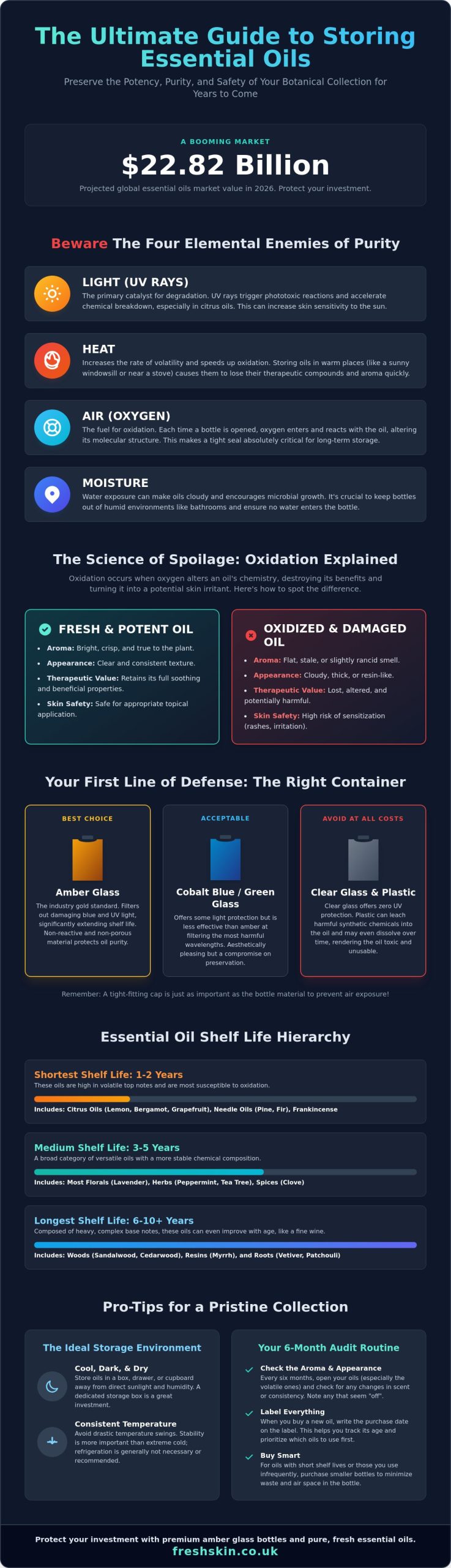
Every bottle of botanical extract represents a complex symphony of chemistry. An Essential oil is composed of volatile organic compounds that are naturally predisposed to react with their surroundings. Understanding these reactions is the first step in learning how to store essential oils long term. When these delicate molecules are exposed to what we call the “Four Elemental Enemies” (Light, Heat, Air, and Moisture), they begin a process of degradation that is irreversible. This breakdown doesn’t just diminish the scent; it fundamentally alters the oil’s therapeutic value.
Oxidation is the most common form of chemical breakdown. It occurs when oxygen molecules from the air interact with the oil’s chemical components, changing their molecular structure. This process creates new, aggressive compounds that can be highly irritating to the body. While a fresh Lavender oil is known for its soothing properties, an oxidized version can become a skin sensitizer. This means it can cause rashes, redness, or allergic reactions where none existed before. Your storage choices are about more than just preserving a fragrance; they’re about maintaining the safety and integrity of your botanical investment.
Understanding Volatility and Molecular Weight
Volatility refers to how quickly a substance turns into a gas and evaporates at room temperature. In the world of aromatherapy, we categorize oils by their “notes,” which is essentially a measure of their molecular weight. Top notes like Peppermint or Eucalyptus have small, light molecules that escape the bottle the moment you open the lid. Base notes possess larger, heavier molecules that resist evaporation. Because top notes are so light and reactive, they’re often the first to succumb to environmental stressors. Protecting these lighter molecules is a primary goal when considering how to store essential oils long term.
The Dangers of Phototoxicity and Oxidation
Light is a particularly aggressive catalyst for chemical change. UV rays can trigger phototoxic reactions, especially in citrus oils, which can make your skin more sensitive to sun damage. You can often spot a spoiled oil by its physical appearance. It might look cloudy or develop a thick, resin-like consistency that differs from its original texture. The aroma will also shift, losing its bright, crisp character and taking on a flat or slightly rancid smell. If an oil shows these signs, don’t use it for topical application. Using oxidized oils on your skin can lead to severe irritation, regardless of how pure the oil was when you first purchased it.
Choosing the Right Containers for Long-Term Preservation
While the room’s temperature is vital, the vessel you choose serves as the primary barrier between your oils and the elements. Selecting the right container is a non-negotiable step in learning how to store essential oils long term. Glass is the industry gold standard for a reason. Unlike plastic, glass is non-reactive and non-porous. Pure essential oils are incredibly potent; they contain concentrated chemical constituents that can actually dissolve certain types of plastic over time. This process, known as leaching, doesn’t just ruin the container. It introduces synthetic chemicals into your botanical oils, rendering them unsafe for therapeutic use.
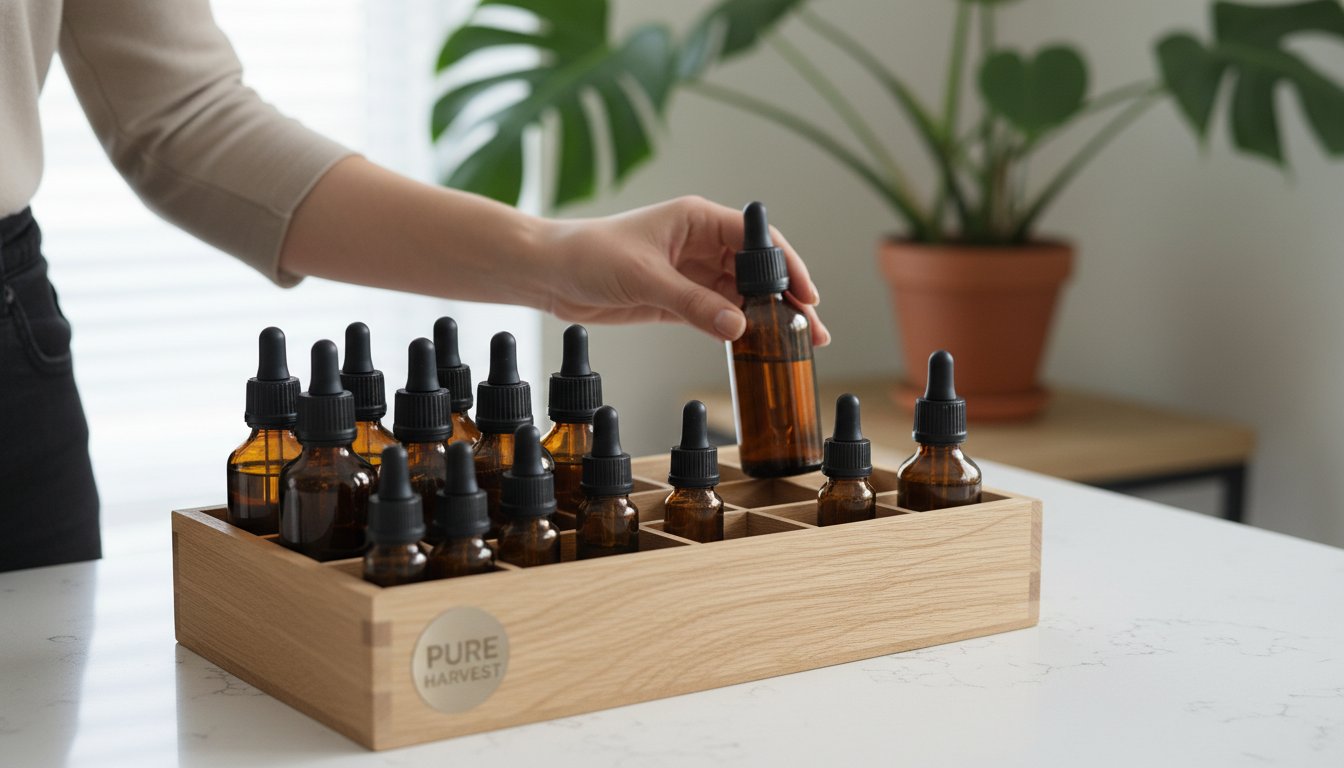
The seal on your bottle is just as important as the material itself. Oxygen is a persistent enemy of purity. Every time you leave a lid loose, you invite the air to begin the process of Oxidation and the Shelf Life of Essential Oils. This chemical reaction slowly strips the oil of its vitality. To prevent this, ensure your bottles have tight-fitting, phenolic caps or dripper inserts that minimize the surface area of the oil exposed to the air. If you’re looking to upgrade your storage system, choosing reliable Amber Glass Bottles with Droppers is a practical way to manage your collection while maintaining the highest standards of purity.
Why Amber Glass is the Industry Standard
Light is a catalyst for chemical breakdown. While cobalt blue and green glass bottles are aesthetically pleasing, they don’t offer the same level of protection as amber. Amber glass is uniquely capable of filtering out the specific blue and ultraviolet wavelengths that accelerate the degradation of delicate molecules. By blocking these rays, amber glass can significantly extend the shelf life of your collection compared to clear or lightly tinted alternatives. For those who value both safety and longevity, using Freshskin’s amber glass bottles ensures that your oils remain in a dark, protected environment even when they’re out on your counter.
Bulk Storage vs. Individual Use Bottles
If you’ve invested in wholesale carrier oils or large volumes of essential oils, your storage strategy needs to adapt. The biggest threat to a half-empty bottle is “headspace.” This refers to the volume of air sitting above the liquid. As you use your oil, the headspace increases, providing more oxygen for the oil to react with. To combat this, we recommend decanting your oils into smaller bottles as you use them. Keeping the liquid level high minimizes air contact and preserves the oil’s potency. This simple decanting technique is one of the most effective ways to protect your botanical investment over several years.
The Essential Oil Shelf Life Hierarchy: What Lasts and What Doesn’t
Not every bottle in your collection shares the same destiny. While some extracts remain stable for a decade, others are remarkably fleeting, losing their vitality in just a fraction of that time. Understanding this natural hierarchy is a vital part of mastering how to store essential oils long term. The chemical makeup of the plant determines its resilience. By categorizing your oils into botanical families, you can better predict which ones need the most vigilant care and which ones will gracefully mature.
The speed at which an oil breaks down is largely dictated by its molecular components. Research into The Science of Essential Oil Degradation highlights how specific compounds react more aggressively to their environment than others. For instance, oils dominated by monoterpenes are far more sensitive to oxygen than those rich in heavier sesquiterpenes. This chemical reality creates a clear timeline for your storage strategy, allowing you to prioritize the use of your most delicate oils before they lose their therapeutic value.
Short-Lived Oils (1-2 Years)
Citrus and needle oils are the high-maintenance members of the botanical world. Extracts like Lemon, Grapefruit, and Tea Tree Essential Oil are prized for their bright, crisp aromas, but these are also the most volatile. Because they’re rich in monoterpenes, they oxidize rapidly when exposed to air. Typically, these oils have a functional shelf life of 1 to 2 years. To keep them fresh, you must be disciplined about closing the lid immediately and keeping them in a consistently cool environment. Once these oils begin to cloud or lose their “sparkle,” they should no longer be used for topical applications.
Intermediate oils, such as Lavender, Peppermint, and Rosemary, offer a bit more flexibility. These usually stay fresh for 2 to 3 years. They contain a balanced mix of alcohols and esters that provide better stability than the citrus group, though they still require the same protection from the elements to maintain their soothing properties.
Long-Lived and ‘Vintage’ Oils (5+ Years)
At the other end of the spectrum are the “vintages.” Woody and resinous oils, such as Sandalwood, Patchouli, and Vetiver, are the rare exceptions that often improve with age. Their heavy molecular weight causes them to thicken over time, developing deeper and more complex aromatic profiles. Some of these base notes can remain potent for 5 to 10 years if handled correctly. However, don’t let their longevity lead to complacency. Even these robust oils aren’t invincible. While they resist oxidation better than a citrus oil, they still require strict protection from UV light and extreme heat to prevent their delicate chemical nuances from becoming distorted or flat.
Establishing the Perfect Storage Environment
Finding the right location for your collection is the final piece of the preservation puzzle. While we’ve discussed the importance of the bottle itself, the external environment acts as a secondary shield. When considering how to store essential oils long term, temperature stability is more important than absolute cold. Fluctuating temperatures cause the liquid to expand and contract. This movement can draw air through the seal and accelerate oxidation. Aim for a consistent range between 15°C and 20°C (60-70°F) to maintain molecular calm. Humidity is another silent factor; moisture can settle around the cap and eventually find its way inside, potentially compromising the oil’s purity.
Creating a ‘dark zone’ is a simple yet effective strategy. A dedicated aromatherapy chest or a cool, dark cupboard away from the steam of the bathroom or the heat of the kitchen is ideal. Practice safe handling by never touching the dropper or orifice reducer directly to your skin or other surfaces. This prevents cross-contamination, ensuring your oils remain as pure as the day they were distilled. If you are looking to start your collection with high-quality extracts, you can buy pure Lavender or Peppermint essential oil from our ethically sourced range.
Refrigeration: Pros, Cons, and Best Practices
Storing certain oils in the refrigerator is a brilliant way to extend their life, particularly for high-monoterpene oils like Lemon or Eucalyptus. However, it requires a specific approach. Always place your oils in a sealed container within the fridge to prevent their potent aromas from migrating to your food. Some oils, like Rose or Aniseed, may crystallize or solidify in cold temperatures. This isn’t a sign of spoilage. Simply let the bottle reach room temperature before use, and the liquid will return to its natural state. Avoid frequent ‘thermal shock’ by only taking out the oils you need for immediate use.
Organising and Labelling for Inventory Control
A professional storage system relies on accurate data. While bottles often have a ‘best before’ date, the ‘Date of Opening’ is far more relevant for safety. The moment the seal is broken, the clock starts on oxidation. Use waterproof labels to mark this date clearly. Essential oils can easily dissolve standard ink, so specialized labels ensure your records remain legible. Implement a ‘first-in, first-out’ rotation system. By keeping older oils at the front of your shelf, you ensure they are used while their therapeutic potency is at its peak. This disciplined approach is the most reliable way to master how to store essential oils long term.
Maintaining Your Collection: Freshskin’s Professional Tips
Maintaining a botanical collection is a continuous journey of care that extends beyond the initial setup. Even after you’ve mastered how to store essential oils long term, a regular audit is the only way to ensure every bottle remains at its therapeutic peak. We recommend a full review of your collection every six months. During this check, examine each bottle for changes in consistency, color, or clarity. If a previously clear oil like Tea Tree or Peppermint has become cloudy or significantly thicker, it’s a sign that the chemical components have begun to shift.
The “Scent Test” is your most reliable diagnostic tool for identifying these subtle changes. A fresh oil should possess a crisp, multi-layered aromatic profile that reflects its plant of origin. If your Eucalyptus or Rosemary starts to smell flat, dusty, or takes on a sharp, turpentine-like edge, oxidation has likely taken place. While these changes are a natural part of an oil’s lifecycle, recognizing them early prevents the accidental application of sensitized oils to the skin. This proactive approach ensures your rituals remain both safe and effective.
Repurposing Oxidised Essential Oils
When an oil is no longer suitable for topical use, it doesn’t need to be discarded. You can find many eco-friendly ways to use oils that have lost their skin-safe status. Older oils can be repurposed into powerful household cleaners or used to freshen bins and carpets. A few drops of oxidized Lemon or Tea Tree can be added to a floor wash for a natural boost. However, your safety is our priority; you should never ingest or diffuse oils that show signs of heavy oxidation. The altered molecular structure can be irritating to the respiratory system and the delicate lining of the gut.
The Freshskin Quality Guarantee
Sourcing pure essential oils is the most important first step in long-term success. The “storage clock” begins the moment an oil is distilled, so starting with the freshest possible product is vital. Our direct-from-producer sourcing model ensures that your oils haven’t spent months sitting in a warehouse before they reach your home. We’re committed to providing the highest quality aromatherapy supplies, from our calming Lavender to our protective storage vessels. Shop our range of amber glass and essential oils today to ensure your botanical investment is protected by quality from the very first drop.
Mastering the Art of Botanical Longevity
Your essential oil collection is more than just a set of scents; it’s an investment in your holistic well-being. By prioritizing amber glass storage and maintaining a stable, cool environment, you’ve taken the most critical steps in learning how to store essential oils long term. Remember that while citrus oils require quick rotation, your heavy base notes will continue to deepen in character if protected from light and air. Regular six-month audits ensure that every drop remains safe for your skin and effective for your rituals.
At Freshskin, we’ve been a family-run UK business since 2010. We’re dedicated to helping you maintain the purity of your oils through direct-from-grower sourcing and premium supplies. With thousands of 5-star reviews for our purity and service, we’re here to support your journey into natural living. Protect your collection with our professional amber glass bottles and enjoy the peace of mind that comes with high-quality preservation. Your path to a lasting, potent botanical library starts with the right tools and a little mindful care.
Frequently Asked Questions
How long do essential oils really last if stored correctly?
Essential oils generally last between one and ten years depending on their chemical composition. Citrus oils like Lemon have the shortest life, typically one to two years, while base notes like Patchouli can actually improve over five to ten years. Understanding these timelines is essential for anyone learning how to store essential oils long term to ensure they remain safe and effective for your daily wellness rituals.
Can I store my essential oils in the fridge?
You can store essential oils in the fridge to significantly slow down the oxidation process. This is particularly beneficial for delicate citrus and needle oils that are prone to rapid degradation. Ensure they’re kept in a sealed, airtight container to prevent their potent aromas from affecting food. Always let the oil return to room temperature before opening the bottle. This prevents condensation from forming inside, which could introduce moisture and spoil the oil.
What happens if I use an essential oil that has expired?
Using an expired or oxidized essential oil often leads to skin irritation or sensitization. As the chemical structure changes, the oil loses its therapeutic benefits and may cause rashes or redness. If the aroma has turned flat or the liquid looks cloudy, it’s best to stop using it topically. You can still use these oils for household cleaning tasks like freshening your bin or cleaning floors with a natural botanical boost.
Why do some essential oils get thicker over time?
Some essential oils thicken naturally as they age, especially resinous base notes like Sandalwood or Vetiver. This is a sign of the oil maturing and developing a deeper aromatic profile. However, if a thin oil like Lemon becomes thick or resin-like, it’s usually a sign of heavy oxidation. In these cases, the change indicates that the oil’s chemical integrity has been compromised and it’s no longer suitable for skin application or aromatherapy.
Is it okay to store essential oils in plastic bottles for a short time?
You should avoid storing pure essential oils in plastic containers, even for a short period. The concentrated compounds in the oil can dissolve plastic, leading to leaching and contamination. This process ruins both the container and the oil, making it unsafe for use. Always choose amber glass bottles to maintain the purity of your collection and prevent chemical reactions between the oil and the packaging, even during a quick transfer.
Should I keep the orifice reducer (dropper) in the bottle?
It’s best to keep the orifice reducer in the bottle because it limits the amount of air that enters the container. This small plastic insert reduces the surface area of the oil exposed to oxygen, which is a key part of how to store essential oils long term. Just ensure you don’t touch the reducer directly with your fingers. This simple habit prevents you from introducing bacteria or cross-contaminating your precious botanical extracts.
How can I tell if my essential oil has oxidised?
You can identify oxidation through changes in scent, clarity, and consistency. An oxidized oil will lose its bright, characteristic aroma and may smell flat or slightly like turpentine. Physically, the oil might appear cloudy or develop a thicker, stickier texture than usual. If you notice any of these signs during your six-month audit, it’s a clear indication that the oil has reached the end of its therapeutic life and should be repurposed.
Does heat destroy the therapeutic properties of essential oils?
Prolonged exposure to heat damages the delicate chemical components of essential oils. High temperatures accelerate volatility, causing the therapeutic molecules to evaporate or break down much faster. This is why it’s vital to keep your collection away from radiators, windowsills, or electronic equipment. Maintaining a stable, cool environment is the most effective way to preserve the integrity and healing potential of your botanical oils, ensuring they remain potent for years.