

Uncategorized
Bulk Soap Making Ingredients UK: The Professional Sourcing Guide for 2026
Jun
Did you know that 74% of consumers now actively avoid synthetic soaps in favour of natural, botanical alternatives? For an artisan maker, this shift represents a massive opportunity, yet the path to scaling often feels blocked by the search for reliable bulk soap making ingredients UK suppliers. You’ve likely felt the sting of a ruined batch due to inconsistent oil quality or watched your margins vanish under the weight of heavy shipping fees. It’s a common hurdle when moving from small-scale crafting to a professional business model.
We understand that your craft is built on trust and transparency. In this guide, we’ll show you how to source premium ingredients, from organic virgin coconut oil to therapeutic lavender and rosemary essential oils, without compromising your ethics or your bank account. You’ll discover how to navigate the 2026 regulatory landscape, including managing CPSR costs that now range from £75 to £210 per recipe. We provide a clear roadmap for lowering your cost-per-unit and building a partnership with a supplier that values purity as much as you do.
Key Takeaways
- Understand the economic shift from retail kits to wholesale sourcing to scale your soap business sustainably and professionally.
- Master the science of balancing fatty acid profiles when selecting your bulk soap making ingredients UK to achieve the ideal lather, hardness, and skin-feel.
- Learn professional scenting techniques, including how to manage flash points and use natural anchors to keep your essential oils vibrant for longer.
- Protect your investment by implementing robust inventory management systems like the FIFO method to ensure maximum ingredient freshness and potency.
- Discover why ingredient provenance and direct grower relationships are essential for maintaining the high standards your health-conscious customers expect.
The Essentials of Sourcing Bulk Soap Making Ingredients in the UK
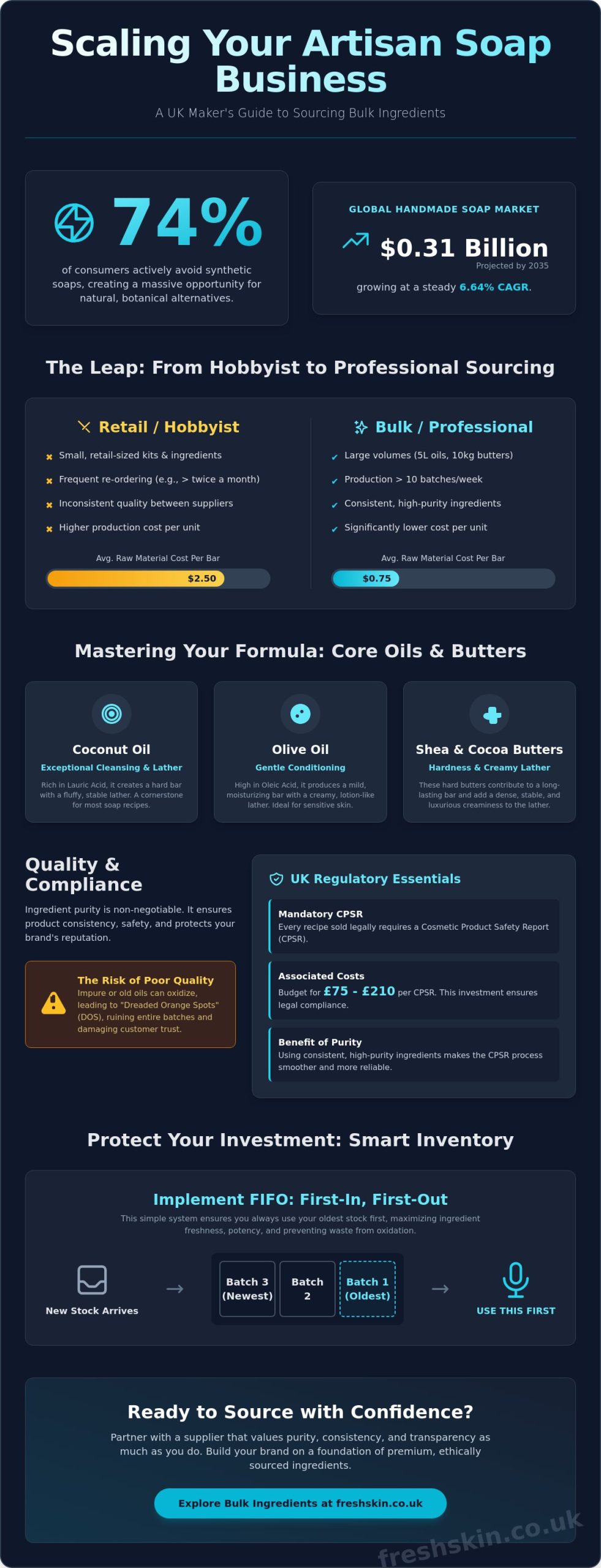
Moving from small-batch crafting to a professional business model requires a shift in mindset. It’s no longer just about the joy of creation; it’s about precision, scalability, and financial sustainability. For many artisan makers, the first major step is identifying a reliable source for bulk soap making ingredients UK to ensure their brand remains competitive as the market grows. The global handmade soap market is projected to reach USD 0.31 billion by 2035, growing at a steady 6.64% CAGR. This growth signals a massive opportunity for those who can maintain high quality while managing their production costs effectively.
Bulk sourcing in the UK soap industry is the strategic transition from purchasing retail-sized kits to procuring raw materials in volumes that support continuous, professional-grade production.
Transitioning from Hobbyist to Bulk Purchases
Recognising the tipping point is essential for your business health. Usually, this happens when your weekly production exceeds ten batches or when you find yourself ordering supplies more than twice a month. Moving to 5L containers of carrier oils or 10kg blocks of butters might seem like a large initial investment, but it significantly reduces your cost-per-unit. While a basic bar of handmade soap can cost between $0.75 and $2.50 in raw materials, buying in bulk allows you to lean towards the lower end of that spectrum. This protects your margins and allows for more reinvestment into your brand’s growth.
Why Ingredient Purity Impacts Your Finished Product
Consistency is the heartbeat of a successful brand. When you use high-quality bulk soap making ingredients UK, you ensure that every bar behaves exactly like the last. This reliability is rooted in the process of saponification, where your lye and oils react to create soap. If your oils are inconsistent or contain hidden fillers, the chemical reaction can falter, leading to soft batches or uneven textures.
Poor quality oils are often the culprit behind “Dreaded Orange Spots” (DOS), which occur when oils oxidise prematurely. By sourcing pure, ethically produced ingredients like organic virgin coconut oil or shea butter, you eliminate these variables. Professional-grade supplies also ensure you stay compliant with UK cosmetic regulations. Every recipe you sell legally requires a Cosmetic Product Safety Report (CPSR), which currently costs between £75 and £210. Using consistent, high-purity ingredients makes this regulatory process smoother. You won’t have to worry about batch-to-batch variations affecting your safety assessments or the well-being of your customers.
Understanding the Core Oils and Butters for Professional Soap Making
Creating a high-performance bar of soap is an exercise in chemistry and balance. When sourcing bulk soap making ingredients UK, your choices determine the longevity, skin-feel, and marketability of your finished product. Most professional recipes revolve around the ‘Big Three’: coconut oil for its exceptional cleansing properties, olive oil for its conditioning qualities, and palm oil for structural hardness. Balancing these fatty acid profiles ensures your soap doesn’t just clean, but also provides a luxurious experience that keeps customers returning. Understanding how lauric, palmitic, and oleic acids interact is the difference between a bar that disintegrates and one that lasts for weeks.
For those positioning their brand in the premium or organic space, using Organic virgin coconut oil is a strategic move. It offers a cleaner label and a subtle, natural aroma that resonates with health-conscious consumers who value purity. As you refine your formulations, remember that all ingredient choices must align with UK cosmetic regulations to ensure safety and legal compliance. This transparency builds long-term trust with your audience, showing that you value their well-being as much as the quality of your craft.
Hard Butters vs. Liquid Carrier Oils
Hard butters like Shea and Cocoa are essential for creating a dense, creamy lather and a bar that won’t melt away in the shower. Shea butter is particularly valued for its high unsaponifiables, which leave a protective layer on the skin after rinsing. In contrast, liquid oils like Sweet Almond Carrier Oil add a gentle, silky quality to the lather, making it ideal for sensitive skin formulations. When working with your bulk soap making ingredients UK, it’s best to gently melt solid fats over low heat in a dedicated vessel. This ensures a uniform consistency before mixing with your lye solution, preventing “stearic spots” and ensuring your finished soap has a professional, smooth texture.
The Role of Specialty Ingredients
Specialty oils allow you to target specific skin concerns or create niche products like beard soaps or facial bars. Golden Jojoba Carrier Oil is a standout choice for high-end facial soaps because it mimics the skin’s natural sebum, making it incredibly bio-compatible and soothing. Moroccan Argan Oil serves as a potent addition to hair and shave bars, providing deep nourishment and a touch of luxury. If you are venturing into liquid soaps or want to achieve better transparency in specific designs, Fractionated Coconut Oil is an ideal solution. It remains liquid at room temperature and offers a lightweight, non-greasy finish. You can explore our collection of premium oils to find the exact ingredients needed to elevate your recipes from standard to extraordinary.
Selecting Scents: Bulk Essential Oils vs. Fragrance Oils
Choosing the right scenting strategy is a pivotal decision for any artisan business. It influences your target audience, your pricing, and your brand’s core values. When you invest in bulk soap making ingredients UK, you’re essentially deciding whether to lead with botanical therapy or evocative, trend-led aromas. Both paths require a deep understanding of safety standards; particularly the International Fragrance Association (IFRA) guidelines and the advice provided by the Cosmetic, Toiletry and Perfumery Association (CTPA). These organisations ensure your products remain safe for consumer use while meeting professional industry benchmarks. Adhering to these standards is not just about compliance; it’s about building a reputation for integrity and care.
When to Choose Pure Essential Oils for Aromatherapy Soap
Pure essential oils are the gold standard for makers targeting the clean beauty demographic. The enduring popularity of Lavender Essential Oil in the UK market proves that customers still crave traditional, calming scents. For a more invigorating experience, blending Peppermint and Eucalyptus creates spa-style bars that are perfect for morning rituals. Essential oils provide a holistic scent profile that allows you to market your soap as a therapeutic experience rather than just a cleansing tool. Working with them in cold process soap requires skill. You must account for flash points, which is the temperature at which an oil’s vapour can ignite, and use scent anchor techniques like adding kaolin clay to prevent the aroma from fading during the six-week cure.
The Benefits of Fragrance Oils for Complex Scent Profiles
While essential oils offer natural purity, fragrance oils provide unparalleled versatility and consistency. They allow you to tap into nostalgic or seasonal trends that natural botanicals simply can’t replicate. Popular profiles like Baby Powder and Fresh Linen have immense domestic appeal. These scents offer a sense of familiar comfort that is highly marketable for everyday use. Fragrance oils are also generally more stable during the saponification process. This means the scent you smell in the bottle is exactly what the customer will experience in the shower. Safety remains paramount when selecting bulk soap making ingredients UK; even synthetic scents must be used within strict IFRA usage limits to prevent skin sensitivity. By balancing these two scenting methods, you can create a diverse product range that caters to both the aromatherapy enthusiast and the customer looking for a beautifully scented household essential.
Practical Strategies for Managing Bulk Soap Supplies
Once your workshop is filled with large containers, your focus shifts from procurement to preservation. Effective management of your bulk soap making ingredients UK ensures that your raw materials remain as potent as the day they arrived. The “First In, First Out” (FIFO) method is the industry standard for maintaining freshness. By labelling every container with its arrival date and batch number, you ensure older stock is used before newer arrivals. This simple habit prevents expensive oils from sitting at the back of the shelf and losing their therapeutic properties. It also creates a clear paper trail, which is essential for your manufacturing logs and regulatory compliance.
Handling large volumes requires the right tools to maintain accuracy and safety. Invest in heavy-duty pumps for your 5L and 25L oil containers to prevent physical strain and messy spills. High-precision digital scales that can handle larger weights are non-negotiable. When dealing with bulk quantities of Sodium Hydroxide (Lye), safety protocols must be strictly followed. Always wear appropriate gloves and eye protection. Work in a well-ventilated space and remember the golden rule: always add lye to water, never the other way around. This prevents dangerous heat reactions that can occur when water hits a large mass of caustic soda.
Optimising Storage and Maintaining Shelf Life
Bulk oils are sensitive to temperature fluctuations and UV light. Store your supplies in a cool, dark environment to slow down the natural process of oxidation. If you decant larger volumes into smaller working portions for daily use, Amber Glass Bottles are vital for protecting light-sensitive liquids from degradation. Regularly check your oils for a rancid smell or a significant change in colour. These are clear indicators that the fatty acids have turned, which can lead to the “Dreaded Orange Spots” mentioned earlier in this guide. You can order your professional-grade storage and ingredients directly from our Nottingham warehouse to keep your production line moving smoothly.
Calculating Ratios and Scaling Recipes Safely
Scaling a recipe is rarely a simple case of multiplication. While a 3% scent load might work for a small test batch, it may behave differently in a 20kg pour due to different heat retention levels. Use reliable soap calculators to adjust for lye purity and water ratios in every single batch. Never “eyeball” measurements when working with kilograms. Even a minor error in lye calculation at this scale can result in a batch that is either too soft to sell or dangerously caustic for the skin. Precision is the foundation of professional soap making.
Why Freshskin Beauty is Your Trusted UK Bulk Ingredient Partner
Since our founding in 2010, we’ve focused on being a reliable partner for the UK crafting community. Our Nottingham-based heritage is built on the belief that professional makers deserve more than just a faceless supplier. Choosing a partner for your bulk soap making ingredients UK is about more than just finding a competitive price; it’s about securing a foundation of trust and quality for your brand. Freshskin Beauty Ltd understands that your reputation is built on the performance of your finished bars, and that performance starts with the purity of the raw materials we provide.
Our direct relationships with growers around the globe allow us to oversee the journey of our oils from source to soap. This transparency is vital in a market where the provenance of ingredients is increasingly scrutinized by health-conscious consumers. Whether you are a growing artisan business or a large-scale manufacturer, our flexible wholesale structures are designed to scale with you. We offer the same high-end botanical authority and approachable warmth to all our clients, ensuring you have the support you need to maintain your production line without interruption.
Our Commitment to Ethical Sourcing and Quality
Integrity is woven into every batch we process. We implement rigorous testing protocols for every shipment of essential oils and carrier oils that enters our warehouse. This ensures that the Lavender, Tea Tree, or Peppermint oils you receive are free from adulteration and meet the high standards your customers expect. We believe that natural wellness shouldn’t be a luxury, so we work tirelessly to keep our supply chain transparent and ethical. Freshskin Beauty Ltd provides a steadfast quality guarantee on all wholesale orders, ensuring that every botanical and base oil arrives with the purity and documentation your professional business requires.
Streamlined Wholesale and Fast UK Delivery
Logistics can be one of the most challenging aspects of scaling a soap business. Heavy bulk items like 25L drums of carrier oils or large blocks of shea butter require careful handling. Our team is expert at managing these logistics, ensuring your ingredients arrive in peak condition and on time. Freshskin Beauty Ltd provides dedicated customer care for our business-to-business clients, offering a personal connection that corporate retailers often lack. Our fast, reliable national delivery means you can spend less time worrying about inventory levels and more time perfecting your craft. By joining our community of natural living enthusiasts and professional makers, you align your brand with quality, safety, and the therapeutic power of botanicals.
Elevating Your Craft with Professional Sourcing
Scaling your artisan soap business is a journey of refining both your craft and your commercial strategy. By mastering the balance of fatty acids in your base oils and navigating the complexities of scenting with botanical precision, you set your brand apart in a competitive landscape. The transition to sourcing bulk soap making ingredients UK is the pivotal step that ensures your margins remain healthy while your product quality stays impeccable. Consistency in your raw materials is the key to building the long-term trust your health-conscious customers value.
As a family-run UK business supporting makers since 2010, we’re here to provide the directly sourced, high-quality ingredients your recipes deserve. From therapeutic essential oils to ethically produced butters, our fast national delivery on all wholesale orders ensures your production line never falters. It’s time to bring your vision to life with materials that reflect your commitment to natural wellness and professional excellence. Shop our full range of bulk soap making ingredients today and take the next step in your professional journey. We’re excited to be your partner in this creative adventure.
Frequently Asked Questions
What are the most important bulk ingredients for a beginner soap business?
The most important ingredients for a new business include a balanced combination of base oils like olive oil, coconut oil, and shea butter. These form the structural foundation of your bar, providing hardness and lather. You’ll also need a reliable lye source and a versatile scenting agent like Lavender Essential Oil. Starting with these essentials allows you to create high-quality, dependable recipes while you learn to manage larger inventory volumes effectively.
How do I calculate the shelf life of bulk carrier oils?
You can calculate the shelf life of your oils by checking the specific Batch Certificate of Analysis (CoA) provided by your supplier. Most carrier oils like Sweet Almond or Golden Jojoba have a shelf life of 12 to 24 months if stored correctly. It’s best to record the date you first open the container, as exposure to oxygen begins the oxidation process. This practice ensures you always use your bulk soap making ingredients UK at their peak potency.
Is it cheaper to buy soap making ingredients in bulk in the UK?
Yes, purchasing in bulk significantly reduces your cost-per-unit, which is essential for maintaining healthy profit margins. While the initial investment is higher, the savings on 5L or 25kg containers compared to retail sizes are substantial. You also save on shipping costs by consolidating your orders into fewer, larger deliveries. This economic efficiency is what allows artisan makers to transition from a hobby to a sustainable professional business using bulk soap making ingredients UK.
What is the difference between soap-grade and therapeutic-grade essential oils?
“Soap-grade” is often a marketing term used to describe oils that have been diluted or standardised for scent consistency, whereas therapeutic-grade oils are pure botanical extracts. For professional makers, using high-purity oils like Rosemary or Tea Tree Essential Oil is vital for both scent and label integrity. We focus on providing pure, unadulterated oils because they offer a superior sensory experience and ensure your finished products meet the highest safety standards for your customers.
Can I use fragrance oils and essential oils together in the same soap batch?
You can certainly use fragrance oils and essential oils together to create unique, multi-layered scent profiles. For example, blending Fresh Linen Fragrance Oil with a touch of Peppermint Essential Oil can result in a complex, refreshing aroma that stands out. When combining them, ensure you calculate the total scent load carefully. Both must comply with IFRA standards to ensure the final bar is safe for skin contact and doesn’t cause irritation.
How should I store 25kg containers of coconut oil or shea butter?
Store 25kg containers in a cool, dry place away from direct sunlight and off the floor to prevent temperature fluctuations. Using a pallet or shelving keeps the containers away from dampness and pests. If your workshop is prone to getting warm, consider a temperature-controlled area to prevent your Organic virgin coconut oil from melting and re-solidifying repeatedly. This stability preserves the texture and chemical composition of your fats, ensuring a consistent batch every time.
Do I need a special license to buy bulk soap making chemicals in the UK?
You don’t need a special license to purchase bulk Sodium Hydroxide (Lye) for soap making in the UK, but you must adhere to strict safety regulations for storage and handling. It’s considered a hazardous substance, so you should keep it in its original, clearly labelled container in a locked cupboard. While buying the chemicals is straightforward, remember that selling the finished soap requires a Cosmetic Product Safety Report (CPSR) to be legally compliant.
What are the best essential oils for cold process soap in terms of scent retention?
The best essential oils for scent retention in cold process soap are typically those with strong, punchy profiles like Eucalyptus, Rosemary, and Peppermint Essential Oil. These oils tend to survive the harsh environment of saponification better than delicate citrus scents. To further improve longevity, many professionals use “anchors” like kaolin clay. These ingredients help to hold the scent molecules in the soap, ensuring a fragrant experience for the customer even after a long cure.