
Uncategorized
Candle Making as a Hobby UK: The Ultimate Beginner’s Guide for 2026
Jun
What if the most restorative part of your evening wasn’t just the glow of a candle, but the rhythmic, therapeutic process of crafting it yourself? Embracing candle making as a hobby UK wide is a beautiful way to blend botanical science with home wellness. It’s common to feel a bit lost when faced with different wax types or to worry about getting the scent throw just right. You want your home to smell like a high-end spa, not a chemistry experiment gone wrong.
We understand that safety and quality are your top priorities, especially with the 2026 CLP regulations now in full effect. This guide promises to simplify the technical side of the craft, from selecting pure soy wax flakes to mastering the perfect temperature for essential oils. You’ll learn how to create professional-standard candles that burn cleanly and safely. We’ll walk through the essential equipment, the secrets to long-lasting fragrance, and how to source the finest ingredients right here in the UK to ensure your self-care rituals are grounded in purity and integrity.
Key Takeaways
- Learn why candle making as a hobby UK is the perfect “slow craft” for 2026, allowing you to create bespoke botanical scents that high-street brands can’t replicate.
- Discover why soy wax flakes are the preferred choice for eco-conscious beginners seeking a clean burn and excellent scent throw.
- Master the delicate balance of heat and timing to reach the correct flash point safely, ensuring a smooth, professional finish every time.
- Explore the nuances between therapeutic essential oils and high-performance fragrance oils to achieve the perfect atmosphere in any room.
- Understand the essential 2026 CLP labelling rules to ensure your handmade creations remain safe and compliant for personal use or gifting.
Why Candle Making is the Perfect UK Hobby in 2026
In an era where digital noise often feels overwhelming, many people are turning to tactile, slow-paced activities to reclaim their peace. Choosing candle making as a hobby UK residents can enjoy from their own kitchens offers a unique blend of creative expression and quiet focus. Unlike mass-produced items, a handmade candle is a reflection of your own intent. It represents a shift towards “slow crafting,” where the value lies in the process as much as the result. While the history of candle making dates back millennia as a necessity for light, its modern rebirth is firmly rooted in wellness and the desire for a more intentional home environment.
The Mindful Art of Scented Crafting
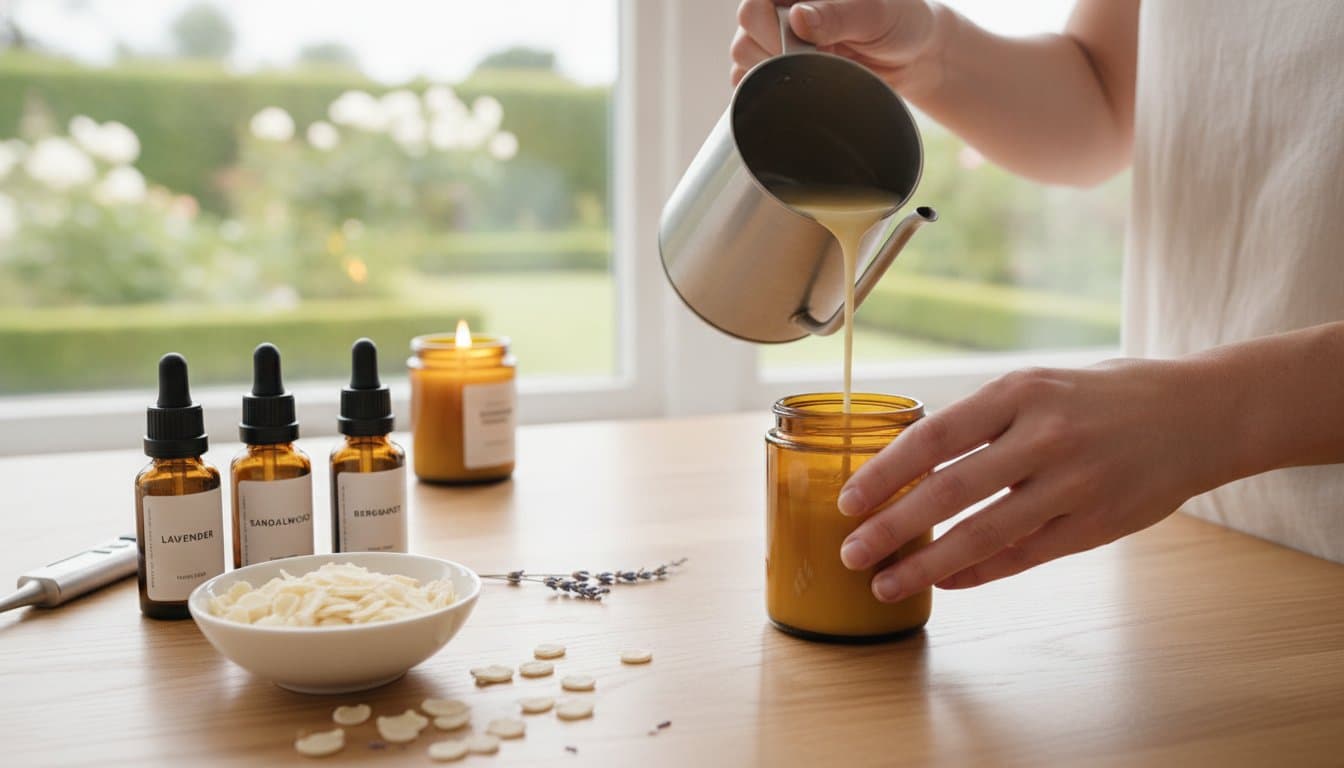
The practice of measuring wax and monitoring temperatures requires a gentle, steady concentration that naturally silences the mind. This focused state is often compared to meditation. As you stir your Soy Wax Flakes, you’re not just preparing a product; you’re engaging in a sensory ritual. By blending specific scents like Lavender Essential Oil or Eucalyptus Essential Oil, you can create a bespoke sanctuary tailored to your emotional needs. There’s a profound sense of accomplishment in seeing a liquid pour transform into a solid, beautiful object that will eventually illuminate your space with a fragrance you designed yourself.
Sustainability and Eco-Friendly Hobbyism
One of the most rewarding aspects of candle making as a hobby UK enthusiasts value is the absolute control over ingredients. You no longer have to wonder about the hidden chemicals or synthetic additives often found in paraffin-based high-street options. By using natural bases like Soy Wax Flakes, you ensure a cleaner, longer burn that is kinder to your home’s air quality. This transition to natural materials reflects a growing commitment to health-conscious living and environmental integrity.
This hobby also encourages a beautiful cycle of reuse. You can give new life to vintage tea cups, glass jars, or even the elegant Amber Glass Bottles with Droppers used for your oils. Sourcing your supplies from reliable UK providers further reduces the carbon footprint associated with international shipping. It’s a holistic approach to crafting that respects both your personal health and the environment, allowing you to enjoy a sense of luxury that is ethically grounded and sustainable.
Essential Supplies: Building Your Beginner Candle Making Kit
Starting candle making as a hobby UK style doesn’t require a commercial-grade studio. You can create beautiful, professional-standard pieces with a few carefully chosen essentials. The goal is to build a kit that prioritizes safety and purity, allowing you to focus on the therapeutic joy of the craft. By selecting the right tools from the beginning, you avoid the frustration of failed pours and wasted ingredients.
Selecting the Right Wax for Your Home
Soy wax flakes are the gold standard for home crafters. Unlike paraffin, which is a petroleum byproduct, soy is plant-based and offers a cleaner, slower burn. These flakes are incredibly easy to measure and melt quickly. This makes them perfect for beginners who want to avoid the mess of chopping large wax blocks. Understanding your wax’s melt point is vital. It’s the specific temperature where the wax turns to liquid, allowing you to add your oils at exactly the right moment for maximum fragrance. To get started with the best materials, you can find high-quality Soy Wax Flakes to ensure your first pour is a success.
Hardware and Safety Equipment
You don’t need expensive machinery to melt your wax. A simple double-boiler setup in your kitchen works perfectly. This involves placing a heat-resistant pouring pitcher inside a pan of simmering water. This method prevents the wax from scorching or reaching dangerous temperatures. A digital scale is your most important measuring tool. Volumetric jugs are often inaccurate for solid wax and concentrated oils. A scale ensures your ratios are precise to the gram. This precision is the secret to a candle that smells as good as it looks.
Safety is paramount during the melting and pouring process. Always wear an apron and heat-resistant gloves to protect yourself from splashes. It’s also wise to consult official UK candle safety advice to ensure your workspace and finished products meet the highest standards. Protecting your surfaces with old newspapers or silicone mats will make the cleanup process much more relaxing. Finally, ensure you have the correct wicks and sustainers. These should be sized according to the diameter of your container to prevent tunnelling and ensure an even, beautiful burn.

Mastering the Craft: A Step-by-Step Guide to Your First Pour
The transition from gathering supplies to your first physical pour is where candle making as a hobby UK enthusiasts truly find their rhythm. It’s a process that rewards patience and rewards those who respect the delicate chemistry of the materials. Before you melt a single flake, ensure your glass containers are meticulously cleaned and dried. Any dust or residue can prevent the wax from adhering properly, leading to unsightly “wet spots” where the wax pulls away from the glass. Once clean, centre your wick using a glue dot and a centring tool to ensure an even burn from the very first light.
Adhering to official UK safety and labelling regulations is a habit best formed early. Even if you aren’t selling your creations yet, understanding the safety standards for containers and wicks ensures your home remains a sanctuary. Begin by melting your Soy Wax Flakes in the double boiler you prepared earlier. Monitor the temperature closely with your digital thermometer. You want to reach approximately 75 to 80 degrees Celsius, but never exceed the wax’s flash point. This is the critical temperature at which the vapours from the wax or oils could potentially ignite.
Temperature Control and Timing
The secret to a candle that fills a room with scent lies in the timing of your oil addition. If you add your oils when the wax is too hot, the fragrance may “burn off,” leaving you with a weak scent throw. Conversely, if the wax is too cool, the oil won’t bind properly to the wax molecules. For most soy waxes, adding your Lavender Essential Oil or Baby Powder Fragrance Oil at around 70 degrees Celsius is ideal. Stir gently but thoroughly for two minutes to ensure a complete bond. When the temperature drops to roughly 55 to 60 degrees Celsius, it is time for the “magic” pour. Pouring at this lower temperature helps achieve a perfectly flat, professional top and reduces the risk of the wax shrinking too quickly.
Common Beginner Troubleshooting
Don’t be discouraged if your first few attempts aren’t flawless. Frosting, a white crystalline appearance on the surface, is a natural characteristic of pure soy wax and doesn’t affect the burn quality. If you notice “tunnelling,” where the candle burns down the middle and leaves wax on the sides, it usually means your wick is too small for the container diameter. To fix a bumpy or uneven surface after the wax has set, simply pass a hairdryer on a low heat setting over the top until the surface melts slightly and resets to a smooth finish. Finally, allow your candles to cure for at least 48 hours. This resting period is essential for the fragrance to fully mature within the wax structure.
The Science of Scent: Fragrance Oils vs. Essential Oils
Choosing your scent profile is arguably the most creative stage of candle making as a hobby UK. It’s where you decide the specific atmosphere your candle will create. To ensure your candle smells as beautiful as it looks, you must understand the “scent load.” For most beginners using soy wax, a scent load of 6% to 10% is the ideal range. This means for every 100g of wax, you will add between 6g and 10g of oil. Adding too much can cause the oil to leach out of the wax, while too little results in a faint aroma. Finding this balance is the key to mastering both “cold throw,” the scent when unlit, and “hot throw,” the scent when burning.
When to Choose Fragrance Oils
Fragrance oils are specifically engineered for performance and variety. They offer a powerful hot throw and remain stable even when exposed to the high heat of melting wax. These oils allow you to recreate nostalgic or complex atmospheres that nature alone cannot easily provide. For instance, using Baby Powder Fragrance Oil can instantly evoke a sense of comfort and cleanliness throughout a nursery or bedroom. If you prefer a crisp, airy environment, Fresh Linen Fragrance Oil is perfect for achieving that sought after “freshly washed” vibe. Because they are synthetic, these oils are incredibly consistent. This makes them a reliable choice for those who want the same scent experience every time they pour.
The Aromatherapy Approach with Essential Oils
If your goal is holistic wellness, pure essential oils are the superior choice. These oils are extracted directly from plants, carrying the therapeutic properties of the botanical source. However, they require more technical care than fragrance oils. Essential oils often have lower flash points, meaning they can be more volatile at high temperatures. For a calming evening ritual, Lavender Essential Oil is a timeless classic that promotes relaxation and deep sleep. In the kitchen, Peppermint Essential Oil acts as a natural “odour buster,” providing a sharp, refreshing lift.
When blending your own scents, remember the triad of notes. Top notes provide the initial impact, middle notes form the heart, and base notes offer a lasting foundation. This layered approach creates a sophisticated, professional aroma. Whether you are seeking the powerful throw of a fragrance oil or the gentle, therapeutic touch of a botanical extract, the quality of your ingredients determines the quality of your burn. You can explore our full range of ethically sourced essential and fragrance oils to find the perfect match for your next project.
From Hobby to Handmade Gifts: Elevating Your Creations
As your confidence grows, you’ll likely find that candle making as a hobby UK enthusiasts love naturally evolves into a desire to share your creations. Transforming a successful pour into a thoughtful gift is a rewarding extension of the craft. It allows you to offer a piece of your mindful practice to friends and family. However, moving from personal use to gifting requires a shift in focus. You must balance your creative aesthetic with a commitment to safety and professional standards. This transition is where your hobby becomes a true artisanal skill, grounded in the values of quality and care for the recipient.
Presentation and Branding Your Hobby
Your personal brand is reflected in the small details. Choosing minimalist, clean labels that list the scent notes creates a sense of luxury and transparency. If you find yourself with leftover oils after a session, storing them correctly is vital to maintain their integrity. Transferring remnants into Amber Glass Bottles with Droppers protects the delicate botanical compounds from UV light degradation. This ensures your Lavender or Peppermint oils remain potent for your next project. While adding dried botanicals or eco-glitter to the top of a candle is tempting, remember that less is more. These additions can become fire hazards if they drift too close to the wick. Always prioritise a clean, safe burn over complex surface decorations.
To preserve the fragrance of your finished pieces, store them in a cool, dark place away from direct sunlight. This prevents the wax from discolouring and keeps the scent profile crisp. Keeping a “burn test” log is another excellent habit for hobbyist improvement. Record the wick size, the specific scent load used, and how long the candle lasted. This data driven approach helps you refine your technique and ensures every gift you give performs beautifully.
UK Safety Standards for Gifting
Safety is the most important gift you can give. In the UK, even candles given away for free are often subject to the same rigorous standards as those sold in shops. As of May 21, 2026, CLP (Classification, Labelling and Packaging) regulations are mandatory for all scented candles. These labels must clearly display hazard information, pictograms, and any potential allergens derived from your oils. This level of detail builds long term trust and ensures your loved ones can enjoy your gifts without worry. Every candle must also feature a safety warning label on its base, typically following British Standards like BS EN 15494, to provide essential fire safety instructions.
Sharing your journey with the wider UK maker community online can offer immense support as you navigate these technical requirements. It’s a space where you can exchange tips on scent blending or label design with fellow enthusiasts. For those ready to move beyond the basics and achieve deep technical mastery, we recommend consulting the ultimate guide on how to make candles. This masterclass provides the necessary context for safe, effective, and beautiful crafting, ensuring your wellness journey remains both creative and compliant.
Your Journey into Mindful Crafting Starts Here
Embracing candle making as a hobby UK wide provides a unique opportunity to slow down and reconnect with your senses. By choosing pure soy wax and mastering the science of scent throw, you can transform your living space into a personalised sanctuary of light and aroma. We’ve explored how proper temperature control and adhering to 2026 safety standards ensure your creations are as professional as they are beautiful. Whether you’re pouring for yourself or preparing handmade gifts for loved ones, the process offers a rhythmic, therapeutic escape from the digital world.
As a family-run UK business since 2010, we’re proud to serve as a premium botanical authority for makers across the country. We provide everything you need to succeed, from pure oils to reliable wax, all supported by fast UK-wide delivery to your doorstep. Explore our high-quality candle making oils and waxes to start your hobby today. We’re excited to be a partner in your new creative journey. Your path to crafting scented bliss is just a single pour away.
Frequently Asked Questions
Is candle making an expensive hobby to start in the UK?
Starting candle making as a hobby UK wide is surprisingly affordable, with basic starter kits typically ranging between £20 and £60. You don’t need specialized machinery; a simple kitchen double-boiler and a digital scale are your primary investments. By purchasing raw materials like soy wax flakes and fragrance oils in smaller quantities initially, you can explore the craft without a significant financial commitment or the need for a dedicated studio space.
Can I use any glass jar from my kitchen for candle making?
You shouldn’t use just any glass jar, as many household containers aren’t designed to withstand the sustained heat of a burning candle. Using non-tempered glass can lead to dangerous cracks or shattering. It’s safer to use jars specifically rated for candle making or repurposed containers that originally held candles. Always check for chips or hairline fractures before pouring your wax to ensure the container’s structural integrity.
What is the best wax for a beginner candle maker?
Soy wax flakes are widely considered the best choice for beginners due to their ease of use and clean-burning properties. These flakes melt quickly and evenly, making the measurement process much simpler than working with large blocks of paraffin. Soy wax also has a lower melting point, which reduces the risk of accidental burns and allows for a more forgiving experience as you learn to master your pouring temperatures.
How long do I need to let my homemade candles ‘cure’ before lighting?
You should allow your candles to cure for at least 48 hours, though one to two weeks is ideal for soy-based creations. This resting period allows the fragrance oil to fully bond with the wax molecules at a microscopic level. Lighting a candle too early often results in a weak scent throw, as the chemical structure hasn’t had sufficient time to stabilize. Patience during this phase ensures a much more rewarding aromatic experience.
Why doesn’t my candle smell as strong as shop-bought ones?
A weak scent throw is usually caused by adding oils at the wrong temperature or using an incorrect scent load. If the wax is too hot, the fragrance can “flash off” and dissipate. If it’s too cool, the oil won’t bind. Ensuring you use the 6% to 10% scent load rule and allowing for a full curing period will help your hobbyist candles rival the intensity of professional, high-street brands.
Do I need a special licence to make candles as a hobby in the UK?
You don’t need a specific licence to enjoy candle making as a hobby UK based, but regulations change the moment you decide to sell. For personal enjoyment, the main requirement is following general safety standards. However, if you transition to selling, you must register with HMRC and ensure every product complies with CLP labelling laws. It’s always best practice to follow these safety and labelling guidelines even when gifting to friends.
Can I use essential oils in my candles, or do I need fragrance oils?
You can use both, though they offer different benefits. Essential oils like Lavender or Peppermint provide natural aromatherapy benefits but can be more volatile and difficult to work with due to lower flash points. Fragrance oils are synthetically designed for stability and a more powerful hot throw. Many makers choose fragrance oils for consistency, while those seeking a holistic, botanical experience prefer the purity of essential oils.
How do I stop my candle from ‘tunnelling’ down the middle?
Tunnelling is prevented by choosing the correct wick size for your container’s diameter and ensuring the first burn lasts long enough. The wax pool should reach the edges of the jar during the initial light, which usually takes one hour per inch of container width. If the wick is too small, it won’t generate enough heat to melt the outer edges, creating a permanent memory ring in the wax.