

Uncategorized
Essential Oil Dilution Chart for Rollerballs: The 2026 Safety Guide
May
What if I told you that applying pure essential oils directly to your skin actually makes them less effective? Many people believe that dilution is just about “watering down” a product, but it’s actually the secret to increasing absorption while protecting your delicate skin barrier. It’s natural to feel overwhelmed by conflicting social media advice or the fear of causing irritation. That’s why having a reliable essential oil dilution chart for rollerballs is the foundation of any safe, holistic practice.
We believe that safety and luxury should go hand in hand. You deserve to feel complete confidence every time you reach for your favorite blend. This guide provides a clear, professional breakdown for 10ml bottles so you can master topical aromatherapy with ease. We’ll show you exactly how to tailor your blends for children and sensitive skin while maintaining the highest standards of botanical integrity and transparency.
We’ll also explore which carrier oils work best for rollers, such as our Golden Jojoba or Fractionated Coconut Oil. You’ll gain a clear understanding of the latest 2026 safety standards and allergen labeling requirements to ensure your home apothecary remains a sanctuary of wellness. By the end of this article, you’ll have a printable-style reference that turns guesswork into expert precision.
Key Takeaways
- Understand why diluting essential oils is vital for skin absorption, preventing the rapid evaporation that occurs with neat application.
- Access our comprehensive essential oil dilution chart for rollerballs to determine exact drop counts for 10ml bottles, ranging from 0.5% to 5% concentrations.
- Identify the best carrier oils, such as Sweet Almond or Fractionated Coconut, based on their texture, skin feel, and long-term stability in your roller bottle.
- Learn the professional step-by-step method for blending, including why the order of ingredients is crucial for a consistent and effective recipe.
- Discover how sourcing high-quality, pure ingredients from a transparent UK authority ensures your DIY wellness creations are both safe and potent.
Understanding Essential Oil Dilution for Rollerballs
Dilution is the foundational practice of blending concentrated essential oils with a nourishing base. It isn’t a method of “watering down” your precious botanicals; rather, it’s a strategic way to ensure they work effectively and safely. When you use an essential oil dilution chart for rollerballs, you’re respecting the potency of nature while honouring your body’s natural boundaries. By mixing a few drops of a potent oil like Peppermint or Eucalyptus into a base, you create a medium that your skin can actually use.
The science behind this lies in our skin barrier. Essential oils are volatile organic compounds, meaning they turn into gas and evaporate quickly when exposed to air. If you apply a “neat” oil directly to your skin, a significant portion of it “flashes off” into the atmosphere before your dermis can absorb it. Dilution slows this process down. By binding the essential oil molecules to a heavier base, you keep them on the skin longer. This allows for deeper penetration and better therapeutic results than using the oil alone.
Perhaps the most critical reason to dilute is to prevent sensitisation. This is a permanent allergic reaction that occurs when the immune system becomes overloaded by repeated exposure to undiluted oils. Unlike a simple skin irritation that fades in a few hours, sensitisation can be a lifelong burden. If you become sensitised to Lavender or Rosemary, you might never be able to enjoy those scents again without experiencing a rash or respiratory distress. Adhering to a safe essential oil dilution chart for rollerballs ensures you can enjoy your collection for years to come. In aromatherapy, a “less is more” philosophy usually yields the best results. A 1% dilution is frequently more effective for daily support than a 5% blend because it allows the body to process the plant compounds steadily without triggering a defensive response from your skin.
Why Rollerballs are the Ideal Application Method
Rollerballs have become a staple in modern aromatherapy because they offer unparalleled convenience. These compact bottles fit easily into a pocket or handbag, making self-care accessible throughout a busy day. The design allows for targeted application to specific areas like the temples, wrists, or the soles of the feet. Beyond the oil itself, the rolling motion of the ball provides a gentle massage that stimulates local blood flow, helping the botanical ingredients absorb more efficiently into the target area.
The Role of the Carrier Oil
A carrier oil serves as the essential vehicle for your blend. It acts as a protective buffer, spreading the concentrated essential oil across a larger surface area while preventing the skin from feeling overwhelmed. Oils like Sweet Almond or Golden Jojoba provide a smooth “slip” that makes application feel like a luxurious ritual. Because these carrier oils are non-volatile, they anchor the aromatic molecules to your skin, ensuring that your signature scent lingers and your skin remains hydrated and calm.
Essential Oil Dilution Chart for 10ml Rollerballs (2026)
Most online resources use US fluid ounces, which can be confusing for enthusiasts in the UK who typically use standard 10ml bottles. This essential oil dilution chart for rollerballs is specifically tailored for the 10ml amber glass bottles that serve as the industry standard here. Precision is the bridge between a pleasant aromatic experience and a potential skin reaction. Even a single extra drop can significantly alter the concentration of your blend, so accuracy is paramount.
It’s helpful to remember that drop sizes can vary based on the viscosity of the oil and the specific dropper insert used. For the most consistent results, many practitioners follow the Tisserand Institute dilution guidelines, which emphasise using a standard pipette for measurements. When you’re ready to start blending, choosing high-quality amber glass bottles with droppers will help protect your finished recipes from light degradation while ensuring your measurements remain as precise as possible.
Standard Dilution Ratios at a Glance
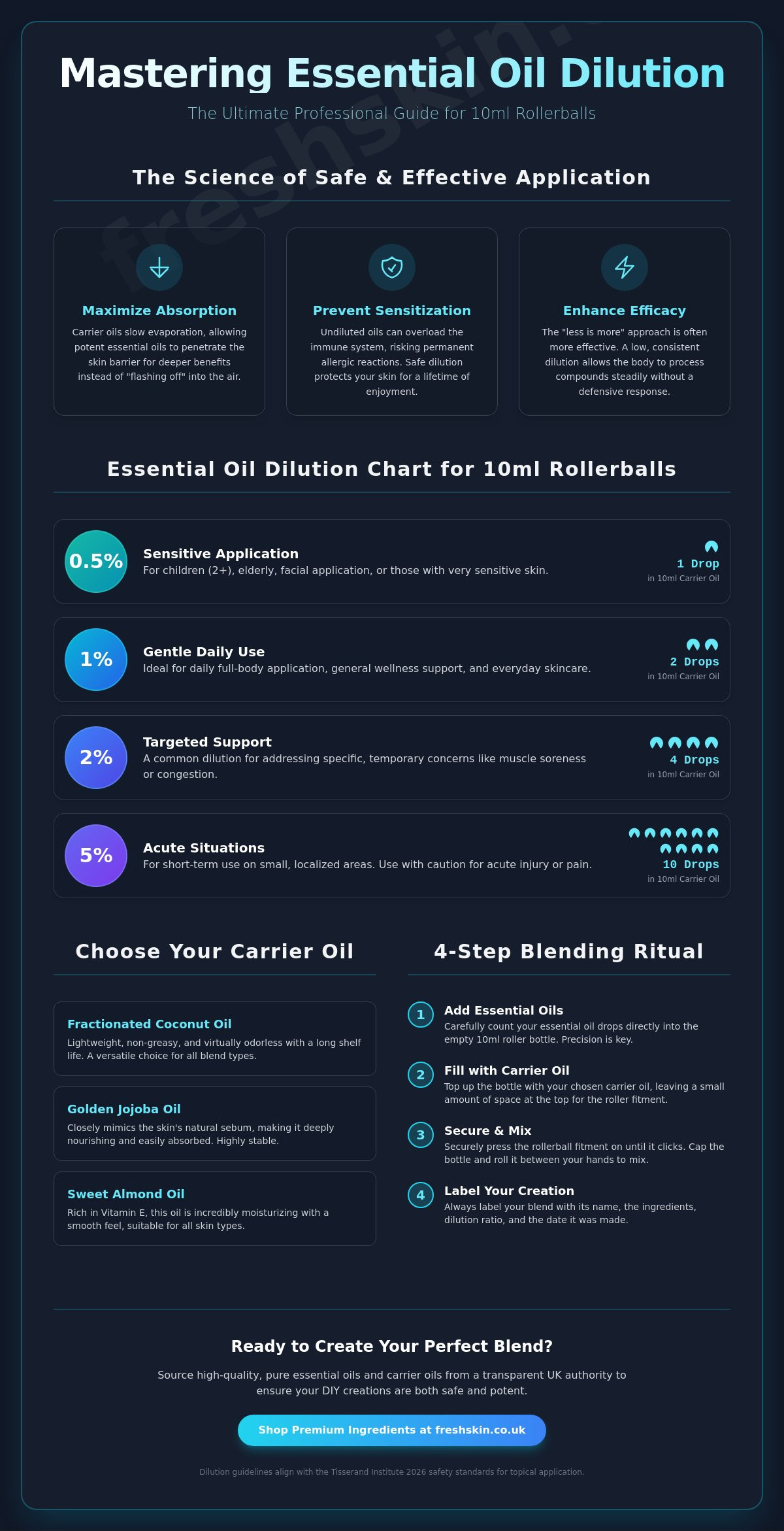
For a standard 10ml rollerball, use the following drop counts to achieve your desired percentage:
- 0.5% Dilution (1-2 drops): This ultra-gentle ratio is best for infants aged six months and older, the elderly, or for applications on the delicate skin of the face.
- 1% Dilution (3 drops): This is the ideal concentration for daily support, children, and individuals with sensitive skin or compromised immune systems.
- 2% Dilution (6 drops): Often called the “sweet spot,” this is the standard ratio for most healthy adult DIY recipes intended for regular use.
- 3-5% Dilution (9-15 drops): These higher concentrations are generally reserved for acute, short-term issues such as localized muscle aches or seasonal snuffles.
Special Considerations for “Hot” Oils
Certain oils are classified as “hot,” meaning they have a higher likelihood of causing a warming or burning sensation if not handled with extreme care. Oils like Cinnamon, Clove, Oregano, and Thyme contain potent phenols that require much lower dermal limits. Regardless of the intended user, these oils should rarely exceed a 0.5% dilution in a topical blend. Additionally, be mindful of photosensitivity when using cold-pressed citrus oils in your rollerballs. If you apply a blend containing Lemon or Grapefruit to your skin and then expose that area to direct sunlight, it can cause severe irritation or pigmentation. For daytime rollers, consider using steam-distilled citrus oils or keeping the application area covered.
Choosing the Best Carrier Oils and Roller Bottles
Once you’ve consulted your essential oil dilution chart for rollerballs, the next step is selecting a base that complements your skin type and lifestyle. The texture, or “slip,” of a carrier oil determines how the rollerball glides across your skin and how quickly the blend absorbs. If an oil is too heavy, it may feel greasy or clog the roller mechanism; if it’s too light, it might not provide enough of a barrier. Safety is always the priority. As highlighted by Johns Hopkins on essential oil safety, using a high-quality carrier is the most effective way to prevent the skin irritation that often comes with undiluted use.
Stability is another vital factor to consider. Many of us keep rollerballs in our handbags, gym kits, or cars, where they’re frequently exposed to temperature fluctuations and light. Choosing a carrier oil with a long shelf life ensures your blend remains fresh and therapeutically active for months rather than weeks. To learn more about various options, you can explore the details in our Carrier Oils Guide.
Top 3 Carrier Oils for Rollerball Blends
- Fractionated Coconut Oil: This is a favourite for many enthusiasts because it’s completely odourless and non-greasy. It remains liquid at all temperatures and has an almost indefinite shelf life, making it perfect for rollers you plan to carry with you daily.
- Golden Jojoba Oil: Technically a liquid wax, Jojoba mimics the skin’s natural sebum more closely than any other oil. It’s exceptionally bio-compatible and excellent for facial rollers. See our Jojoba Oil Guide for details.
- Sweet Almond Oil: Rich in Vitamin E and skin-loving proteins, this oil is incredibly soothing. It’s a wonderful choice for those with dry or irritated skin patches, providing a slightly richer texture than coconut oil.
The Importance of Amber Glass Bottles
Your choice of container is just as important as the oils inside. Essential oils are potent botanical compounds that can degrade plastic over time, which is why high-quality glass is the only professional choice for long-term storage. Amber glass provides essential UV protection, filtering out harmful light rays that would otherwise cause your oils to oxidise. This preservation is key when following an essential oil dilution chart for rollerballs, as it ensures the specific concentrations you’ve carefully measured stay stable and effective.
The roller ball itself also impacts your experience. While plastic balls are functional, stainless steel roller balls offer a smoother, cooler application that feels more luxurious on pulse points. If you’re wondering about sustainability, you can safely refill your amber bottles. Just ensure they’re thoroughly cleaned with high-percentage alcohol and dried completely before adding a new recipe to prevent cross-contamination or bacterial growth.
Step-by-Step: How to Make Your Own Rollerball Recipe
Creating your own botanical blends is a deeply rewarding ritual that brings the power of nature into your daily routine. To begin, clear a steady surface and gather your ingredients. You’ll need your 10ml amber glass bottles, your chosen carrier oil, and the essential oils you’ve selected based on the essential oil dilution chart for rollerballs. Ensuring your workspace is calm and organized helps you focus on the precision required for safe, effective blending.
A professional secret is to always add your essential oils to the bottle first. This allows you to count the drops accurately without the carrier oil getting in the way. If you accidentally add an extra drop, it’s much simpler to rinse the bottle and start again before you’ve committed your base oil. Once your essential oils are in, fill the rest of the bottle with a high-quality base like Fractionated Coconut Oil, leaving just enough space at the top for the roller fitment to click into place.
Labeling is the step most DIYers forget, yet it’s vital for long-term safety. You might think you’ll remember what’s inside, but several weeks later, many clear blends look identical. Always include the date, the specific oils used, and the dilution percentage. Most rollers remain potent and effective for 6 to 12 months if you store them in a cool, dark place away from direct sunlight. This preservation is key when following an essential oil dilution chart for rollerballs, as it ensures the chemical integrity of your blend stays stable.
The Blending Process
Step 1: Carefully add the required number of essential oil drops to your empty 10ml bottle. Step 2: Fill the remaining space with your chosen carrier oil, stopping just below the neck of the bottle. Step 3: Secure the roller fitment and cap tightly, then gently roll the bottle between your palms for thirty seconds. This helps the oils integrate without creating unnecessary air bubbles.
Safety First: The Patch Test
Individual skin chemistry varies, so a patch test is a non-negotiable safety step. Apply a small amount of your new blend to the inner forearm and wait 24 hours to monitor the results. Watch for signs of irritation like redness, itching, or small bumps. If a reaction occurs, don’t try to wash it off with water, as water can drive the oil deeper into the skin. Instead, apply a generous amount of plain carrier oil to the area and wipe it away with a clean, soft cloth.
Sample Rollerball Recipes for Beginners
- The “Sweet Dreams” Blend: Use 3 drops of Lavender for a calming evening ritual.
- The “Focus” Blend: Combine 2 drops of Peppermint with 1 drop of Rosemary for an afternoon pick-me-up.
- The “Skin Soothe” Blend: Use 3 drops of Tea Tree to help manage minor skin blemishes.
Freshskin Quality: Sourcing the Best Oils in the UK
Freshskin Beauty Ltd isn’t just a retailer; we’re a Nottingham-based family business built on a foundation of integrity and botanical expertise. We’ve spent years cultivating relationships with ethical growers to ensure every bottle of Lavender, Peppermint, or Eucalyptus oil we provide meets the highest standards of purity. When you use an essential oil dilution chart for rollerballs, the accuracy of your measurements only matters if the oils themselves are 100% pure and free from hidden synthetics. We believe that transparency is the key to trust, which is why we provide the detailed documentation and context you need to practice aromatherapy with absolute confidence.
Our commitment to quality is particularly relevant as we move through 2026. With new UK regulatory assessments on ingredients like Citral and expanded allergen labeling requirements taking effect on July 31, 2026, staying informed is essential for every natural living enthusiast. We take the burden of compliance off your shoulders by ensuring our sourcing remains ahead of these shifts. You can learn more about our rigorous standards and usage tips in our comprehensive guide to Essential Oils.
Why UK Hobbyists and Professionals Choose Us
Our Nottingham team is dedicated to supporting your wellness journey with both speed and care. We offer fast national delivery across the United Kingdom, ensuring your supplies arrive when you need them. Whether you’re a DIYer creating a single blend for your desk or a wholesale business stocking up on Fractionated Coconut Oil and Amber Glass Bottles, Freshskin Beauty Ltd provides the same level of meticulous attention. Our oils undergo rigorous quality testing, so you don’t have to worry about the provenance of your ingredients when you partner with us.
The Freshskin Promise
The Freshskin promise is simple: we provide the power of nature without compromise. There are no fillers or synthetics in our range, only pure, therapeutic-grade botanicals. We want to empower you to create high-end products in your own home that rival any luxury brand. By following a safe essential oil dilution chart for rollerballs and using our ethically sourced oils, you’re joining a growing community of enthusiasts who value quality and ethics. We’re proud to be your partner in holistic health, helping you craft a lifestyle that feels as clean as it does luxurious.
Empower Your Wellness Journey with Confidence
Mastering your own botanical creations is a beautiful way to integrate the healing power of plants into your daily life. You’ve learned how dilution ensures your oils penetrate the dermis effectively while protecting your skin from the long-term risks of sensitization. By keeping our essential oil dilution chart for rollerballs close at hand, you turn every blending session into a precise, safe, and professional ritual. Choosing the right amber glass and stable carrier oils ensures your recipes remain potent for months to come.
As a family-run UK business since 2010, we’re dedicated to your safety and success. We bring over 10 years of aromatherapy expertise to every bottle we sell, providing only directly sourced, pure ingredients. Whether you’re crafting a sleep blend with Lavender or a restorative roller with Rosemary, you can trust in the integrity of our botanicals. We believe that everyone should have access to high-quality ingredients that support a healthy, natural lifestyle.
Shop our premium range of Essential Oils and Carrier Oils today and start your next blending project with total confidence. We’re here to support your natural living journey every step of the way.
Frequently Asked Questions
How many drops of essential oil are in a 10ml roller bottle?
A 10ml roller bottle holds approximately 200 drops of total liquid, but the number of essential oil drops depends on your target concentration. For a standard 2% adult blend, you’ll use 6 drops of essential oil. If you’re following an essential oil dilution chart for rollerballs for a 1% child-safe blend, you would only use 3 drops before filling the rest with carrier oil.
Can I use water as a carrier in my rollerball bottle?
No, you shouldn’t use water as a carrier because essential oils and water don’t mix. Without a chemical emulsifier, the concentrated oil will simply float on top, leading to an undiluted application that can cause immediate skin irritation. Always choose a lipid-based carrier like Golden Jojoba or Fractionated Coconut Oil to ensure the essential oils are safely and evenly suspended throughout the bottle.
Where are the best places to apply essential oil rollers?
The most effective places to apply your rollers are pulse points where the skin is thinner and blood vessels are closer to the surface. These include your wrists, temples, and the area behind your ears. For a grounding experience or when using stronger oils, the soles of the feet are an excellent choice because the skin there is less sensitive and has larger pores for absorption.
How long do DIY essential oil rollerballs last?
Most DIY rollerballs remain effective for 6 to 12 months if they’re stored in a cool, dark environment. The longevity of your blend is largely determined by the shelf life of your carrier oil. While Fractionated Coconut Oil is incredibly stable and lasts for years, oils like Sweet Almond may oxidize more quickly. Using amber glass bottles helps protect the delicate botanical compounds from light degradation.
Is it safe to use essential oil rollers on children?
Yes, rollers are safe for children as long as you use age-appropriate oils and very low concentrations. For children aged two to six, a 1% dilution is the maximum recommended limit, while infants over six months require a 0.5% concentration. It’s vital to consult an essential oil dilution chart for rollerballs specifically for pediatric use and avoid applying strong oils like Peppermint or Eucalyptus near a child’s face.
What should I do if my skin reacts to a rollerball blend?
If you notice redness, itching, or a burning sensation, apply a plain carrier oil to the area immediately to further dilute the essential oil. Don’t try to wash the reaction away with water, as water can actually drive the oil deeper into your pores and intensify the discomfort. Once the area is coated in carrier oil, gently wipe it away with a clean cloth and stop using that specific blend.
Can I use fragrance oils in a rollerball for perfume?
You can use cosmetic-grade fragrance oils, such as Fresh Linen or Baby Powder, to create custom perfume rollers. While these oils don’t provide the therapeutic benefits found in pure botanicals, they’re a wonderful way to enjoy a signature scent. You must still follow dilution guidelines and perform a patch test, as fragrance oils are highly concentrated and can cause sensitivity if applied directly to the skin.
How do I clean and reuse my glass roller bottles?
To safely reuse your amber glass bottles, remove the roller fitment and soak both the bottle and the ball in warm, soapy water. After washing, soak the glass components in high-percentage rubbing alcohol to strip away any lingering aromatic resins. Allow every part to air dry completely before refilling to ensure your new recipe isn’t contaminated by the previous scent or any leftover moisture.