

Uncategorized
How to Use Plastic Pipettes for Blending Essential and Fragrance Oils
Jun
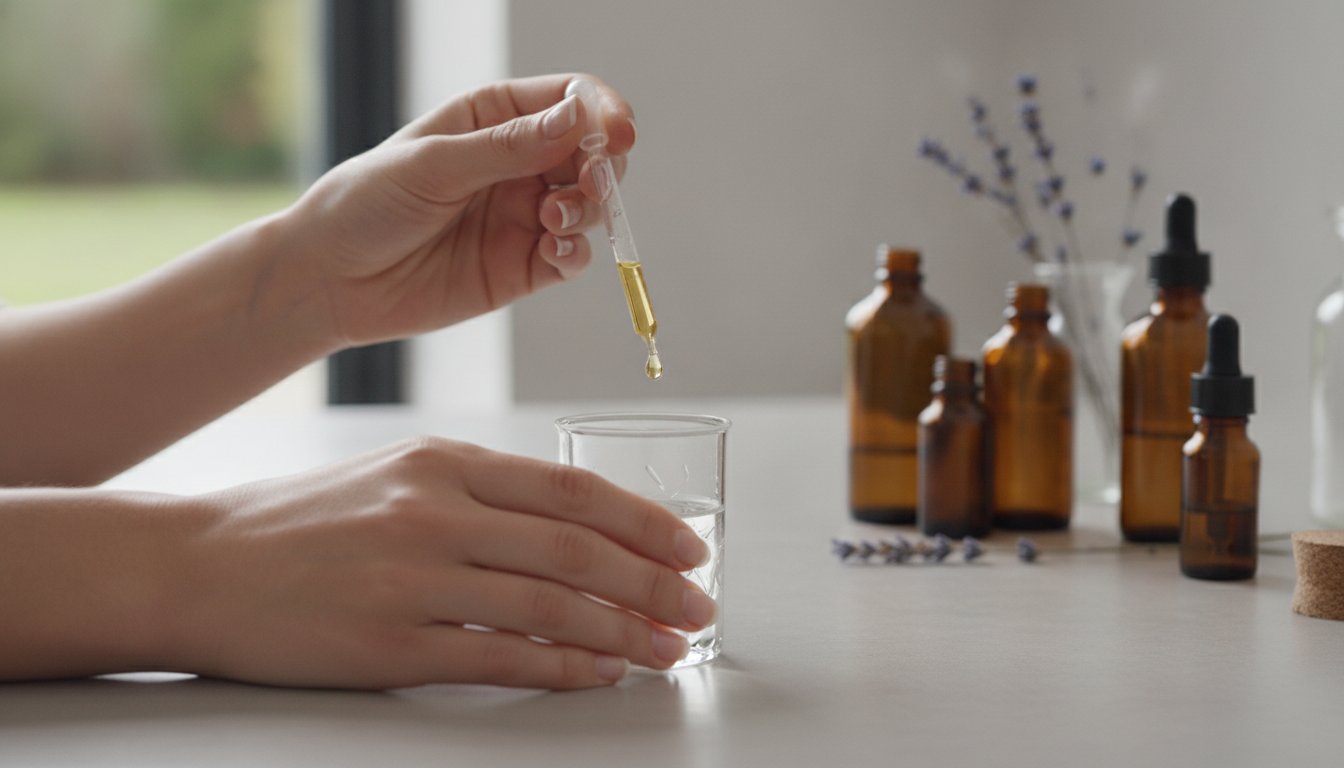
Have you ever watched a single, misplaced drop of expensive Moroccan Argan Oil or Lavender Essential Oil disappear into a spill on your workbench and realized you just lost more than just a few cents? It’s a frustrating experience that many botanical enthusiasts face when they’re first learning the delicate art of scent creation. We understand that your ingredients are precious, and maintaining their integrity is essential for a therapeutic experience. This guide will show you exactly how to use plastic pipettes for blending to ensure that every drop goes precisely where it’s intended, helping you maintain the purity of your ingredients and the consistency of your recipes.
Mastering these simple tools is the bridge between a hobbyist experiment and a professional-grade botanical creation. For makers looking to expand their expertise into other areas of the beauty industry, it can be helpful to learn more about Wholesale distribution of professional aesthetic products to understand the high standards required for professional use. We’ll walk you through the practical steps of achieving repeatable scent profiles while keeping your workspace clean and free from cross-contamination. You’ll learn how to measure by both drop and milliliter using high-quality, non-reactive materials like HDPE or PET, which are safe for use with potent oils. We’ll also touch on how these techniques align with modern safety standards, such as the 2022 MoCRA requirements, so you can feel confident and grounded in your creative practice.
Key Takeaways
- Learn the “Squeeze, Submerge, Release” technique to gain complete control over your oil transfers and eliminate messy spills.
- Discover how to use plastic pipettes for blending to achieve consistent, professional-grade results through precise milliliter measurements.
- Protect your scent profiles by adopting the “one pipette, one oil” rule to prevent cross-contamination between potent botanicals.
- Understand the nuances between drop and volume measurements to ensure your favorite recipes remain repeatable and accurate every time.
- Identify the best materials for your DIY workspace, including the importance of using non-reactive plastics and amber glass for long-term storage.
Why Plastic Pipettes are Essential for Precise Oil Blending
Creating a signature scent is a delicate dance between creative intuition and technical skill. While the vibrant aroma of Lavender Essential Oil or Peppermint Essential Oil might inspire your next project, the physical act of mixing requires a steady hand and reliable tools. This is where the humble pipette transforms your process from guesswork into a refined craft. A transfer pipette is a disposable tool used to move small volumes of liquid precisely, and for the home blender, it’s a low-cost, high-impact essential. Using these tools allows for “micro-blending,” where you can test tiny fractions of a fragrance combination before committing your entire inventory to a full batch.
Pouring directly from a bottle neck often leads to the dreaded “glug” factor. This uneven flow results in messy spills and inconsistent scent profiles that are nearly impossible to replicate. If you’re a small business owner crafting soaps or candles, repeatability isn’t just a preference; it’s a requirement for building long-term customer trust. Precision also plays a vital role in safety. Potent oils like Eucalyptus or Tea Tree require exact ratios to remain skin-safe and effective. Learning how to use plastic pipettes for blending ensures you never accidentally double your dosage because of a shaky pour or an unexpected splash.
Control and Consistency in Aromatherapy
Consistency is the heartbeat of quality aromatherapy. When you rely on open-neck bottles, you’re essentially guessing your ratios. Pipettes eliminate this uncertainty by giving you drop-by-drop control over every addition. This level of accuracy is especially important when you’re working with high-intensity oils where a single extra drop can easily overpower a delicate base. By mastering how to use plastic pipettes for blending, you ensure every batch of your signature Rosemary and Peppermint blend smells exactly like the last. It’s a simple change that elevates your hobby into a professional practice.
Protecting Your Essential Oil Investment
Your collection of botanical oils represents a significant investment in your well-being. Pipettes help you protect that value by reaching the very bottom of 10ml or 50ml bottles, ensuring no precious liquid stays trapped inside. They also help minimize oxidation. Every second a bottle stays open, oxygen begins to degrade the volatile compounds within the oil. Pipettes allow you to draw exactly what you need quickly and reseal the bottle immediately. Beyond preservation, they keep your workspace pristine. Spills on expensive wooden surfaces or equipment aren’t just messy; they’re costly. A controlled transfer means your oils stay in the beaker, where they belong.
Mastering the Technique: How to Use a Transfer Pipette Step-by-Step
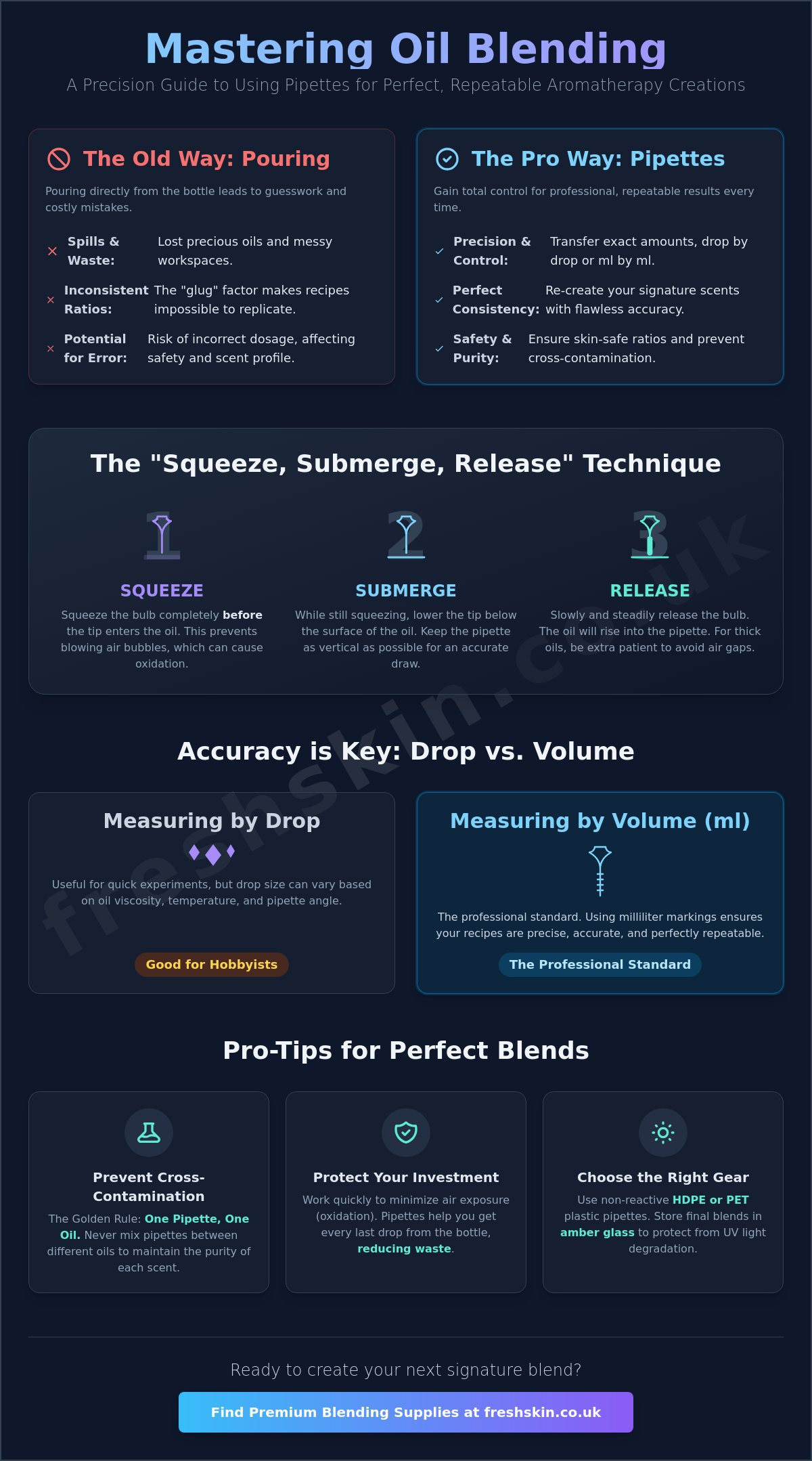
Using a pipette might seem intuitive, but a few technical adjustments can significantly improve your accuracy and the quality of your final product. Mastering how to use plastic pipettes for blending begins with the “Squeeze, Submerge, Release” method. This simple rhythm prevents common issues like air bubbles and messy “spitting” that occur when air is forced through the oil. By following a structured approach, you ensure that every drop of your precious Peppermint Essential Oil or Rosemary Essential Oil is accounted for, maintaining the integrity of your therapeutic recipes.
The Anatomy of a Successful Draw
One of the most common mistakes is squeezing the pipette bulb while the tip is already submerged in the liquid. You should always squeeze the bulb before entering the oil. If you wait until the tip is under the surface, you’ll blow air into your bottle, which can cause oxidation or create bubbles that disrupt your volume measurement. Once you’ve squeezed the bulb, submerge the tip and slowly release your grip. This controlled release allows the oil to rise steadily without turbulence.
Keep the pipette in a vertical position during this process. Tilting the tool can lead to air gaps or inaccurate readings against the graduation marks. When you’re working with high-viscosity oils like Patchouli or Myrrh, you’ll need a bit more patience. These thicker liquids move slowly through the narrow tip, so release the bulb pressure gradually to allow the oil to rise without creating a vacuum gap. If you’re looking for high-quality supplies to start your next project, our essential oil collection provides the perfect foundation for your blending journey.
Reading the Meniscus and Graduation Marks
Standard plastic pipettes usually feature clear markings for 0.5ml, 1ml, and 3ml. To get a truly professional result, you need to understand the meniscus. This is the slight curve on the upper surface of the liquid. For most essential oils, you should read the measurement from the bottom of that curve at eye level. This level of precision is vital for ensuring blend consistency, especially when you’re scaling up a recipe for a larger batch of candles or soaps.
Steadying your hand is often the hardest part of the process. Try resting your pinky finger or the side of your hand against the rim of your blending beaker or your carrier oil bottle. This anchor point gives you the stability needed to dispense a single drop at a time. To dispense, apply the lightest possible pressure to the bulb. Don’t rush the process; a slow, rhythmic release is the secret to perfect ratios. Learning how to use plastic pipettes for blending in this way turns a simple task into a mindful ritual that respects the potency of your ingredients.
Measuring by Drop vs. Volume: Ensuring Your Blend is Consistent
When you’re standing at your blending station, you might wonder if you should count every individual drop or simply fill the pipette to the 1ml mark. Both methods have their place in the botanical world. Drops are ideal for the initial discovery phase, allowing you to tweak a scent profile one tiny addition at a time. However, once you’ve perfected your recipe, switching to volume measurements is the key to professional consistency. Understanding how to use a transfer pipet for both methods ensures that your final product remains safe and effective for its intended use.
The “Drop Method” is fantastic for micro-blending. It gives you the freedom to experiment without wasting large amounts of precious ingredients like Moroccan Argan Oil or expensive floral absolutes. But as your passion grows into a small business or a dedicated craft, you’ll find that drops are simply too variable for production. This is where mastering how to use plastic pipettes for blending by volume becomes a vital skill. Milliliters provide a fixed standard that doesn’t change regardless of how hard you squeeze the bulb.
The “Standard” Drop Approximation
In the aromatherapy community, a common rule of thumb is that 20 drops of a standard essential oil equal approximately 1ml. While this is a helpful starting point, it’s not a universal law. The physical properties of the oil itself change the drop size significantly. For instance, a thin, volatile oil like Peppermint Essential Oil will produce smaller, more frequent drops than a thick, resinous oil. External factors like the ambient temperature of your workspace and the diameter of the pipette tip also play roles. If you’re focusing on how to use plastic pipettes for blending with high accuracy, remember that drops are best for testing, while milliliters are the standard for batching and safety calculations.
Scaling Your Recipes for Larger Batches
Once your 10ml tester bottle smells exactly as you imagined, it’s time to scale up. If your small recipe used 10 drops of Lavender, a 100ml batch would require 100 drops. Counting to 100 is tedious and leaves too much room for human error. Instead, use the graduation marks on a 3ml pipette to measure the equivalent volume in milliliters. This transition from “drop counting” to “volume measuring” is how you move from hobbyist to professional maker. As you increase the amount of fragrance, you must also ensure your carrier oil ratios remain within safe limits for skin application. For detailed advice on choosing the right base for your blend, refer to our Carrier Oils guide.
Every successful blender keeps a detailed journal to document their process. Recording the specific pipette size, the temperature of the room, and the exact volume used allows you to recreate your successes with ease. If a batch turns out perfectly, you’ll want to know exactly how you got there. This level of transparency and documentation is the first step toward building a practice that values both quality and ethical standards.
Preventing Cross-Contamination: Best Practices for Handling Multiple Oils
When you’re working with multiple botanicals, things can get crowded quickly. The golden rule of scent craft is simple: one pipette, one oil, every single time. A single lingering drop of Peppermint Essential Oil on a shared tool can completely mask the soft, floral notes of a delicate Lavender Essential Oil blend. This contamination doesn’t just ruin your current project; it can compromise your entire fragrance library if you aren’t careful. Understanding how to use plastic pipettes for blending effectively means respecting the unique chemical signature of every ingredient you use.
From an environmental and cost perspective, it’s natural to want to minimize waste. However, the integrity of your therapeutic creations relies on the absolute purity of your tools. High-quality plastic pipettes ensure that your ethically sourced ingredients remain as pure as the day they were distilled. While the cost of a fresh pipette is minimal, the cost of replacing a contaminated bottle of Rosemary Essential Oil or Moroccan Argan Oil is significant. Prioritizing cleanliness is a sign of a disciplined and thoughtful maker.
Labelling and Workspace Organisation
Organise your station by creating a clear physical boundary between clean and used supplies. Use a simple rest, such as a ceramic tray or a dedicated pipette holder, to prevent tools from rolling across your workspace and picking up dust or other oils. If you’re managing a complex blend with five or more ingredients, use small pieces of masking tape to temporarily label each pipette. Most importantly, never place a used pipette back into an original oil bottle. Even a trace amount of a different oil can trigger oxidation or alter the scent of your stock forever. To keep your workspace professional and your blends pure, explore our high-quality botanical oils and begin your journey with confidence.
Can You Reuse Plastic Pipettes?
While we value sustainability, plastic pipettes are generally designed for single use in scent blending. The narrow stem makes it nearly impossible to thoroughly clean out the oily residue. Even a vigorous alcohol rinse often fails to strip away the aromatic molecules of potent fragrance oils. You might feel tempted to wash them to save on costs, but the risk of a ruined batch usually outweighs the price of a fresh tool. The only safe time to reuse a pipette is within the same session for the exact same oil. For everything else, start fresh to maintain the purity your craft deserves.
Maintaining this level of discipline ensures that your workspace remains a sanctuary for creativity. By keeping your oils separate and your tools clean, you allow the true character of each botanical to shine through in your finished products. This commitment to quality is what separates a professional-grade creation from a simple experiment.
Choosing the Right Blending Supplies for Your DIY Projects
Quality tools are the foundation of any successful botanical workspace. When you invest in high-grade supplies, you eliminate the frustration of tools that crack under pressure or provide inconsistent suction. Poorly made pipettes often fail to hold a vacuum, leading to the air bubbles and “spitting” that can disrupt your measurements. Understanding how to use plastic pipettes for blending effectively requires equipment that responds to your touch with precision. By choosing reliable materials, you ensure that every drop of Peppermint Essential Oil or Sweet Almond Carrier Oil is handled with the care it deserves.
Once you’ve mastered your blend, the next step is ensuring its longevity. While plastic pipettes are perfect for the transfer process, long-term storage requires a different approach. We recommend using Amber Glass Bottles with Droppers to protect your finished creations. The dark glass filters out harmful UV rays that can degrade the therapeutic properties of your oils, while the integrated dropper allows for easy application later. This combination of disposable precision for blending and durable glass for storage keeps your botanical library at its peak potency.
Essential Tools for the Modern Blender
A professional blending station relies on the synergy between several key tools. While plastic pipettes handle the liquid transfer, glass beakers provide a stable environment for mixing, and glass stirring rods ensure your oils are fully incorporated without reacting with the ingredients. We generally suggest using 1ml pipettes for concentrated botanicals where every drop counts. For larger volumes, such as adding Golden Jojoba Carrier Oil or Fractionated Coconut Oil, a 3ml pipette is often more efficient. If you’re ready to explore the deeper theory behind scent construction, our Aromatherapy Guide 2026 offers a wealth of knowledge on balancing botanical wisdom with modern wellness practices.
The Freshskin Commitment to Quality
At Freshskin Beauty Ltd, our roots are firmly planted in Nottingham, where our family-run business began with a simple mission to provide high-purity ingredients to the UK maker community. We source our products directly to ensure they meet our rigorous standards for ethics and quality. Whether you’re working with our signature Essential Oils or exploring our range of carrier oils and fragrance oils, you can trust that your ingredients are pure and potent. We believe that when you have the right tools and the finest botanicals, your creative journey becomes a soothing, rewarding ritual. Start your blending projects with confidence, knowing that we’re here to support your wellness journey every step of the way.
Elevate Your Botanical Creations with Professional Precision
Mastering your craft starts with the right tools and a disciplined approach. You’ve learned how to move beyond guesswork by adopting the “Squeeze, Submerge, Release” technique and understanding the value of volume-based measurements. By keeping your workspace organized and respecting the “one pipette, one oil” rule, you protect the purity of your botanical ingredients and ensure every blend is a success. Understanding how to use plastic pipettes for blending is a simple yet transformative step in your journey as a maker.
As a family-run UK business since 2010, Freshskin Beauty Ltd is dedicated to supporting your creative practice. We provide directly sourced, high-quality botanical ingredients and offer fast national delivery across the United Kingdom to keep your projects moving forward. We take pride in our heritage and our commitment to helping you achieve professional results at home. Explore our full range of blending supplies and essential oils to find everything you need for your next signature scent. We’re excited to see what you create as you bring your unique botanical visions to life with confidence and care.
Frequently Asked Questions
How many drops are in a 1ml plastic pipette?
There are approximately 20 drops in a 1ml plastic pipette, though this is an industry average rather than a fixed rule. The exact count often changes based on the viscosity of the oil and the temperature of your workspace. Thinner oils like Peppermint Essential Oil tend to produce smaller drops, while thicker resins produce larger ones. For the most consistent results, we recommend relying on the graduation marks on the side of the pipette.
Can I wash and reuse plastic pipettes for different essential oils?
We don’t recommend washing and reusing plastic pipettes for different oils because the narrow stem is nearly impossible to clean completely. Residual aromatic molecules from a potent oil like Eucalyptus can easily linger and contaminate a new, more delicate blend. To maintain the absolute purity and integrity of your ingredients, it’s best to use a fresh pipette for each unique oil you handle during a session.
What is the difference between a transfer pipette and a dropper bottle?
A transfer pipette is a disposable tool designed for moving and measuring specific volumes of liquid during the blending process. In contrast, a dropper bottle is a permanent storage container used to protect and dispense your finished recipe. While pipettes offer superior precision for measuring milliliters, amber glass dropper bottles are the gold standard for shielding your oils from UV light and oxidation over time.
How do I measure thick essential oils like Vetiver with a pipette?
To measure thick oils, you must use a very slow and steady release of the pipette bulb to allow the viscous liquid time to rise. Thicker botanicals move much more slowly than thin oils, so rushing the process will only create a vacuum gap or air bubbles. If the oil is particularly stubborn, try gently warming the bottle between your hands for a few minutes to improve its flow before you begin.
Are plastic pipettes safe to use with undiluted fragrance oils?
Yes, high-quality plastic pipettes made from materials like HDPE are safe for use with undiluted fragrance and essential oils. These materials are specifically chosen because they are non-reactive and won’t degrade when they come into contact with concentrated botanicals. Mastering how to use plastic pipettes for blending ensures that your tools remain stable and your oils stay pure throughout the entire mixing process.
Which size pipette is best for making 10ml essential oil blends?
A 1ml pipette is the ideal size for measuring the concentrated essential oils in a 10ml blend, while a 3ml pipette is better for the carrier oil. The 1ml version provides the fine graduation marks needed for precise scent ratios. When you’re learning how to use plastic pipettes for blending small batches, using these two sizes in tandem helps you maintain accuracy without wasting your precious botanical ingredients.
How do I avoid air bubbles when drawing up carrier oils?
You can avoid air bubbles by always squeezing the pipette bulb before you submerge the tip into the carrier oil. If you squeeze the bulb while the tip is already underwater, you’ll force air into the liquid and create turbulence. A slow, controlled release of the bulb while holding the pipette vertically will ensure a smooth draw of Sweet Almond or Fractionated Coconut Oil every time.
Where should I dispose of used plastic pipettes after blending?
Used plastic pipettes should be disposed of in your general household waste according to most local UK guidelines. Because they’ve been in contact with concentrated aromatic compounds, they generally aren’t suitable for standard domestic plastic recycling bins. If you’re unsure about the specific regulations in your area, it’s a good idea to check with your local council regarding the disposal of materials used with essential oils.