

Uncategorized
Tea Tree Essential Oil: The Ultimate Guide to Benefits, Uses, and Safety (2026)

Jul
Your bathroom cabinet likely holds a small bottle of tea tree essential oil, yet you might hesitate to use it because of conflicting advice found online. It’s a common struggle; you want the powerful antiseptic benefits for a stubborn breakout or a dry scalp, but the fear of skin irritation from “neat” application often holds you back. You aren’t alone in feeling confused by complex dilution ratios or the search for a truly pure, high-quality source here in the UK.
This guide is designed to replace that uncertainty with professional clarity and warmth. We’ll show you exactly how to harness the natural strength of tea tree oil for skincare and home DIYs while adhering to the latest 2026 safety standards. You’ll discover clear instructions for acne care, reliable recipes for non-toxic cleaning, and the facts behind current UK regulations. Whether you’re a hobbyist or a small business owner, we’re here to ensure your journey with this botanical wonder is both safe and transformative. From understanding concentration limits in creams to sourcing bulk oils from a trusted family-run business, you’ll find everything you need to use this oil with complete confidence.
Key Takeaways
- Understand the science of tea tree essential oil, focusing on how its primary active compound, Terpinen-4-ol, provides powerful antimicrobial support for your skin and home.
- Learn how to address common concerns like acne and dandruff by integrating this botanical extract into your daily personal care routines with confidence.
- Discover practical ways to replace harsh chemicals with natural DIY cleaning solutions and soap-making recipes that deliver a professional, clinical finish.
- Gain confidence in safe application by mastering dilution techniques with carrier oils like Sweet Almond or Golden Jojoba to protect your skin’s natural barrier.
- Stay informed on the 2026 UK safety standards and the importance of choosing pure, ethically sourced oils for both personal use and small-scale manufacturing.
What is Tea Tree Essential Oil? Nature’s Most Versatile Antiseptic
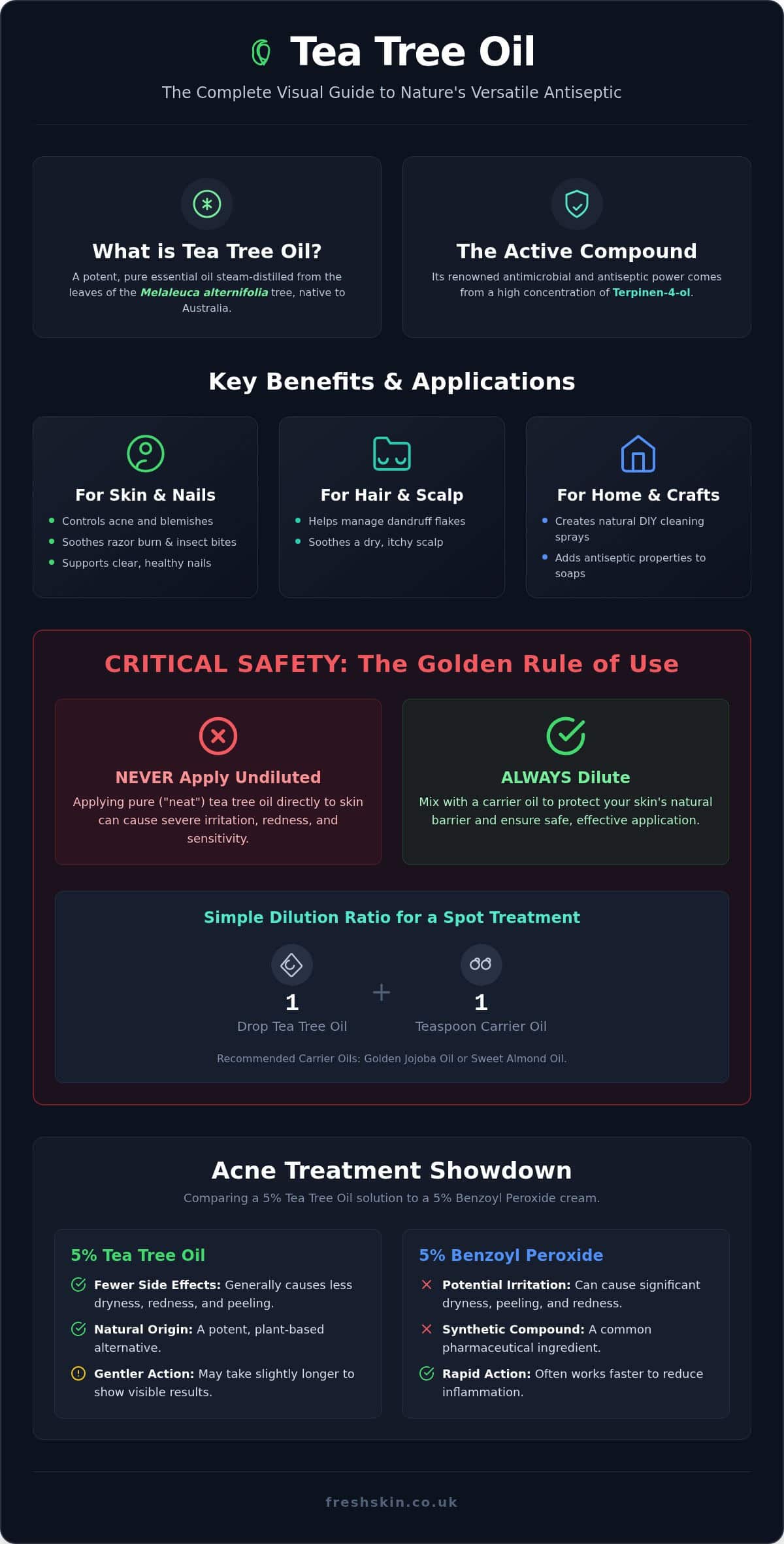
Tea tree essential oil isn’t just another fragrance on the shelf; it’s a potent botanical extract that has earned its reputation as a “medicine cabinet in a bottle.” Derived through the careful steam distillation of the leaves from the Melaleuca alternifolia tree, this oil is a complex mixture of over 100 different compounds. The most significant of these is Terpinen-4-ol. This specific component is the engine behind the oil’s renowned antimicrobial and antiseptic properties. When you choose a high-quality oil, you’re looking for a high concentration of Terpinen-4-ol, which ensures the oil is both effective and reliable for therapeutic use.
Understanding What is Tea Tree Essential Oil? requires looking beyond the label. Many products marketed as “tea tree solutions” or “remedies” are actually pre-diluted with water, alcohol, or synthetic fillers. These additions significantly reduce the therapeutic potential of the plant. At Freshskin Beauty, we focus on providing 100% pure tea tree essential oil. This purity ensures you have full control over the concentration, whether you’re treating a single blemish or crafting a large batch of natural home cleaners. It’s about transparency and giving you the raw, unadulterated power of nature.
The Origins of Melaleuca Alternifolia
The highest quality tea tree grows in the low-lying, swampy regions of New South Wales, Australia. This native environment provides the perfect humid conditions for the Melaleuca alternifolia to thrive, producing a rich, medicinal resin within its needle-like leaves. To capture this essence, the leaves undergo steam distillation. This gentle process uses low-pressure steam to burst the plant’s volatile oil glands without damaging the delicate chemical bonds. This specific species is the gold standard for aromatherapy because it offers the most consistent and scientifically researched profile of healing compounds found in the Melaleuca genus.
Tea Tree vs. Manuka Oil: Clearing the Confusion
While both oils hail from the same botanical family and share similar healing traits, they offer distinct experiences. Tea tree oil has a sharp, camphoraceous scent that immediately evokes a sense of cleanliness and clinical purity. Manuka oil, sourced from New Zealand, is earthier and often carries a significantly higher price tag due to its rarity. Most enthusiasts prefer tea tree essential oil for skin-clearing applications because of its rapid action against bacteria. It’s also much more cost-effective for large-scale DIY projects, making it the ideal partner for home hygiene and bulk soap making.
Key Benefits of Tea Tree Oil for Skin, Hair, and Nails
The therapeutic reach of tea tree essential oil extends far beyond its antimicrobial roots. It’s a staple in modern holistic care because it addresses multiple concerns with a single, potent extract. Whether you’re managing a sudden breakout or looking to soothe a dry, itchy scalp, this oil provides a natural alternative to harsh synthetic chemicals. Before you begin incorporating it into your routine, it’s helpful to understand Safety First: How to Dilute and Apply Tea Tree Oil Safely, as this ensures you reap the rewards without irritating your skin’s delicate barrier.
Beyond the face, tea tree oil is highly effective for maintaining nail health and soothing minor physical irritations. Its antifungal properties make it a popular choice for supporting the recovery of nails affected by onychomycosis. It also serves as a calming agent for the skin after minor trauma. If you’ve ever dealt with the stinging discomfort of razor burn or the persistent itch of an insect bite, a diluted drop of tea tree can provide rapid, cooling relief.
Tea Tree Oil for Acne and Blemish Control
Acne occurs when pores become clogged with excess sebum and bacteria. Tea tree essential oil works by penetrating deep into the pores to dissolve these oily blockages while neutralising the bacteria responsible for inflammation. Clinical studies have compared 5% tea tree oil to 5% benzoyl peroxide, a common pharmaceutical acne treatment. While tea tree may take slightly longer to show results, it’s often preferred because it typically causes fewer side effects like extreme dryness or peeling. For a quick spot treatment, simply add one drop of oil to a teaspoon of Golden Jojoba Carrier Oil and apply it directly to the blemish using a clean cotton bud.
Revitalising the Scalp and Hair
A healthy scalp is the foundation of vibrant hair. Tea tree provides a distinctively “clean” and tingly sensation that many find incredibly refreshing. It’s particularly useful for managing dandruff, as it targets Malassezia, the yeast-like fungus that often causes flaking and itching. You don’t need a complicated recipe to see the benefits; just add two or three drops of pure tea tree essential oil to your usual portion of shampoo before lathering. For those focused on a comprehensive hair care routine, combining this with the tips in our Rosemary Oil guide can help support both scalp clarity and hair thickness.
By choosing a high-quality, ethically sourced oil, you ensure that these treatments remain as effective as nature intended. Whether you are buying for personal use or small-scale manufacturing, sourcing from a trusted UK family business guarantees the purity your skin deserves.
Beyond Skincare: Tea Tree Oil for Home Hygiene and Crafting
The versatility of tea tree essential oil makes it an indispensable tool for maintaining a clean, healthy home environment. Its sharp, medicinal aroma is synonymous with hygiene, but its value goes far beyond just a pleasant scent. In the laundry room, adding a few drops to your washing machine can help deodorise stubborn sports gear and damp towels that have lost their freshness. While we have discussed the Key Benefits of Tea Tree Oil for the body, its utility in a household setting is equally impressive, offering a non-toxic alternative to the aggressive chemicals found in many commercial products.
For those who value a holistic lifestyle, tea tree provides a bridge between clinical cleanliness and natural living. It’s particularly effective at tackling the areas of the home prone to dampness, such as bathroom tiles and kitchen sinks. By harnessing the oil’s natural properties, you can create a sanctuary that feels as pure as it looks, all while supporting your family’s well-being through thoughtful, plant-based choices.
Natural Home Cleaning Recipes
Creating your own all-purpose spray is a simple way to reduce your household’s chemical footprint. Mix 500ml of water with 120ml of white vinegar and 15 drops of tea tree essential oil in one of our amber glass bottles. This solution is remarkably effective against household mould and mildew, as the oil naturally inhibits fungal growth on porous surfaces. If you find the medicinal scent too intense, our Fragrance Oils guide offers excellent advice on layering scents like Fresh Linen or Peppermint to create a more balanced, inviting aroma for your living spaces.
Tea Tree Oil in Soap and Candle Making
In the world of crafting, tea tree is prized for its “clinical clean” profile. When making cold process soap, blending tea tree with Eucalyptus or Rosemary creates a refreshing, spa-like experience that’s perfect for hand soaps. If you’re new to the craft, our Soap Making for Beginners guide provides the technical foundation needed to incorporate essential oils safely into your batches. Candle makers should be mindful of flash points; for tea tree essential oil, the flash point is approximately 59°C. Adding the oil to your soy wax flakes at the correct temperature ensures the scent remains potent and the candle burns safely, providing a purifying atmosphere throughout your home.
Safety First: How to Dilute and Apply Tea Tree Oil Safely
Safety isn’t just a precaution; it’s the foundation of a successful wellness ritual. While the potency of tea tree essential oil is its greatest strength, using it incorrectly can lead to skin sensitisation or irritation. You might see advice online suggesting “neat” or undiluted application for blemishes, but professional aromatherapists almost always recommend dilution. Applying the oil directly to the skin repeatedly can strip the natural lipid barrier, potentially causing long-term sensitivity that prevents you from using the oil altogether in the future.
Before you integrate this botanical powerhouse into your daily routine, a patch test is the essential first step. Mix a single drop of the oil with a teaspoon of your chosen carrier oil and apply it to a small area on your inner forearm. Wait 24 hours to ensure no redness or itching occurs. It’s also vital to remember that tea tree essential oil is for external use only. Ingesting the oil is toxic and can lead to serious neurological symptoms, so it must always be kept well away from the mouth and used with care around mucous membranes.
The Essential Dilution Chart
Precision is key when mixing your own blends at home. For facial applications, such as a daily moisturiser or a targeted serum, a 1% dilution is the gold standard. This equates to just one drop of essential oil per 5ml (one teaspoon) of carrier oil. For body applications, such as a massage oil or a foot rub, you can safely increase this to a 2% or 3% dilution. Choosing the right base is just as important as the ratio itself; our Carrier Oils guide can help you decide between the lightweight feel of Fractionated Coconut Oil or the skin-mimicking properties of Jojoba.
Pet and Child Safety Considerations
What’s beneficial for humans can be hazardous for our smaller companions. Tea tree oil contains terpenes that are highly toxic to dogs and cats, as their livers cannot process these compounds effectively. Even a small amount applied to their skin or diffused in a confined space can cause distress. When using the oil in a household with small children, always ensure your blends are kept at a lower concentration and stored securely. It is vital to keep your oils stored in amber glass bottles in a cool, dark place that remains completely out of reach for children and pets.
To ensure you’re working with the highest quality botanical extracts for your family’s safety, you can buy pure tea tree essential oil directly from our UK-based family business.
Sourcing Quality: Why Choose Freshskin Beauty for Tea Tree Oil
Choosing a supplier for your botanical ingredients is a decision rooted in trust and transparency. In a market often saturated with “fragrance oils” that mimic natural scents using synthetic chemicals, finding a source for 100% pure tea tree essential oil is vital for both safety and efficacy. At Freshskin Beauty, we’ve built our reputation on a commitment to therapeutic-grade purity. We source our oils directly from global growers, ensuring that every bottle contains the unadulterated essence of Melaleuca alternifolia without the addition of fillers or artificial extenders. This direct relationship allows us to maintain high standards while offering the integrity that health-conscious consumers and small business owners expect.
As a family-run business based in the UK, we value personal connection over corporate distance. We understand the needs of our community, from the hobbyist blending their first facial serum to the small-scale manufacturer requiring consistent quality for their product line. Our national reach ensures that high-quality oils are accessible to everyone, backed by the expertise and approachable warmth that only a family business can provide. We don’t just sell oils; we partner with you on your wellness journey, providing the context and safety information necessary for effective use.
Pure vs. Adulterated Oils: What to Look For
Identifying a high-quality oil starts with the label. A reputable supplier will always clearly state the Latin name, Melaleuca alternifolia, to distinguish it from other species that may not have the same antimicrobial profile. Purity also depends on how the oil is stored after distillation. We use amber glass bottles to protect the integrity of our oils from UV light, which can cause oxidation and reduce therapeutic benefits. For a comprehensive look at how to verify the quality of your collection, our Essential Oils Purity guide offers detailed insights into the science of sourcing.
Supporting Your Wellness Journey and Business
We pride ourselves on supporting a diverse range of customers with flexible options that grow with your needs. Whether you’re looking for a 10ml bottle for home use or require multi-litre quantities for a professional workshop, our wholesale and bulk options cater to every scale. Our tiered pricing structure is specifically designed to help small cosmetic businesses manage their costs without sacrificing quality. Combined with our fast UK delivery and expert advice, we’re here to ensure you have the tools you need to succeed. Ready to experience the difference that purity makes? Explore our range of pure Tea Tree Essential Oil and discover the gold standard in botanical care.
Embrace a Natural Approach to Wellness
You’ve now explored how to harness one of nature’s most effective botanical extracts with complete confidence. By mastering safe dilution ratios and understanding the diverse applications for skin, hair, and home, you can transform your daily rituals into purposeful acts of self-care. It’s clear that tea tree essential oil is much more than a simple remedy; it’s a versatile tool for anyone committed to a holistic, chemical-free lifestyle. Whether you are treating a blemish or purifying your living space, the power of this plant is truly remarkable.
Your journey toward better health deserves the highest quality ingredients. As a family-run UK business, we’re dedicated to providing direct-from-grower quality and full transparency in everything we do. Whether you’re a hobbyist or a small business owner looking for reliable bulk options, we’re here to support your growth with oils that meet the strictest standards of purity. You can Shop Pure Tea Tree Essential Oil at Freshskin Beauty to begin your next project. We’re excited to see how you integrate these powerful botanical gifts into your life and look forward to supporting your wellness journey every step of the way.
Frequently Asked Questions
Can I apply tea tree oil directly to my skin?
You should avoid applying tea tree oil directly to your skin without first diluting it. While some sources suggest “neat” application for small spots, professional aromatherapists advise against this because it can lead to long-term skin sensitisation or irritation. By mixing the oil with a carrier oil, you protect your skin’s natural barrier while still benefiting from its powerful antimicrobial properties. Always perform a patch test on your inner forearm before starting a new routine.
Is tea tree oil safe for use on the face for acne?
Yes, tea tree oil is a safe and effective natural support for acne-prone skin when you use it at the correct concentration. For facial application, a 1% dilution is the professional standard, which means adding one drop of essential oil to 5ml of a carrier oil. This allows the oil to penetrate pores and target bacteria without causing the extreme dryness or peeling often associated with aggressive synthetic acne treatments.
What is the best carrier oil to mix with tea tree oil?
The best carrier oil depends on your specific skin needs and the area you are treating. Golden Jojoba Carrier Oil is an excellent choice for facial use because it closely mimics the skin’s natural sebum, making it ideal for oily complexions. For body massage or larger areas, Sweet Almond Carrier Oil or Fractionated Coconut Oil provide a smooth, nourishing base that spreads easily and absorbs well into the skin.
Can tea tree oil be used in a diffuser around pets?
You should exercise extreme caution when using tea tree essential oil in a diffuser if you have pets in your home. This oil contains terpenes that are toxic to dogs and cats, as their livers cannot process these compounds effectively. If you choose to diffuse it, ensure the room is well-ventilated and your pet has the freedom to leave the area immediately if the scent becomes overwhelming for them.
How can I tell if my tea tree oil is 100% pure?
You can identify pure tea tree essential oil by checking the label for the Latin name, Melaleuca alternifolia. Truly pure oils are always stored in amber glass bottles to protect them from UV damage and won’t contain synthetic additives or “fragrance” on the ingredient list. Sourcing from a transparent UK family business that works directly with growers is the most reliable way to ensure you’re receiving a therapeutic-grade product.
What happens if you accidentally swallow tea tree oil?
If you or someone else accidentally swallows tea tree oil, you should seek medical advice or contact a poisons information centre immediately. This oil is strictly for external use and is toxic if ingested, potentially causing symptoms like confusion, loss of muscle coordination, or more serious neurological issues. It’s vital to store your oils in a secure place that remains completely out of the reach of children and pets.
Can tea tree oil help with hair growth or dandruff?
Tea tree oil is particularly effective for managing dandruff because it targets the yeast-like fungus responsible for scalp flaking and itchiness. While it isn’t a direct hair growth stimulant like rosemary oil, it creates a healthier scalp environment by reducing buildup and inflammation. A clean, balanced scalp is the essential foundation for healthy hair growth, making this oil a valuable addition to your custom shampoo or scalp treatment.
How should I store my tea tree oil to keep it fresh?
You should store your oil in a cool, dark place away from direct sunlight to maintain its delicate chemical integrity. Keeping the oil in an amber glass bottle with a tight-fitting lid prevents oxidation and UV degradation, which can make the oil less effective and more irritating to the skin over time. Most essential oils stay fresh for approximately two years when kept in these stable, protected conditions.