

Uncategorized
Rosemary Oil for Hair Before and After: A Science-Backed Guide to Visible Results
May
Could a simple herb really offer an 82.4% to 94.6% inhibition of the enzymes linked to hair thinning? While it sounds like a bold claim, clinical research suggests that high-purity botanical extracts are more than just a trend. If you’ve spent mornings examining your crown or temples with growing concern, you’re not alone in seeking a gentler, more ethical path to hair health. You’ve likely seen the viral rosemary oil for hair before and after photos and wondered if those results are truly attainable for your own scalp.
We believe that transparency is essential when you’re investing your time in a new self-care ritual. You want results that you can see in the mirror without the persistent itching or irritation often found in synthetic alternatives. This guide provides an honest look at the reality of botanical care, grounded in clinical data rather than social media hype. We’ll explore the documented six-month timeline required for visible change and how a recent trial showed a 57.73% improvement in hair growth when combining rosemary and lavender. You’ll also discover precise dilution methods using nourishing carrier oils like Sweet Almond or Golden Jojoba to create a safe, sustainable ritual for thicker hair density.
Key Takeaways
- Gain confidence in your botanical journey by understanding the clinical evidence that compares rosemary oil to traditional hair growth treatments.
- Discover how to accurately track your progress and interpret rosemary oil for hair before and after milestones, from reduced fallout to increased density.
- Learn the essential safety protocols for diluting pure essential oils with carrier oils like Sweet Almond or Jojoba to protect your scalp.
- Master the realistic six-month timeline required to see visible results, ensuring you stay consistent through every phase of hair emergence.
- Understand why sourcing high-purity, ethical oils is the most critical step in avoiding the scalp irritation and buildup caused by synthetic alternatives.
The Science of Rosemary Oil: Why the “Before” Becomes a Better “After”
For centuries, Rosmarinus officinalis has been cherished across Mediterranean cultures, not just as a culinary staple but as a cornerstone of holistic hair care. This aromatic herb carries a rich history of supporting vitality, yet its reputation today rests on more than just tradition. Modern clinical trials have begun to validate what herbalists have known for generations. The most famous evidence comes from a 2015 study where researchers compared rosemary oil to 2% minoxidil, a common pharmaceutical option. After six months of consistent use, the results were clear. Rosemary oil was just as effective at increasing hair count as the standard treatment, but with significantly less scalp itching and irritation. This study changed how many view alternative medicine for hair loss, moving it from the fringes into the scientific spotlight.
The secret to these visible rosemary oil for hair before and after results lies in a potent compound called carnosic acid. This antioxidant doesn’t just sit on the surface; it actively works to heal damaged tissue and support nerve endings within the scalp. By fostering a healthy environment at the cellular level, rosemary oil ensures that the foundation for new growth is strong. This healing property is paired with an ability to improve scalp microcirculation. When applied correctly, the oil helps deliver a steady stream of oxygen and nutrients to follicles that may have previously been starved of the resources they need to thrive.
The Biological Mechanism of Hair Growth
Rosemary oil acts as a natural vasodilator, which means it gently widens the blood vessels in the scalp to enhance blood flow. This process is vital for keeping hair in the “Anagen” or growth phase for a longer period. Additionally, laboratory studies have shown that rosemary extract can inhibit the 5-alpha-reductase enzyme by 82.4% to 94.6%. This enzyme is responsible for converting testosterone into DHT, a hormone that causes follicles to shrink. By blocking this process, rosemary helps prevent the miniaturization of hair strands. Key biological benefits include:
- Vasodilation: Widening blood vessels to deliver vital nutrients to the root.
- DHT Inhibition: Blocking the hormone responsible for follicle shrinkage.
- Anagen Extension: Encouraging hair to stay in the active growth phase longer.
Who is the Ideal Candidate for Rosemary Oil?
While many turn to botanical oils for androgenetic alopecia, also known as pattern hair loss, they’re equally beneficial for those experiencing temporary thinning due to high stress or seasonal changes. If you’re noticing more hair in the brush than usual, the calming nature of a scalp ritual can provide both physical and emotional relief. Rosemary oil is a stimulatory botanical that requires consistent application for cellular response. It’s best suited for those who value a sustainable, long term approach to wellness and are willing to commit to a frequent application schedule to see their hair’s full potential return.
Decoding “Before and After” Results: What Can You Actually Expect?
When you first begin your botanical journey, your “before” state is often defined by more than just thinning hair. Many individuals start with a scalp that feels tight, dry, or shows visible signs of inflammation. These conditions often lead to dormant follicles, where hair production has stalled. Understanding the reality of rosemary oil for hair before and after transformations means looking past the surface. Success starts with a healthy scalp environment. Clinical research explains why rosemary oil might be good for your hair by highlighting its ability to soothe this inflammation and prepare the skin for new growth.
You might notice a brief period of increased shedding during the first few weeks of application. Don’t let this discourage you. This “Shedding Phase” is a common occurrence in many hair care routines. It happens because the rosemary oil encourages the scalp to transition from the resting phase to the active growth phase. To make room for new, stronger strands, the scalp must release older, weaker hairs. It’s a natural reset that paves the way for the visible improvements you’re working toward.
Visual Markers of Success
The first tangible changes are often subtle. You might notice a reduction in scalp visibility at your parting or crown as hair density begins to shift. A 2024-2025 trial recorded a 32% improvement in hair density and a nearly 70% increase in hair thickness among participants. You should also look for “baby hairs”—fine, vellus hairs appearing along the hairline. These are the early signs of new growth. Over time, these fine hairs mature into terminal hairs, contributing to a fuller, more voluminous appearance.
Factors That Influence Your Personal Results
Your individual timeline depends heavily on consistency. Applying a 2% dilution daily yields far more reliable results than an occasional weekly treatment. Genetics and age also play a role; they define the baseline of what your follicles can achieve. However, even if your “after” doesn’t mirror a viral social media post, the secondary benefits of improved texture and reduced brittleness are significant wins. Choosing a pure rosemary essential oil ensures your scalp receives the full botanical benefit without the interference of synthetic fillers that can cause buildup. By committing to the process for at least six months, you allow your hair the necessary time to cycle through its natural growth phases.

The Application Framework: How to Create Your Own Hair Growth Oil
The golden rule of botanical care is simple: never apply neat rosemary oil directly to your scalp. Essential oils are incredibly potent, and using them without a buffer can lead to redness, irritation, or even chemical sensitivity. To see the best rosemary oil for hair before and after results, you must prioritize the health of your skin barrier. A 2% dilution is the recognized standard for frequent scalp application. This ratio ensures you receive the stimulatory benefits of the herb while maintaining a soothing, therapeutic experience. This concentration was utilized in the famous randomized comparative trial, proving that safety and efficacy go hand in hand.
Creating your blend is a straightforward process that allows you to control the purity of your ingredients. For a standard 100ml batch, add approximately 40 to 50 drops of rosemary essential oil to your chosen base. It’s essential to store your finished blend in Amber Glass Bottles with Droppers. These dark bottles protect the volatile compounds from light degradation, ensuring your oil remains effective from the first drop to the last. Synthetic additives in pre-mixed oils often lead to buildup, but a homemade blend using high-quality oils keeps the scalp clean and receptive.
Matching Carrier Oils to Your Hair Type
Most guides suggest any carrier oil will do, but choosing the right base for your specific hair type can significantly improve your results. If you have an oily scalp, Golden Jojoba Carrier Oil is the ideal choice because it mimics the skin’s natural sebum, helping to balance oil production without clogging pores. For those with dry or damaged strands, Moroccan Argan Oil provides deep hydration and essential fatty acids to repair the hair shaft. If your hair is fine and easily weighed down, Sweet Almond Oil offers a lightweight, non-greasy finish that absorbs quickly into the scalp.
The Scalp Massage Technique
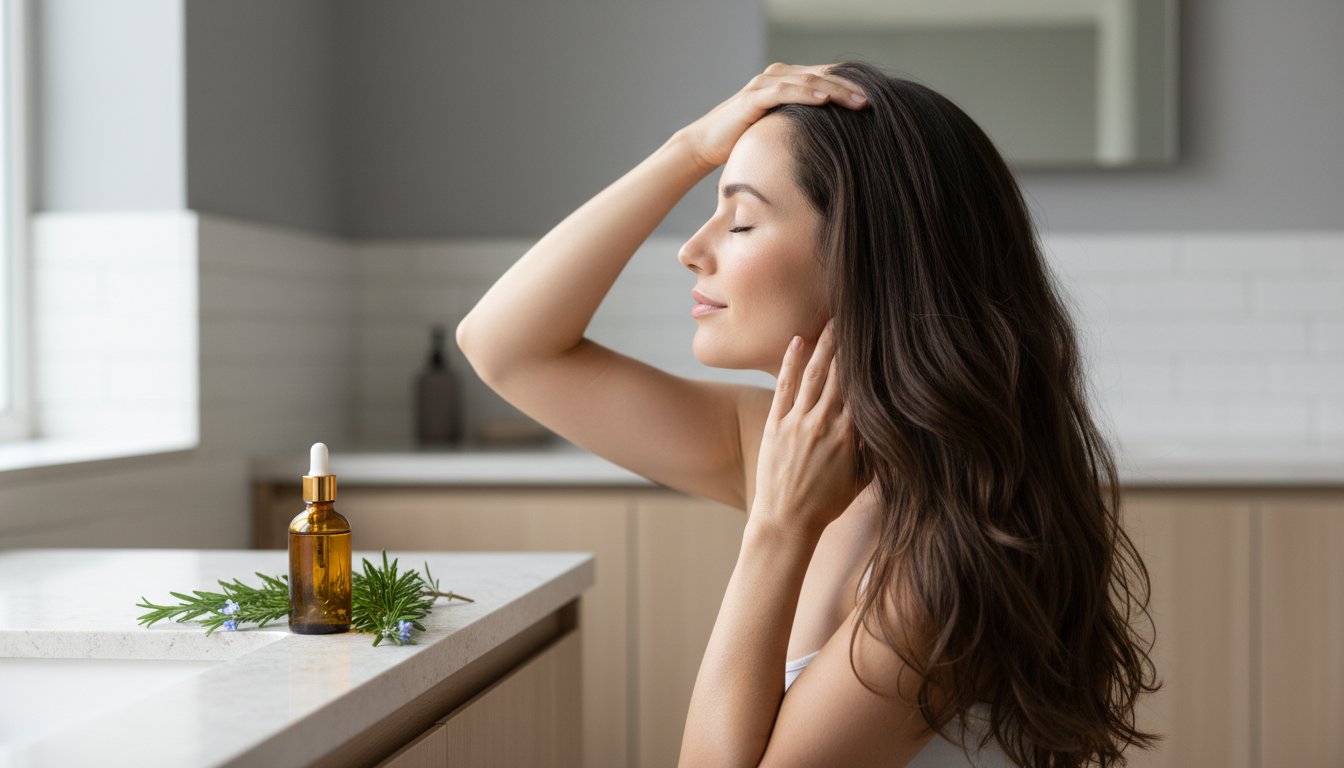
Application is as much about the physical ritual as it is about the ingredients. Using a dropper allows you to target “problem areas” like the crown or temples without wasting product. Once the oil is applied, commit to a 5-minute massage using your fingertips. This ritual stimulates blood flow and encourages lymphatic drainage, which helps move nutrients to the hair follicles. Some enthusiasts use the inversion method, gently leaning their head forward during the massage to further boost circulation. Whether you choose this method or a traditional seated massage, consistency remains the most important factor for cellular response.
Managing Expectations: A 6-Month Rosemary Oil Timeline
Understanding that hair growth is a marathon rather than a sprint is the first step toward success. While viral videos might suggest overnight transformations, the biological reality of your hair cycle dictates a steadier pace. To accurately judge your rosemary oil for hair before and after journey, you must commit to a minimum of six months. This timeline isn’t arbitrary; it aligns with the landmark 2015 clinical trial where participants saw no significant hair count increase at the three-month mark, yet achieved remarkable results by month six. Consistency is the bridge between starting a routine and seeing a visible change.
During Month 1, the “Adjustment Phase,” your focus should be on scalp comfort. You might notice your scalp feels less itchy or congested, but visible growth is rare. By Months 2 and 3, the “Emergence Phase,” you may begin to see fine baby hairs along the hairline and notice a reduction in daily fallout. However, the most rewarding changes happen in Month 6. This is the “Results Phase,” where documented trials have measured a hair growth rate improvement of up to 57.73% when using high-quality botanical formulations. This is the only time you should take your final “after” photo to compare against your baseline.
The Patience Requirement
Hair follicles move through distinct phases: Anagen (growth), Catagen (transition), and Telogen (resting). Because a portion of your hair is always in the resting phase, new growth takes time to reach the surface. Stopping your routine after only 90 days is the most common mistake in natural hair care. You’re often quitting just as the follicles are beginning to respond at a cellular level. To track your progress effectively, take photos in consistent lighting and at the same angles every four weeks. This helps you notice subtle changes in density that might be missed in a daily mirror check.
Addressing Potential Side Effects
It’s vital to distinguish between a healthy tingling and actual irritation. A mild, warm sensation is usually a sign of increased blood flow from the oil’s vasodilatory properties. However, if you experience persistent redness, burning, or bumps, you should wash the area immediately and increase your dilution ratio. Always perform a patch test on your inner arm before a full scalp application to ensure your skin is comfortable with the botanical blend. If your hair loss continues to accelerate despite consistent care, it may be time to consult a trichologist to rule out underlying medical conditions. Start your journey today by selecting a high-purity rosemary essential oil to anchor your new hair care ritual.
The Freshskin Difference: Why Purity Dictates Your Results
Not all botanical oils are created equal. While many retail options focus on a pleasant scent, there’s a significant difference between “Fragrance Grade” and pure essential oils. Fragrance oils are designed for their aroma and often contain synthetic fillers that offer no benefit to the scalp. In fact, these additives can lead to buildup and irritation, which actively hinders the results you’re looking for in your rosemary oil for hair before and after journey. By choosing a pure extract, you ensure that every drop is working toward stimulating your follicles and supporting scalp health without unnecessary chemical interference.
At Freshskin, we believe that transparency is the foundation of trust. As a family-run UK business, we’ve built our reputation on sourcing our Rosemary Essential Oil directly from dedicated growers who share our commitment to ethical standards. We don’t just sell a product; we provide the raw, potent ingredients you need to create a personalized hair care ritual. This direct connection to the source allows us to guarantee the integrity of our oils, ensuring they’re free from the synthetic components that often clutter commercial formulations. Your scalp deserves the cleanest possible environment to thrive.
Sourcing and Quality Control
Quality control is a science we take seriously. Every batch of our oil undergoes GC/MS testing to verify its chemical profile and ensure it meets our high standards for purity. It’s a common misconception that “natural” always equals “safe,” but without rigorous testing, botanical extracts can vary wildly in potency. Buying pure oils in bulk for your DIY blends isn’t just more cost-effective; it’s also more environmentally friendly. It reduces packaging waste and gives you complete control over the concentration and quality of your scalp treatments, allowing for a safer and more effective experience.
Starting Your Journey with Confidence
Your transformation begins with a simple, consistent ritual: Dilute, Massage, Repeat. By following the 6-month timeline we’ve discussed, you’re giving your body the space it needs to respond to botanical stimulation. We invite you to join the Freshskin community to explore more about aromatherapy and discover new DIY beauty tips that align with a holistic lifestyle. Your hair’s health is a reflection of the care you provide, and we’re here to support you every step of the way. Explore our range of pure Rosemary and Carrier Oils to start your transformation today.
Your Path to Botanical Hair Vitality
Choosing a natural approach to hair care is an empowering decision that rewards patience and consistency. To see the most authentic rosemary oil for hair before and after results, you must commit to a dedicated six-month ritual. This timeline allows your scalp the necessary time to transition through its natural growth phases while benefiting from the stimulatory properties of high-purity botanicals. Remember that safety is your foundation; always use a proper 2% dilution with a carrier oil that complements your specific hair type.
At Freshskin, we’ve been a family-run UK business since 2010, providing 100% pure, therapeutic-grade oils to our community. We handle every bottle with integrity, ensuring that you receive the highest quality extracts without synthetic additives or fillers. With fast national delivery across the UK, your new self-care routine is only a few days away. We’re honored to be your partner in this wellness journey as you cultivate a healthier, more vibrant scalp environment.
Start your hair growth journey with our premium Rosemary Essential Oil and embrace the sustainable power of nature today.
Frequently Asked Questions
How long does it take for rosemary oil to show hair growth results?
It typically takes six months of consistent application to observe measurable changes in hair density and count. While some individuals notice a reduction in daily fallout by the third month, clinical evidence indicates that the most significant improvements occur after half a year. This timeline is necessary because hair follicles require time to transition from the resting phase back into the active growth stage.
Can I leave rosemary oil in my hair overnight?
Yes, you can leave a diluted rosemary oil blend in your hair overnight to allow for maximum absorption into the scalp. Ensure you’re using a skin-friendly carrier oil like Golden Jojoba or Sweet Almond to prevent irritation during sleep. If you have a sensitive scalp, it’s best to start with a shorter duration of 30 minutes before committing to an overnight treatment to ensure your skin remains comfortable.
Is rosemary oil better than Minoxidil for hair loss?
A 2015 clinical study found that rosemary oil was as effective as 2% minoxidil for increasing hair count after six months of use. The primary advantage of the botanical option was a significantly better side-effect profile, with users reporting much less scalp itching and irritation. Many people choose rosemary oil as a natural, sustainable alternative that supports scalp health without the use of synthetic pharmaceuticals.
How many times a week should I use rosemary oil for hair growth?
For optimal results, apply your diluted oil blend at least two to three times a week. Some individuals prefer a daily application to maintain a steady stimulatory effect on the follicles. To see a true transformation in your rosemary oil for hair before and after progress, finding a frequency that you can realistically maintain for at least six months is the most important factor in your success.
Do I have to dilute rosemary oil before putting it on my scalp?
You must always dilute rosemary essential oil before applying it to your scalp. Essential oils are highly concentrated plant extracts that can cause chemical burns or skin sensitization if used neat. A 2% dilution, which is approximately 40 drops of essential oil per 100ml of carrier oil, provides a safe and effective concentration for regular scalp massages without risking irritation or redness.
Can rosemary oil cause more hair loss initially?
Some users experience a temporary increase in shedding during the first few weeks of a new botanical routine. This occurs because the oil encourages follicles to exit the resting phase and enter the active growth phase. To make room for new, healthier strands, the scalp must release older, weaker hairs. This process is a natural part of the hair cycle reset and shouldn’t be a cause for alarm.
What is the best carrier oil to mix with rosemary oil for hair?
The best carrier oil depends on your specific hair and scalp type. Golden Jojoba is excellent for oily scalps as it mimics natural sebum, while Moroccan Argan oil offers deep nourishment for dry or damaged strands. If you have fine hair, Sweet Almond oil is a lightweight, non-greasy option. Matching the base oil to your needs ensures better absorption and helps improve the overall texture of your hair.
Is rosemary oil safe for colour-treated hair?
Pure, diluted rosemary oil is generally safe for colour-treated hair and won’t strip your dye. Its antioxidant properties can actually help protect the hair shaft from environmental damage. It’s always wise to perform a patch test on a small, inconspicuous section of hair first to ensure there’s no reaction. Avoid using very high heat immediately after application, as this can sometimes affect the vibrancy of certain hair colours.