

Uncategorized
Lavender Essential Oil for Sleep: The Complete Guide to Better Rest in 2026

Feb
Does the promise of a restful night feel just out of reach, leaving you to face the morning feeling anything but refreshed? When you’re overwhelmed by conflicting wellness advice, it can be difficult to know where to turn for genuine support. Yet, for centuries, the gentle, botanical aroma of pure lavender essential oil for sleep has remained a steadfast, natural ally in the quest for deeper tranquillity. It offers a simple, sensory path back to the restorative rest your body and mind deserve.
This comprehensive guide is designed to be your trusted resource, cutting through the noise to deliver only the essentials. As a UK-based, family-run company, we believe in clarity and safety above all. Here, you will discover the science-backed methods that make lavender so effective, learn to create calming and skin-safe DIY rituals for your bedtime routine, and gain the confidence to select a truly therapeutic-grade oil. It’s time to transform your evening into a sanctuary of calm and finally achieve the deep sleep you’ve been dreaming of.
Key Takeaways
- Understand the science of how pure lavender (*Lavandula angustifolia*) interacts with your nervous system to promote a state of calm ideal for rest.
- Explore the three most effective methods for using lavender essential oil for sleep, from simple inhalation to creating a soothing bedtime environment.
- Master the “Safety First” rule by learning correct dilution techniques with carrier oils to create safe, effective DIY sleep rituals.
- Learn why choosing 100% pure, therapeutic-grade lavender is essential for achieving genuine sleep benefits and how to spot the difference from fragrance oils.
The Science of Serenity: How Lavender Interacts with Your Nervous System
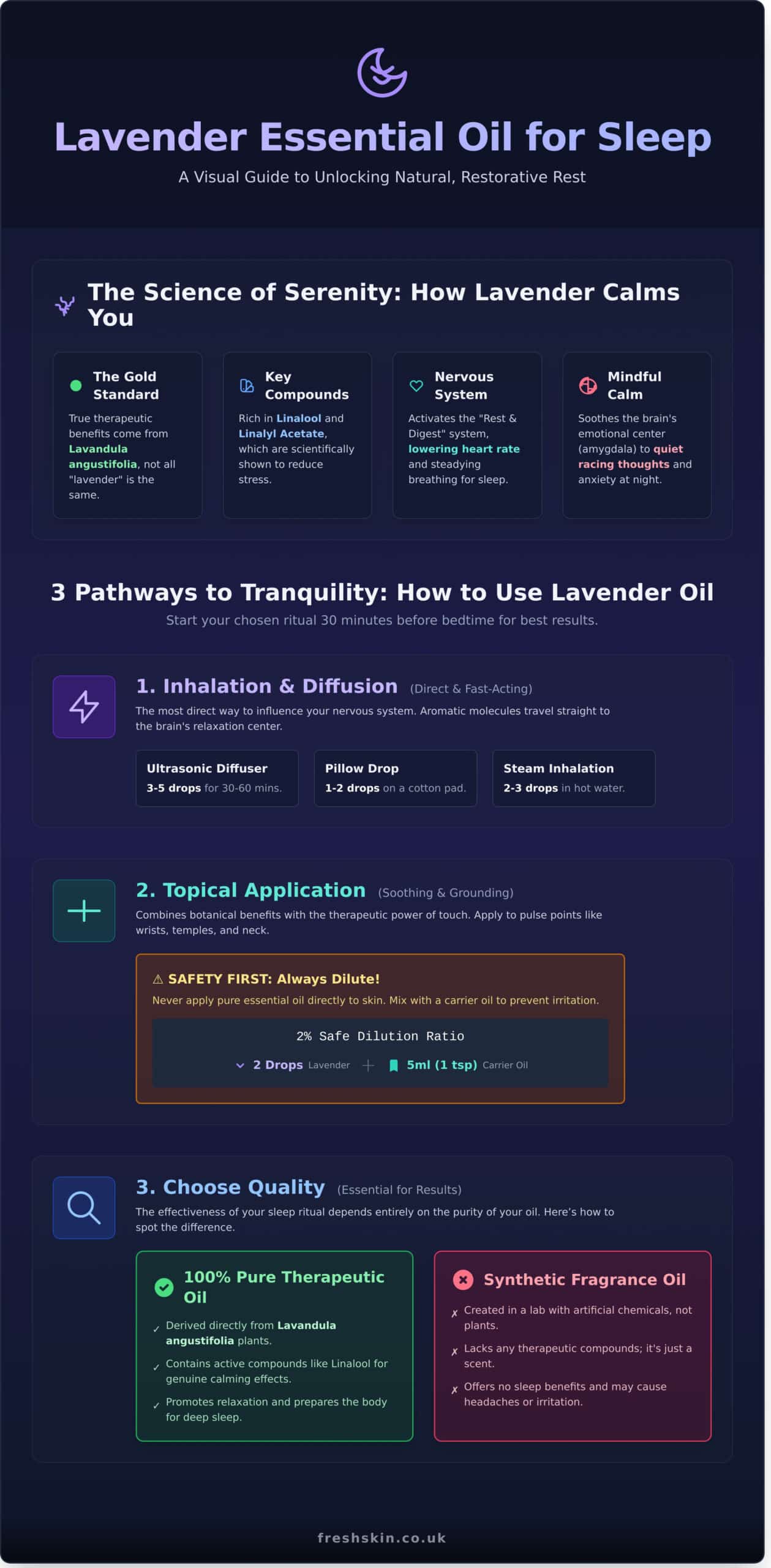
Ever wondered why the scent of lavender is so deeply calming? The answer lies in its sophisticated botanical chemistry. While many plants are called lavender, it is specifically Lavandula angustifolia that is celebrated in aromatherapy as the gold standard for promoting rest. Its therapeutic power comes from two primary chemical constituents, linalool and linalyl acetate, which work in harmony to reduce physiological arousal. For a comprehensive overview of lavender oil and its complex makeup, this resource is an excellent starting point. These compounds directly influence your nervous system, guiding it from a state of stress to one of profound tranquility.
When you inhale lavender, you are essentially sending a signal to your body to slow down. The aroma helps activate the parasympathetic nervous system-our natural “rest and digest” mode. This shift encourages a lower heart rate, steadier breathing, and relaxed muscles, creating the ideal physical conditions for sleep. Furthermore, the scent has a notable calming effect on the amygdala, the brain’s emotional processing centre. By soothing this area, lavender helps to quiet the racing thoughts and anxieties that so often keep us awake at night, making it an invaluable tool in preparing the mind for deep rest.
Linalool: The Chemical Key to Relaxation
Linalool is a naturally occurring terpene alcohol that is one of the most abundant compounds in true lavender. Research suggests that it gently modulates GABA receptors in the brain, which are the same receptors targeted by some sleep medications, helping to inhibit brain signals and promote a sense of calm. This is precisely why the purity of your oil matters; only a 100% pure, unadulterated oil guarantees the presence and therapeutic potency of these vital chemical constituents.
The Olfactory Connection: From Scent to Sleep
Your sense of smell offers a direct pathway to your brain’s emotional core. When you inhale lavender, its aromatic molecules travel up the nose to the olfactory bulb, which sends signals directly to the limbic system. This process bypasses the conscious mind, triggering an immediate and instinctual relaxation response. By consistently using lavender essential oil for sleep, you create a powerful emotional “anchor,” training your brain to associate this beautiful, clean scent with safety, serenity, and the ritual of winding down.
Effective Methods: How to Use Lavender Essential Oil for Sleep
To truly harness the calming properties of lavender essential oil for sleep, it’s essential to create a consistent pre-sleep ritual. The goal is to build a powerful sensory cue-a Pavlovian response where the gentle aroma of lavender signals to your body and mind that it’s time to unwind. We recommend beginning your chosen method approximately 30 minutes before you intend to close your eyes. This allows the therapeutic compounds to take effect, preparing you for a night of deep, restorative rest. The primary methods for use fall into three main categories: inhalation, topical application, and environmental diffusion.
Diffusion and Inhalation Techniques
Inhaling lavender is the most direct way to influence the nervous system. The aromatic molecules travel to the brain’s limbic system, which governs emotions and relaxation. A comprehensive review titled Lavender and the Nervous System details these anxiolytic (anxiety-reducing) effects. Here are our favourite inhalation methods:
- Ultrasonic Diffuser: Add 3-5 drops of our 100% Pure Lavender Oil to your diffuser. For a gentle transition to sleep, use an intermittent setting that diffuses for 30-60 minutes before automatically shutting off.
- The Pillow Drop: Place 1-2 drops onto a cotton pad or tissue and tuck it inside your pillowcase. This avoids direct contact with skin and prevents any potential staining on delicate fabrics.
- Steam Inhalation: On particularly stressful nights, add 2-3 drops to a bowl of hot (not boiling) water. Drape a towel over your head, lean over the bowl, and inhale the steam deeply for a few minutes.
Topical Application and Massage
Applying lavender topically combines the oil’s botanical benefits with the therapeutic power of touch. Always dilute pure essential oil with a carrier oil like jojoba or sweet almond oil (a 2% dilution is a safe start: 2 drops of lavender per 5ml of carrier oil) before applying to the skin. Focus on pulse points such as the wrists, temples, and behind the ears, where the oil is easily absorbed. Many people enjoy applying lavender to the soles of their feet; while there is no specific physiological evidence that this is more effective, the practice is a grounding, mindful ritual. For a truly luxurious experience, add 5-7 drops of lavender oil blended with a dispersant (like a tablespoon of full-fat milk or honey) to a warm bath to ensure the oil mixes with the water instead of floating on top.
These calming rituals are particularly beneficial for frequent travelers. Whether you’re flying for business or pleasure, maintaining a sense of routine can significantly improve sleep quality and combat jet lag. For those who often travel via services like a private jet charter london, creating a portable aromatherapy kit with a small bottle of lavender oil can transform a flight or hotel room into a personal sanctuary of calm.
And when your travels take you to popular destinations like Portugal’s Algarve region, creating a true sleep sanctuary becomes paramount. The foundation of any restful retreat is an exceptional bed, and for those setting up a home or holiday property, you can buy premium beds Algarve to ensure every night is restorative.
Can Lavender Help If You Cannot Smell It?
It’s a common and thoughtful question, particularly from those with a reduced sense of smell (anosmia) or individuals caring for loved ones who may not perceive scents as they once did. The reassuring answer is yes; the therapeutic benefits of lavender essential oil for sleep extend far beyond its beautiful aroma. The key lies in understanding how the oil’s active compounds interact with the body through pathways other than the nose.
Absorption Through the Skin and Lungs
While the calming scent of lavender is a significant part of the aromatherapy experience, the oil’s sleep-promoting properties are not solely dependent on your ability to smell it. When diffused or applied topically, the tiny botanical molecules of lavender oil enter your body through two primary, non-olfactory pathways:
- Through the Lungs: When you inhale the vapour, molecules travel to the alveoli-tiny air sacs in your lungs-where they are absorbed directly into the bloodstream, bypassing the sense of smell entirely.
- Through the Skin: When applied topically (properly diluted in a carrier oil), the oil’s components are small enough to penetrate the skin’s outer layers and reach the rich network of capillaries below, entering your circulatory system.
In both cases, the active compounds begin to circulate throughout the body, exerting their calming effects on the central nervous system, even if the olfactory nerve isn’t involved in the process.
Psychological vs. Physiological Benefits
It’s helpful to distinguish between the psychological comfort of a pleasant scent and the direct physiological action of the oil’s chemical constituents. The aroma can create a positive mental association with relaxation, but the true sedative power lies in compounds like linalool and linalyl acetate. A comprehensive meta-analysis published by the National Institutes of Health, titled The Sleep-Enhancing Effect of Lavender Essential Oil, reviewed numerous studies and confirmed its effectiveness in improving sleep quality through these very biological mechanisms.
For those with an impaired sense of smell, topical application is an excellent method. Simply diluting a few drops of lavender oil with a carrier oil like sweet almond or jojoba and massaging it into the soles of the feet or wrists allows for direct absorption. When you use a guaranteed 100% pure oil, like those from our family-run UK business, you can be confident that all the necessary therapeutic molecules are present to deliver a genuine, science-backed effect, helping you find a more peaceful night’s rest.
Safe Practices: Dilution Ratios and DIY Sleep Ritual Recipes
To fully embrace the therapeutic benefits of lavender essential oil for sleep, safety must always be your first consideration. At Freshskin Beauty Ltd, we champion a responsible approach to aromatherapy. The most important rule is to never apply pure, undiluted essential oil directly to your skin, as its concentration can cause irritation.
Instead, essential oils must be diluted in a carrier oil-a neutral, plant-based oil that safely ‘carries’ the essential oil onto your skin. Gentle options like Sweet Almond or Jojoba oil are perfect vehicles. For adults, we recommend the following dilutions for topical use:
- 1% Dilution: Ideal for sensitive skin or for products used daily over large areas of the body. (Approximately 6 drops of essential oil per 30ml of carrier oil).
- 2% Dilution: A standard dilution for most adults and for localised application. (Approximately 12 drops of essential oil per 30ml of carrier oil).
Before committing to a full application, always perform a patch test. Simply apply a small amount of your diluted oil to the inside of your elbow and wait 24 hours to ensure no sensitivity occurs.
The Ultimate Pillow Spray Recipe
Create a calming atmosphere with this simple, all-natural pillow mist. In a small spray bottle, combine 50ml of distilled water, 50ml of witch hazel (or a high-proof alcohol like vodka to act as a preservative and emulsifier), and 20-25 drops of pure lavender essential oil. For a more complex and grounding aroma, consider adding 5 drops of Roman Chamomile or Cedarwood oil. Shake well before each use and lightly mist your pillows and linens 10 minutes before bedtime. To protect the delicate aromatic compounds from light, always store your blend in protective Amber Glass Bottles.
Soothing Night-Time Body Oil
A gentle self-massage can be a profoundly relaxing ritual to prepare your body for rest. This recipe uses a 1% dilution, making it perfect for nightly use. To create a 100ml batch, simply blend 100ml of nourishing Sweet Almond Carrier Oil with 20 drops of lavender essential oil. After your evening bath or shower, warm a small amount of the oil in your palms and slowly massage it into your shoulders, neck, and the soles of your feet. Focus on releasing the day’s physical tension as you breathe in the serene, botanical scent, signalling to your body and mind that it’s time to unwind.
The Freshskin Difference: Sourcing Pure Lavender for Therapeutic Sleep
When you’re seeking a natural remedy to improve your rest, the quality of your chosen oil is paramount. Many products labelled “lavender oil” are merely fragrance grade, designed to mimic a scent using synthetic compounds or diluted essences. These lack the complex botanical profile-rich in esters like linalyl acetate-that is scientifically recognised for its calming, sleep-promoting properties. To truly benefit from lavender essential oil for sleep, you need a therapeutic-grade oil, which is why our 100% Pure guarantee is at the heart of everything we do.
At Freshskin Beauty, we ensure that the oil you use for your wellbeing is potent, unadulterated, and effective. It’s a promise rooted in our heritage and our unwavering commitment to quality.
From Grower to Bottle: Our Quality Commitment
Our dedication to purity begins at the source. We foster direct relationships with artisan growers and distillers from the world’s finest lavender regions. This allows us to secure the freshest, most potent botanicals for our oils. Every batch that arrives at our Nottingham-based headquarters undergoes rigorous quality testing to verify its purity and therapeutic composition. We believe in total transparency, providing full technical data so you can feel completely confident in the oil you bring into your home.
Why a Family-Run Business Matters
As a family-run business, our reputation is personal. We pour care and accountability into every single bottle, a promise that larger, faceless corporations often cannot make. This ethos guides our commitment to ethical sourcing and sustainable practices, ensuring that our passion for natural wellness benefits our customers, our partners, and the planet. We invite you to join our community of natural living enthusiasts across the UK who value this personal, principled approach to aromatherapy.
Transform your nightly routine into a truly restorative ritual with an oil you can trust.
Explore our Pure Lavender Essential Oil for your sleep ritual.
Embrace Tranquil Nights with Pure Lavender
As we’ve explored, the path to a more restorative night is beautifully simple and deeply rooted in nature. You now understand not only the science behind how lavender calms the nervous system but also the practical, safe methods for incorporating it into your nightly routine. The true key to unlocking these therapeutic benefits, and the most vital takeaway from this guide, is that the quality of your lavender essential oil for sleep is paramount.
At Freshskin, we are dedicated to helping you achieve that profound sense of peace. As a family-run UK business based here in Nottingham, we take immense pride in ethically sourcing the finest botanical ingredients for our community. Our unwavering 100% Pure Guarantee means you can trust that every drop is of the highest therapeutic quality, free from synthetics and ready to support your wellness journey. Shop our 100% Pure Lavender Essential Oil for a better night’s sleep and begin your journey to the serene rest you deserve.
Frequently Asked Questions About Lavender Oil for Sleep
How many drops of lavender oil should I put in my diffuser for sleep?
For a standard 100ml water diffuser, we recommend beginning with 3 to 5 drops of our 100% pure lavender essential oil. This amount is typically sufficient to create a gentle, therapeutic aroma that promotes relaxation without overwhelming the senses. You can adjust the quantity based on your room size and personal preference, but starting with less allows you to find the perfect balance for your sleep sanctuary, ensuring a serene atmosphere that encourages a peaceful night’s rest.
Can I put lavender essential oil directly on my pillow?
We advise against applying undiluted essential oils directly to your pillowcase. The concentrated botanical compounds can potentially stain the fabric and may cause skin irritation upon direct contact with your face. A much safer method is to create a simple pillow mist. Add 5-10 drops of lavender oil to a small 50ml spray bottle filled with distilled water, shake well before each use, and lightly spritz your bedding a few minutes before climbing into bed.
Is lavender oil safe to use for children’s sleep?
Lavender oil can be a wonderfully calming part of a child’s bedtime routine, but safety and proper dilution are paramount. For children over two years of age, we recommend using only 1-2 drops in a diffuser in a well-ventilated room for short periods (30-60 minutes). For topical application, ensure a very low 0.5% dilution (1 drop per 2 teaspoons of carrier oil). We always suggest performing a patch test and consulting with your paediatrician before use.
What is the best carrier oil to mix with lavender for a sleep massage?
For a deeply relaxing sleep massage, we love pairing lavender with carrier oils known for their skin-nourishing properties. Sweet almond oil is a wonderful, versatile choice as it absorbs well without feeling greasy. For drier or more sensitive skin, jojoba oil is an excellent option as its composition is very similar to our skin’s natural sebum. Fractionated coconut oil is another light, non-staining favourite, providing a smooth glide that allows the therapeutic benefits of lavender to be fully absorbed.
How long does it take for lavender oil to start working?
When diffused, the calming effects of lavender can often be felt within minutes as the aromatic molecules are inhaled and interact with the limbic system in your brain. When applied topically as part of a massage blend, it may take around 20-30 minutes for the oil to be absorbed through the skin and for you to feel a sense of profound relaxation. Consistency is key; incorporating it into your nightly ritual helps to signal to your body that it’s time to wind down.
Can I use lavender oil every night, or will I become immune to it?
Using lavender essential oil for sleep every night is generally safe, and you will not build a true physiological immunity to its effects. However, your nose can become accustomed to the scent over time-a phenomenon known as olfactory fatigue-which might lessen its perceived impact. To keep your routine effective, you could try taking a break for a night or two each week, or occasionally blend lavender with another calming oil like Roman Chamomile to create a new aromatic synergy.
Does lavender oil expire, and how should I store it for maximum potency?
Yes, like all pure botanical extracts, lavender essential oil has a shelf life. A high-quality, pure lavender oil will typically maintain its therapeutic potency for about 3-4 years from opening. To ensure its longevity, proper storage is crucial. Always keep the bottle tightly capped and store it in a cool, dark place away from direct sunlight and heat, such as a bedroom cupboard or drawer. This prevents oxidation, which degrades the oil’s delicate chemical compounds.
Is it safe to use lavender oil if I have pets in the bedroom?
We urge extreme caution when using any essential oils around pets, as their systems are far more sensitive than ours. Lavender oil is considered toxic to cats and can be an irritant for dogs if not used carefully. We do not recommend using an active diffuser in a closed bedroom with pets overnight. Please ensure your pet can leave the room freely if an aroma is present, and always consult your veterinarian before introducing essential oils into their environment.