

Uncategorized
Aromatherapy Guide 2026: Balancing Botanical Wisdom with Modern Wellness
Mar
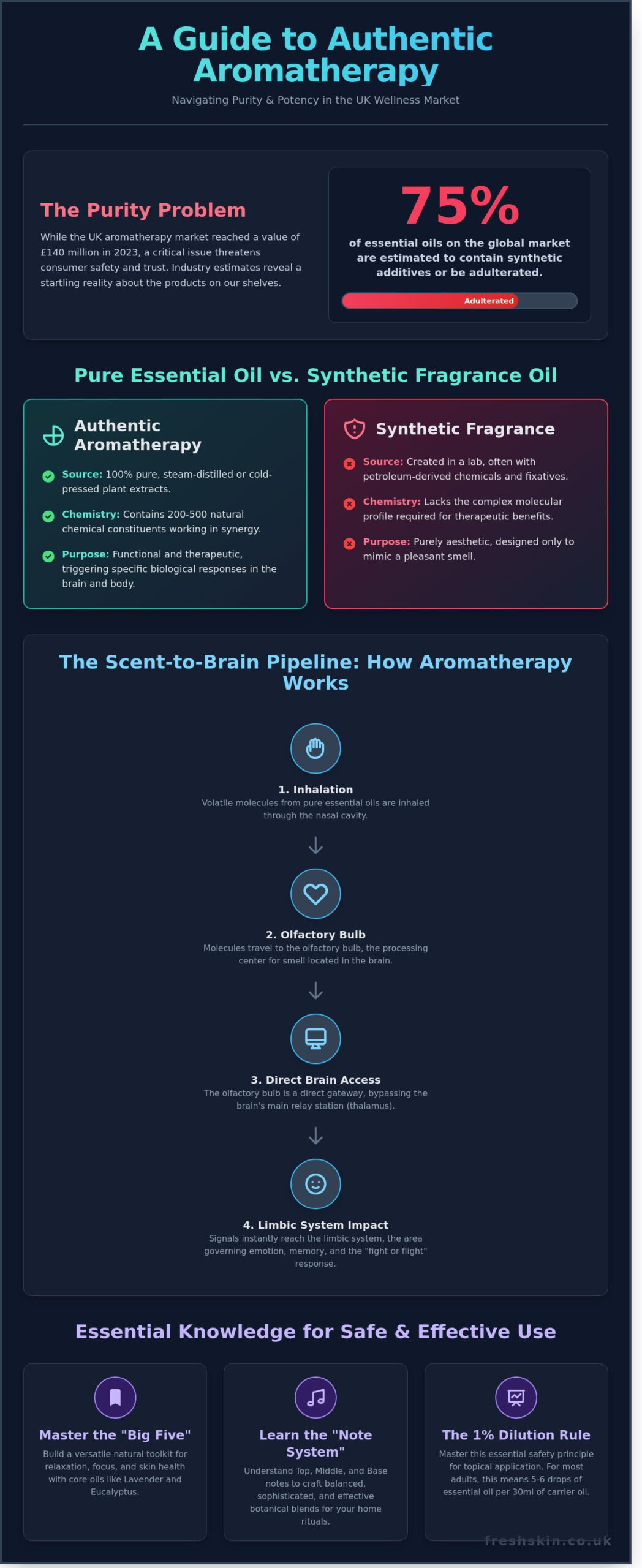
Did you know that while the UK aromatherapy market reached a record value of £140 million in 2023, industry experts estimate that nearly 75% of essential oils on the global market contain synthetic additives? It’s a startling figure that explains why so many people feel hesitant when choosing a bottle for their home. You’re likely looking for a natural way to support your family’s wellbeing, but the fear of skin irritation or “fake” products can make the process feel more stressful than soothing.
It’s perfectly normal to feel overwhelmed by complex blending ratios or conflicting advice found online. At Fresh Skin, our UK-based family team believes that botanical wisdom should be accessible and safe for everyone. This 2026 guide provides you with the scientific foundation to identify high-quality oils without overpaying, alongside practical steps to create effective blends. We will explore the molecular chemistry of plants, safe dilution methods, and the exact steps to curate a bespoke wellness kit for your household.
Key Takeaways
- Understand the vital distinction between synthetic fragrance and functional aromatherapy to harness the true therapeutic power of volatile plant compounds.
- Explore the “scent-to-brain” pipeline to learn how botanical aromas interact with your limbic system to support emotional balance and wellbeing.
- Master the “Big Five” essential oils—including Lavender and Eucalyptus—to build a versatile natural toolkit for relaxation, focus, and skin health.
- Learn the professional “Note System” and the essential 1% dilution rule to safely craft your own bespoke botanical blends and soothing home rituals.
- Discover how to identify adulterated products in the UK market and why sourcing 100% pure, ethically harvested ingredients is vital for your family’s safety.
What is Aromatherapy? Defining the Art and Science of Scent
Aromatherapy is the therapeutic application of volatile plant compounds to support the body’s natural healing processes. While many people associate scents with simple relaxation, true aromatherapy focuses on the physiological and psychological impact of botanical extracts. When exploring What is Aromatherapy?, we find a practice that bridges the gap between ancient botanical wisdom and contemporary clinical research. It’s vital to distinguish between fragrance used for aesthetic scent and aromatherapy used for specific function. Fragrances are often synthetic, designed to mimic a smell without providing the complex chemical profile needed for health benefits. In contrast, aromatherapy relies on the intricate, naturally occurring molecules found in the plant’s essential oil.
In the current 2026 wellness climate, British consumers are turning to botanical solutions with increasing frequency. A 2025 consumer survey indicated that 64% of UK adults now incorporate essential oils into their daily routines, viewing them as a cornerstone of modern self-care. This shift reflects a deeper desire for transparency and a return to nature-based rituals that are both effective and ethically grounded. At Fresh Skin, our family-run heritage drives us to provide the clarity and quality needed to make these rituals part of your home life.
The Origins of Botanical Medicine
The practice of using plant resins and balms dates back to 2700 BCE in ancient China and India, where botanical extracts were central to traditional healing systems. Ancient Egyptians later refined these techniques, using aromatic preparations for both medicinal purposes and sacred rituals. The 10th-century Persian physician Avicenna significantly advanced the field by inventing the refrigerated coil, which allowed for more efficient steam distillation. Modern aromatherapy was formally named in 1937 by French chemist René-Maurice Gattefossé. After a laboratory explosion, he discovered the healing properties of lavender oil on his burnt hand, shifting the focus from perfumery to therapy. Over the last 50 years, purity standards have evolved from basic sensory checks to rigorous laboratory testing to ensure every drop meets strict safety profiles.
Aromatherapy vs. Fragrance Oils
Authentic aromatherapy requires 100% pure essential oils, never synthetic perfumes or diluted fragrance oils. Synthetic scents are created in laboratories to be shelf-stable and inexpensive, but they lack the 200 to 500 different chemical constituents found in a single plant extract. These natural constituents work in synergy to provide the therapeutic benefits your body recognises. We believe that the chemical complexity of the plant is where the true power lies. Therapeutic grade is a commitment to 100% purity and potency, ensuring the oil is free from fillers or synthetic extenders. Choosing pure oils ensures you aren’t just filling your home with a nice smell, but are actively supporting your family’s wellness journey with the highest quality botanical ingredients available.
- 100% Pure Essential Oils: Contain only the natural steam-distilled or cold-pressed extract of the plant.
- Fragrance Oils: Often contain petroleum-derived chemicals and synthetic fixatives.
- Functional Scent: Uses the plant’s chemistry to trigger specific biological responses in the brain and body.
How Aromatherapy Works: The Olfactory System and Skin Absorption
Understanding aromatherapy requires looking past the pleasant fragrance to the complex biological responses it triggers in the human body. When you inhale a 100% pure essential oil, volatile molecules travel through the nasal cavity to the olfactory bulb. This structure acts as a direct gateway to the brain. Research from How Aromatherapy Works highlights that these scents bypass the thalamus, the brain’s relay station, hitting the limbic system almost instantly. This area governs our “fight or flight” response and emotional memory. It’s why a single breath of peppermint can sharpen focus within seconds, while frankincense might immediately ground a racing mind.
Some sceptics suggest these effects are purely psychological. However, the chemical reality tells a different story. Essential oils contain active compounds like terpenes and esters that interact directly with body chemistry. A 2021 study published in the Journal of Plant Science found that these molecules are detectable in the bloodstream within 20 minutes of topical application. They aren’t just “smells”; they’re botanical agents that influence physiological states. Our UK-based family team has seen how this transparency builds trust with customers who want to move beyond the “placebo” myth and understand the science of their self-care rituals.
The Scent-Emotion Connection
When you inhale lavender, the molecule linalool interacts with the GABA neurotransmitter system. This process helps quieten the amygdala, the brain’s emotional alarm bell. It’s a physical reaction, not a placebo. This direct link explains why 74% of users in a 2023 wellness survey reported immediate stress reduction when using citrus-based oils. These botanical scents provide a natural way to recalibrate your internal state without synthetic intervention. The amygdala stores emotional imprints, meaning a specific scent can unlock a sense of safety or alertness based on your biological history.
Topical Application and the Dermal Barrier
Essential oil molecules are incredibly small. Their low molecular weight allows them to slip through the skin’s dermal barrier and enter the capillaries. Because these oils are highly concentrated, using a carrier oil like Sweet Almond or Jojoba is vital for safety. Dilution isn’t just about preventing sensitisation; it’s about efficiency. A 2% dilution ratio ensures the oil doesn’t evaporate too quickly, allowing for a steady, even absorption into the tissues. This method protects the skin’s integrity while ensuring the therapeutic benefits reach the bloodstream.
As a family-run business, we prioritise your safety by providing clear guidance on these technical aspects. Using high-quality, ethically sourced ingredients ensures that your skin absorbs only the purest botanical compounds. You can find a range of ethically sourced carrier oils to help you blend safely at home, ensuring your wellness journey is both effective and gentle on your skin. Our 100% Pure guarantee means you never have to worry about synthetic fillers interfering with this delicate dermal process.
Essential Oil Profiles: Choosing the Right Botanical for Your Needs
Selecting the right botanical requires more than just following your nose. To help you build a functional collection, we categorise our oils into four primary benefit pillars: Calm, Energy, Focus, and Skin Health. This framework ensures your aromatherapy practice is both intentional and effective. Accuracy starts with the Latin name. For instance, true Lavender is Lavandula angustifolia. If a label lacks this detail, you might mistakenly purchase Lavandula latifolia, which contains high camphor levels that can actually act as a stimulant rather than a sedative.
The chemical profile of an oil is also dictated by its terroir; the specific combination of soil, altitude, and climate where the plant grew. A 2022 analysis showed that Peppermint grown in specific cooler climates often yields a higher menthol content, reaching up to 45% of the total oil volume. Understanding Why Purity Matters is vital because synthetic additives or poor harvesting methods strip away these delicate therapeutic compounds. Our UK-based family team prioritises oils that reflect their geographic heritage to ensure you receive the full botanical benefit.
Oils for Relaxation and Sleep
For evening rituals, Lavender and Clary Sage are the gold standard. Lavender’s high linalool content helps quiet the nervous system after a long day. You can add five drops to a warm bath mixed with a tablespoon of carrier oil, or use a diffuser 30 minutes before bed. For a deeper understanding of this botanical, explore our Lavender Essential Oil: A Complete UK Guide. Clary Sage complements this by encouraging a sense of emotional equilibrium, making it ideal for high-stress periods.
Oils for Energy and Mental Clarity
When the afternoon slump hits, Peppermint and Lemon provide an immediate lift. Peppermint’s cooling sensation clears the senses, while Lemon’s bright aroma helps dissipate mental “fog.” If you’re studying or working, Rosemary is your best ally. Research from Northumbria University in 2013 suggested that the aroma of Rosemary can improve memory tasks by up to 75%. For a quick boost, place two drops on a tissue and inhale deeply; it’s a simple, effective “desk-side” solution that won’t disturb your colleagues.
Oils for Skin Health and First Aid
The “Big Five” collection is completed by Tea Tree and Eucalyptus, both essential for your natural first aid kit. Tea Tree is a potent antimicrobial, often used at a 5% dilution to manage blemish-prone skin. Eucalyptus is unrivalled for respiratory support, providing a cooling sensation that helps clear airways during the winter months. You must never apply these oils “neat” to the skin. Always blend them with a carrier oil, such as Jojoba or Sweet Almond, to prevent irritation and ensure the aromatherapy benefits are absorbed safely and effectively.
The Craft of Blending: How to Create Your Own Aromatherapy Rituals
Creating a personal blend is where botanical science meets your own intuition. In aromatherapy, we call the successful result ‘synergy’. This occurs when the chemical components of two or more oils interact to produce a therapeutic effect greater than the sum of their individual parts. A 2022 study published in the Journal of Essential Oil Research highlighted how specific terpenes in lavender and bergamot work more effectively against stress when combined than when used alone. You aren’t just mixing scents; you’re engineering a wellness tool where 1+1 equals 3.
Creating a Balanced Scent Profile
The note system helps you build a fragrance that evolves over time. Top notes like Citrus or Eucalyptus provide that immediate, zesty lift but evaporate within 30 minutes. Middle notes, such as Lavender or Geranium, form the ‘heart’ and last for several hours. Finally, base notes like Frankincense and Cedarwood offer a grounding foundation, with heavy molecules that can linger on the skin for a full day.
Precision is vital for both safety and scent consistency. You’ll need amber glass bottles to block UV light, which can degrade oil quality by up to 40% over a six-month period. Use glass pipettes for accurate counting and a digital scale that measures to 0.01g if you’re making larger batches. For general adult body use, stick to the 1% dilution rule: exactly 6 drops of essential oil per 30ml of carrier oil.
Step-by-Step DIY Blending Guide
Follow this logical sequence to ensure your blend is potent and stable. First, choose your ‘Hero’ oil based on your goal, such as Lemon for focus or Roman Chamomile for rest. Second, select a carrier oil that suits your skin; Grapeseed is light for oily skin, while Jojoba is perfect for deep hydration. Mix your oils in a clean, dark bottle and allow the blend to ‘age’ for 24 hours. This resting period lets the molecules harmonise, creating a smoother aromatic experience.
Safety Protocols and Patch Testing
Always perform a 24-hour patch test before full application. Apply a small amount of your diluted blend to the inside of your elbow and monitor for any redness or irritation. It’s vital to remember that certain oils, such as Clary Sage, should be avoided during pregnancy, and others like Peppermint aren’t suitable for use around very young children or pets. High-antioxidant citrus oils typically expire within 12 months, whereas heavy, resinous woody base oils can remain potent for up to 6 years if stored correctly.
Ready to start your own blending journey? Explore our range of 100% pure essential oils to find your perfect synergy.
Why Purity Matters: The Freshskin Beauty Promise
Purity defines the success of your aromatherapy practice. The UK market currently faces a challenge with adulterated oils; some industry reports suggest that nearly 18% of products sold online contain synthetic fillers or cheaper carrier oils. Identifying these fakes requires a keen eye. You should check for the botanical Latin name on the label, look for a batch number, and be wary of prices that seem suspiciously low for rare extracts like Rose or Sandalwood. If a 10ml bottle of pure Neroli costs less than £10, it’s almost certainly a synthetic reconstruction.
Freshskin Beauty operates differently. We’ve built our reputation on a direct-from-source model that eliminates the expensive middlemen often found in the wellness industry. By working closely with growers, we provide premium ingredients without the 300% luxury markups common in high-street boutiques. Our roots are firmly planted in Nottingham, where we’ve remained a family-run business since our founding in 2010. This heritage ensures that botanical integrity isn’t just a marketing slogan; it’s a personal commitment to our community of users.
Starting a collection doesn’t require a massive investment. We recommend beginning with a curated kit of versatile staples like Lavender, Tea Tree, and Peppermint. These three oils alone can address over 50 common household and wellness needs, from soothing skin irritations to improving focus during work hours. Quality over quantity ensures your home remains a sanctuary of genuine natural healing.
Sourcing and Quality Control
We select our producers based on their ability to deliver 100% pure formulations. Every batch undergoes rigorous GC-MS (Gas Chromatography-Mass Spectrometry) testing to verify its unique chemical makeup. This scientific scrutiny ensures the oil contains the correct therapeutic constituents, such as linalool in Lavender, at the precise levels required for efficacy. Our ethical sourcing policy means we only partner with farms that use sustainable harvesting practices, protecting the land for future generations of growers.
Your Partner in Natural Wellness
We support a diverse community, from individual hobbyists mixing their first diffuser blend to over 5,000 small UK businesses. For those creating their own candle or soap lines, buying in bulk offers significant savings, often reducing the cost per millilitre by up to 40%. This makes professional-grade crafting accessible to everyone. We don’t just supply products; we provide the technical data sheets and safety information necessary for you to create with confidence.
Your journey into the world of botanical health deserves a foundation of trust. Whether you’re looking to improve your sleep hygiene or launch a new skincare brand, we’re here to provide the expertise and purity you need. We invite you to explore our top-rated essential oils and experience the difference that genuine quality makes to your daily rituals.
Begin Your Botanical Transformation Today
Mastering the art of aromatherapy means more than just enjoying a pleasant scent; it’s about understanding how the 450 different types of scent receptors in your nose interact with botanical molecules to influence your well-being. By selecting oils based on their specific chemical profiles and commitment to purity, you’re investing in a practice that supports both physical and emotional health. Our Nottingham-based family business has spent years refining these connections, ensuring every bottle meets our 100% Pure Guarantee through rigorous testing protocols.
We believe that premium quality shouldn’t come with a prohibitive price tag. By sourcing directly from global growers, Freshskin Beauty provides professional-grade oils at direct-from-source prices, making high-end wellness accessible for your daily rituals. Whether you’re a seasoned blender or just starting to explore the therapeutic benefits of plants, the right ingredients make all the difference to your results.
Explore our range of 100% pure essential oils and start your aromatherapy journey today
Take that first step towards a more balanced life with nature’s most potent extracts by your side.
Frequently Asked Questions
Is aromatherapy safe for everyone to use?
Aromatherapy is safe for most adults when used correctly, though specific groups like infants under 3 months and pregnant women in their first trimester should avoid certain blends. Our family-run UK team recommends consulting a GP if you have a history of asthma or epilepsy. We ensure every bottle carries our 100% Pure guarantee, providing the transparency your family needs for a safe, calming wellness routine.
How do I know if an essential oil is 100% pure?
You can identify a 100% pure essential oil by checking the label for its Latin botanical name, the country of origin, and a specific batch number. Genuine therapeutic oils aren’t “fragrance oils” and won’t contain synthetic additives or cheap fillers. We provide detailed safety data sheets for our entire range, ensuring you receive the botanical integrity expected from a high-end UK supplier.
Can I ingest essential oils for health benefits?
You shouldn’t ingest essential oils because they’re highly concentrated botanical extracts that can cause internal irritation or toxicity. The UK Food Standards Agency advises against oral consumption without supervision from a qualified medical practitioner. Stick to inhalation or topical application in a 2% dilution to enjoy the therapeutic benefits safely; it’s the best way to protect your long-term health.
What is the best way to diffuse oils in a large room?
The most effective way to scent a large space is using an ultrasonic diffuser with a water capacity of 500ml, which covers areas up to 35 square metres. For an average UK living room, adding 5 to 8 drops of oil provides a consistent, calming aroma. This method preserves the delicate chemical structure of our 100% Pure oils without using heat, which can often degrade their quality.
How many drops of essential oil should I add to a carrier oil?
You should add 12 drops of essential oil to 30ml of carrier oil to achieve a standard 2% dilution for adult body application. If you’re blending for facial use or sensitive skin, reduce this to 6 drops per 30ml for a gentler 1% concentration. This precise approach ensures you experience the botanical benefits while maintaining the protective integrity of your skin’s natural barrier.
Why do some essential oils cost so much more than others?
Price variations reflect the volume of raw plant material required for extraction; for instance, it takes roughly 4,000kg of rose petals to produce 1kg of Rose Absolute. While a 10ml bottle of Orange oil might cost under £4.00 due to high peel yields, rare botanicals like Jasmine require intensive hand-harvesting. We balance these costs by sourcing ethically, ensuring you receive premium quality at fair UK prices.
Are essential oils safe to use around cats and dogs?
Essential oils can be toxic to pets, so you must never apply them directly to fur and always provide an exit from rooms where you’re diffusing. Research from the PDSA indicates that oils like Tea Tree, Cinnamon, and Ylang Ylang are particularly hazardous to cats and dogs. Always use a low-output setting and observe your pet’s behaviour for 30 minutes after starting a new scent.
How should I store my aromatherapy oils to keep them fresh?
Store your aromatherapy oils in airtight amber glass bottles in a cool, dark cupboard kept below 18°C. Exposure to direct sunlight or heat causes oxidation, which reduces the therapeutic potency of the botanical compounds. While citrus oils typically stay fresh for 12 months, most other oils in our collection maintain their integrity for up to 3 years when they’re stored correctly.