

Soap Making
The Ultimate Guide to Essential Oils for Soap Making (2026)

Mar
Have you ever held your breath as you pour a precious, and often costly, essential oil into your soap batter, hoping the scent will hold and the batch won’t seize? The journey from a beautiful botanical concept to a perfectly cured bar can feel fraught with uncertainty. The fear of wasting pure ingredients, confusion over technical terms like ‘flash point’, and the worry of creating a soap that isn’t safe for the skin are concerns we hear often from our community of UK crafters.
As a family-run business dedicated to the therapeutic power of ethically sourced ingredients, we want to replace that apprehension with pure confidence. This guide is your trusted companion, designed to demystify the art and science of using essential oils for soap making. Within this guide, you will discover how to select the most stable and fragrant oils, master the principles of beautiful blending, and understand the correct usage rates to ensure your creations are both wonderfully aromatic and perfectly safe for you and your loved ones.
Key Takeaways
- Understand the crucial difference between pure essential oils and synthetic fragrance oils to ensure your soap is truly natural and botanical.
- Master the art of scent blending by learning to balance top, middle, and base notes for a lasting, harmonious aroma in your handmade soaps.
- Discover the correct usage rates to safely incorporate essential oils for soap making, protecting the skin while achieving the perfect scent strength.
- Identify which popular essential oils perform best in cold process soap, ensuring your final creation has a beautiful, stable scent that endures.
Why Choose Essential Oils for Natural Soap Making?
Choosing to scent your handmade soap with essential oils is about embracing the pure, botanical essence of nature. Unlike synthetic alternatives, essential oils are concentrated plant extracts that capture the authentic aroma and therapeutic qualities of their source. When you add a few drops of pure lavender or uplifting sweet orange oil, you are incorporating a fragrance that has been distilled directly from flowers, leaves, or peel. For a deeper understanding of what essential oils are and how these precious compounds are extracted, this resource provides excellent foundational knowledge.
The primary benefit lies in their authenticity; you are creating a truly natural product with a complex, nuanced scent profile that cannot be replicated in a lab. However, this natural purity also presents a unique challenge. The potent chemical environment of saponification-the process that turns oils into soap-can be harsh, causing some delicate essential oils to fade or change. This makes the selection of the right essential oils for soap making both an art and a science.
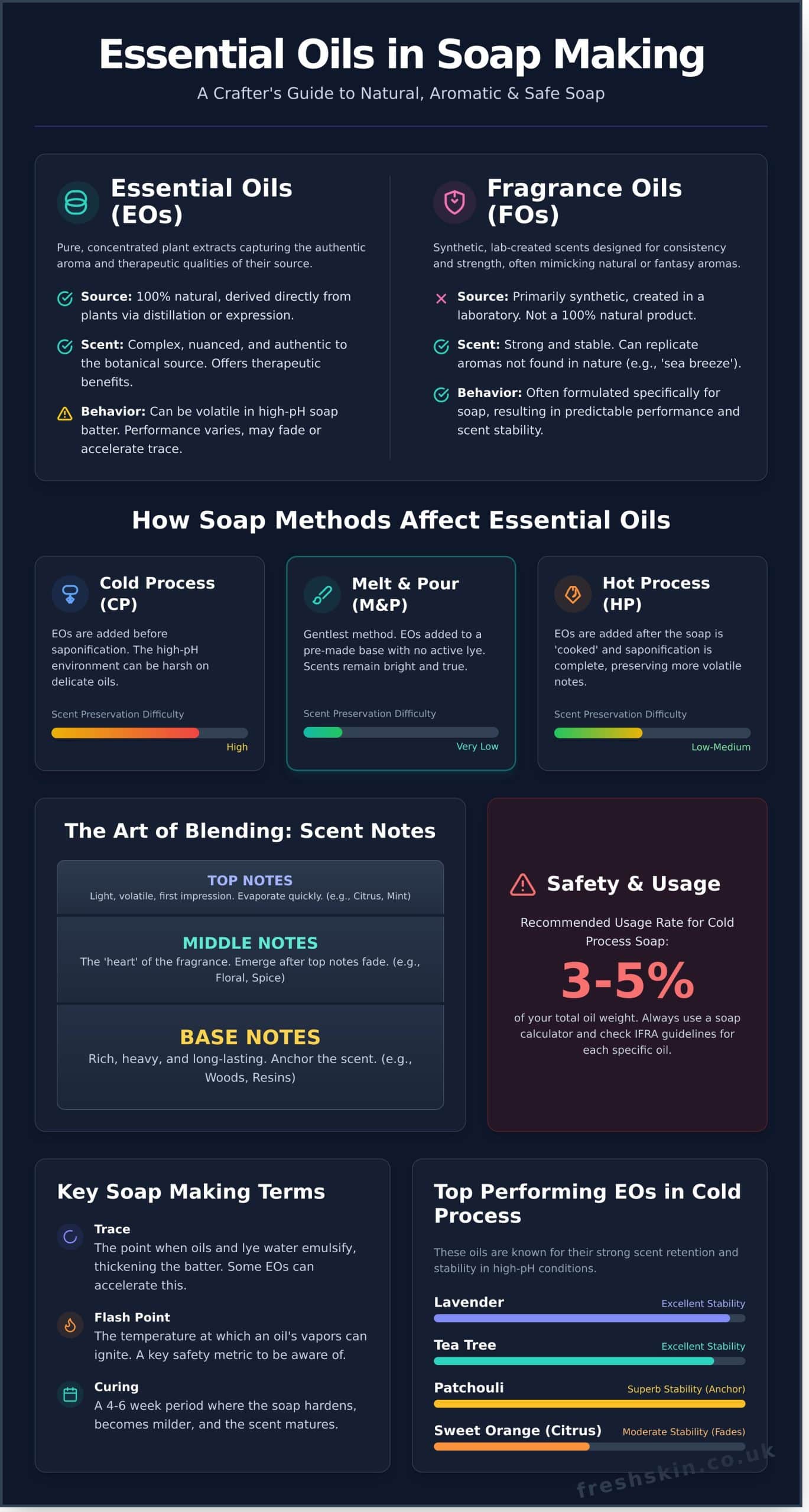
Essential Oils vs. Fragrance Oils: The Key Differences
When scenting soap, the main choice is between essential oils (EOs) and fragrance oils (FOs). Understanding their distinctions is key to achieving your desired result with integrity and confidence.
- Source: Essential oils are 100% plant-derived, extracted through methods like steam distillation. Fragrance oils are synthetic, created in a laboratory, and may contain some natural components but are not wholly natural.
- Scent Profile: EOs offer the genuine, complex aroma of the plant. FOs provide consistent, strong scents and can replicate smells not found in nature, such as ‘birthday cake’ or ‘sea breeze’.
- Behaviour in Soap: Many fragrance oils are formulated specifically for stability in high-pH soap batter. Essential oils are more volatile and can behave unpredictably, sometimes accelerating the soap-making process or losing their scent over time.
Understanding Soap Making Methods
The soaping method you use significantly impacts how essential oils perform. A basic awareness of each process helps you protect the delicate aromatic compounds you’ve chosen to work with.
Cold Process (CP): In this method, essential oils are added to the soap batter before the lye has fully saponified the oils. The high pH and heat generated can be harsh, so robust oils like lavender, tea tree, and patchouli tend to perform best.
Melt and Pour (M&P): This is the gentlest method. You simply melt a pre-made soap base and add your essential oils. Since there is no active lye, the scents remain bright and true with minimal risk of fading.
Hot Process (HP): With hot process, the soap is ‘cooked’ to complete saponification. The essential oils are added at the end, after the harsh chemical reaction is over, which helps preserve more delicate and volatile top notes like citrus.
The Science: How Essential Oils Behave in Cold Process Soap
Understanding the science behind how essential oils behave in cold process soap is the key to transforming a good bar into a truly exceptional one. The saponification process-the chemical reaction between lye and fats-is a high-alkaline environment that can be harsh on delicate botanical compounds. This is why some scents can morph or fade. Adhering to best practices for essential oil safety in cosmetics is paramount, as is understanding how each pure oil will interact with your soap batter.
Some oils may cause your batter to thicken instantly (seize) or develop grainy lumps (rice), while others can cause discolouration. Knowing what to expect allows you to prepare your recipe and workspace for a smooth, successful soaping session.
Key Terms Every Soap Maker Should Know
- Trace: This is the point in soap making when the oils and lye water have emulsified and the batter begins to thicken, leaving a visible trail or ‘trace’ when drizzled. Some essential oils can significantly speed this up.
- Flash Point: The lowest temperature at which an oil’s vapours can ignite when exposed to a flame. While less of a risk in cold process, it’s a critical safety metric to be aware of, especially if you work with warmer temperatures.
- Curing: The essential 4-6 week period after soap is cut, during which water evaporates, the bar hardens, and the pH level becomes milder. The scent of the essential oils will also mellow and mature during this time.
Oils Known for Acceleration
Certain essential oils are notorious for accelerating trace due to their unique chemical components. This can quickly lead to a thick, difficult-to-pour batter, sometimes even seizing completely in the pot. Common accelerators include spicy and floral oils:
- Clove Bud
- Cinnamon Bark
- Bay
- Ylang Ylang
To work with these potent oils successfully, soap at cooler temperatures (around 30-38°C) and add the essential oil at a very light trace. Consider blending them with an oil known to slow things down, such as our pure Lemongrass, to give yourself more time to work.
Maximising Scent Retention
One of the most common challenges when using essential oils for soap making is ensuring the beautiful aroma lasts. Delicate, volatile top notes like Lemon, Bergamot, and Sweet Orange tend to fade during the high-pH saponification process and long cure time. To combat this, you can anchor these lighter scents with grounding base notes.
Essential oils like Patchouli, Cedarwood, or Vetiver have heavier molecules that evaporate more slowly, helping to ‘fix’ the lighter aromas in the bar. You can also add natural fixatives like Kaolin clay or finely ground oats to your recipe, as their porous structures help absorb and hold onto the scent. Finally, ensure you cure your soap in a cool, dark, well-ventilated space to best preserve its therapeutic fragrance.
The Art of Scent: Top Oils by Profile & Blending Tips
Creating a beautifully scented soap is an art form, guided by the principles of aromatherapy and perfumery. The key to a balanced, lasting fragrance lies in understanding scent notes. Much like a musical chord, a blend of essential oils has top, middle, and base notes that evaporate at different rates, creating a complex and evolving aroma. The volatile nature of these pure botanical extracts means their character can change during the saponification process. For a deeper understanding of how essential oils react in soap on a chemical level, this interview with chemist Kevin Dunn, PhD, is an invaluable resource.
- Top Notes: These are the first scents you notice. They are light, fresh, and evaporate quickly. (e.g., Citrus oils)
- Middle Notes: The heart of the fragrance, these emerge after the top notes fade. They are typically warm and well-rounded. (e.g., Floral, Herbaceous oils)
- Base Notes: These are the deep, rich scents that anchor the blend and linger the longest. (e.g., Woody, Earthy oils)
Essential Oils by Scent Family
Grouping oils by their aromatic profile is the first step in crafting your signature scent. Here are some of the most reliable essential oils for soap making, organised by family:
- Floral: Lavender, Geranium, Ylang Ylang (use sparingly, can be overpowering)
- Citrus: Lemon, Sweet Orange, Bergamot (beautiful top notes, but prone to fading; anchor with a base note)
- Woody/Earthy: Cedarwood, Patchouli, Vetiver (excellent fixatives that act as strong base notes)
- Herbaceous: Rosemary, Peppermint, Tea Tree (provide strong, clean, and invigorating notes)
Beginner Blending Formulas
To begin your journey, we recommend starting with these classic, well-balanced blends. The percentages represent the ratio of oils in your total essential oil allowance for your soap recipe.
- Classic Calming Blend: A soothing and grounding aroma perfect for a bedtime bar.
- 60% Lavender (Middle)
- 40% Cedarwood (Base)
- Uplifting Citrus Grove: A bright, cheerful scent anchored with an earthy base to improve its staying power.
- 50% Sweet Orange (Top)
- 30% Lemongrass (Middle)
- 20% Patchouli (Base)
- Fresh & Clean Blend: A powerfully refreshing and clarifying scent ideal for a morning shower soap.
- 50% Rosemary (Middle)
- 30% Peppermint (Top/Middle)
- 20% Tea Tree (Middle)
Creating Your Own Unique Blends
Once you are comfortable with the basics, feel empowered to experiment. Dip separate scent strips or cotton balls into each oil you wish to combine, then hold them together and wave them gently under your nose to preview the aroma. Start with simple two or three-oil blends. A good starting point is the 30-50-20 rule: 30% Top Notes, 50% Middle Notes, and 20% Base Notes. This simple guideline helps ensure a well-rounded and enduring fragrance in your finished soap.
Safety First: Essential Oil Usage Rates & Best Practices
Harnessing the power of pure botanicals is one of the greatest joys of soap making, but it comes with a profound responsibility. It’s a common misconception that ‘natural’ automatically means ‘safe’. Essential oils are highly concentrated plant extracts, and using them correctly is paramount for creating beautiful, skin-kind soap. Understanding the principles of safe handling and accurate usage rates protects both you during the creation process and the loved ones who will use your final product.
At Freshskin Beauty Ltd, the well-being of our customers is at the heart of everything we do. This guide will walk you through the essential safety practices for using essential oils for soap making, ensuring your creative journey is as safe as it is rewarding.
Calculating Your Usage Rate
To ensure your soap is both fragrant and gentle, you must calculate your essential oil usage rate correctly. The standard industry guideline for cold process soap is to use essential oils at 3-5% of the total weight of your soaping oils (the oils you are turning into soap, not including lye or water). For example, if your recipe calls for 500g of soaping oils, you would use between 15g and 25g of essential oil. Always measure by weight using a digital scale-never by drops-for accuracy. We highly recommend using a reputable online fragrance or lye calculator to do the maths for you.
Phototoxic & Skin-Sensitising Oils
Certain essential oils contain compounds that can cause a phototoxic reaction, which is a painful skin reaction like a severe sunburn or blistering when the skin is exposed to UV light after use. It is crucial to be aware of these oils, especially in leave-on products, but caution is still wise in soap. Common phototoxic oils include:
- Bergamot (Citrus bergamia)
- Cold-Pressed Lemon (Citrus limon)
- Cold-Pressed Lime (Citrus aurantifolia)
Other oils, like Cinnamon and Clove, can be skin sensitisers if used at high levels, potentially causing irritation. Always adhere to the lower end of usage recommendations for these potent oils.
Essential Safety Checklist
Before you begin blending your chosen essential oils for soap making, please review this fundamental checklist. Following these simple steps ensures a safe environment for you and your family.
- Always wear protective gear. When handling pure, undiluted essential oils, gloves and safety glasses are non-negotiable to protect your skin and eyes from potential irritation.
- Keep away from children and pets. Store your essential oils securely in a cool, dark place, well out of reach of curious hands and paws.
- Research every oil. Before introducing a new botanical to your soap recipe, take the time to research its specific properties and recommended usage levels. Your confidence in your craft begins with knowledge and preparation.
Starting with high-quality, pure ingredients is the first step in safe formulation. You can explore our complete collection of 100% pure, ethically sourced essential oils at freshskin.co.uk.
Our Top 10 Beginner-Friendly Essential Oils for Soap
Embarking on your soap making journey is an exciting creative process. To help you begin with confidence, we’ve curated a list of reliable, beautifully scented, and well-behaving essential oils. These selections are known for their stability in cold process soap, ensuring your final bars are as fragrant and beautiful as you envisioned.
The Must-Have Starter Oils
These four foundational oils are versatile, popular, and incredibly forgiving for newcomers.
- Lavender: The undisputed all-star. Its calming, floral aroma is a timeless favourite. As a middle note, it blends wonderfully and behaves perfectly in soap, with no risk of accelerating trace.
- Tea Tree: Known for its powerful, medicinal, and clean scent. This middle note is exceptionally stable in soap and is a fantastic choice for facial or clarifying bars due to its purifying properties.
- Peppermint: A vibrant and refreshing top note that invigorates the senses. Its strong, minty fragrance holds well, but be mindful that it can slightly speed up the saponification process (trace).
- Sweet Orange: This bright, cheerful top note brings a burst of citrus to any blend. While some citrus oils can fade over time, its affordability and uplifting scent make it a staple for any soap maker.
Expanding Your Collection
Once you’re comfortable with the basics, these oils will add depth, complexity, and staying power to your creations.
- Cedarwood: A fantastic woody base note that provides a warm, grounding foundation for blends. It’s an excellent fixative, helping to anchor more volatile top notes and ensure a lasting scent.
- Lemongrass: A strong, zesty top/middle note with a fresh, lemony scent that holds up beautifully in soap. Uniquely, it can sometimes help slow down trace, giving you more time for intricate designs.
- Rosemary: A robust, herbaceous middle note with a complex, stimulating aroma. It offers excellent scent retention and pairs well with both citrus and woody oils.
- Eucalyptus: With its powerful, fresh, and camphoraceous aroma, this top/middle note is perfect for creating invigorating ‘spa’ or ‘breathe easy’ bars.
- Patchouli: A deep, earthy, and musky base note that acts as a superb scent anchor. The fragrance of patchouli in soap often mellows and improves beautifully with curing time.
- Geranium: A wonderfully stable floral. This sweet, rosy middle note is an excellent alternative to the more temperamental Rose Absolute and performs reliably in cold process soap.
Why Choose Freshskin for Your Soap Making Journey
The quality of your soap is directly linked to the purity of your ingredients. At Freshskin, we are committed to providing 100% pure, high-quality, and ethically sourced essential oils for soap making. As a UK-based, family-run business, we understand the passion that drives artisan crafters. We ensure every oil we offer is rigorously tested for purity, giving you the peace of mind to create safe, effective, and beautifully aromatic products for yourself and your loved ones.
Explore our full range of essential oils for soap making and start creating today!
Your Journey into Aromatic Soap Making
You are now equipped with the essential knowledge to elevate your craft, from understanding the science of saponification to mastering the art of safe and beautiful scent blending. This foundation empowers you to create soaps that are not only cleansing but also a true sensory experience, infused with the pure essence of nature.
The quality of your final bar always begins with the integrity of your ingredients. Choosing the right essential oils for soap making is the most crucial step, and we are here to help. As a family-run UK business trusted by thousands of crafters, we stand by our 100% pure and ethically sourced guarantee.
Begin your next creative project with confidence. Shop our curated collection of 100% pure essential oils for soap making and discover the ingredients that will make your creations truly special. We wish you the very best on your soaping journey.
Frequently Asked Questions About Essential Oils for Soap Making
How much essential oil should I add to my soap?
A safe and effective starting point when using essential oils for soap making is a usage rate of 3% of the total weight of your soaping oils. For a 1kg batch of oils, this would be 30g of essential oil. Some robust oils like lavender or patchouli can be used up to 5%, but potent oils like clove should be used more sparingly. We always recommend consulting a reliable soap-making calculator and starting with a lower percentage for any new botanical blend.
Which essential oils have the strongest, longest-lasting scent in cold process soap?
For a scent that beautifully endures the saponification process, turn to base note essential oils. Potent, earthy, and resinous oils like Patchouli, Vetiver, Cedarwood, and Sandalwood are excellent choices as they are less volatile. Some strong middle notes, such as Lavender (specifically Lavandula angustifolia) and Lemongrass, also anchor themselves well in cold process soap, providing a lasting, pure aroma that matures wonderfully over the curing period.
Can I use any essential oil in soap making?
While many pure essential oils are wonderful in soap, not all are suitable. Certain oils, particularly spice oils like Cinnamon Bark or Clove, can be highly irritating to the skin unless used at extremely low, carefully calculated dilutions. Others, like many citrus top notes, are very volatile and their scent can fade quickly. We advise researching each specific oil’s safety data and recommended usage rates for skincare before adding it to your beautiful, handcrafted soap.
Why did my essential oils disappear or fade in my cured soap?
Scent fading is a common challenge, often caused by the high pH environment of saponification and the volatility of certain oils. Delicate top notes like Sweet Orange, Lemon, and Grapefruit have a tendency to evaporate during the process and the long cure time. To help your scent last, consider anchoring these lighter notes with a base note like Patchouli or using a natural fixative like Kaolin Clay or Benzoin Resinoid in your recipe to help preserve the aroma.
Can I mix essential oils and fragrance oils together in one soap batch?
Yes, it is technically possible to combine essential oils and high-quality, skin-safe fragrance oils in a single soap recipe. This is often done to anchor a fleeting essential oil scent or to achieve an aroma not found in nature. As a family-run business dedicated to 100% pure botanical ingredients, we champion the use of solely therapeutic essential oils. For crafters who choose to blend, always ensure your fragrance oil is specifically formulated for cold process soap.
What are the best essential oil blends for a calming or relaxing soap?
For a truly serene and spa-like experience, a classic calming blend combines the therapeutic properties of Lavender, Roman Chamomile, and a touch of grounding Frankincense. Lavender is renowned for its ability to soothe the mind, while Roman Chamomile offers a gentle, apple-like sweetness that eases tension. A few drops of Frankincense add a resinous depth that encourages quiet contemplation, creating the perfect botanical trio for a relaxing, end-of-day cleanse.
Do I need to worry about the flash point of essential oils in cold process soap?
The flash point-the temperature at which a substance’s vapours can ignite-is a crucial safety consideration, but it is generally not a concern for cold process soap making. This is because the essential oils are added at a relatively low temperature when the soap batter has cooled, well below the flash point of most oils. However, it becomes a more important factor to be mindful of for safety when working with hot process or melt and pour soap methods.